

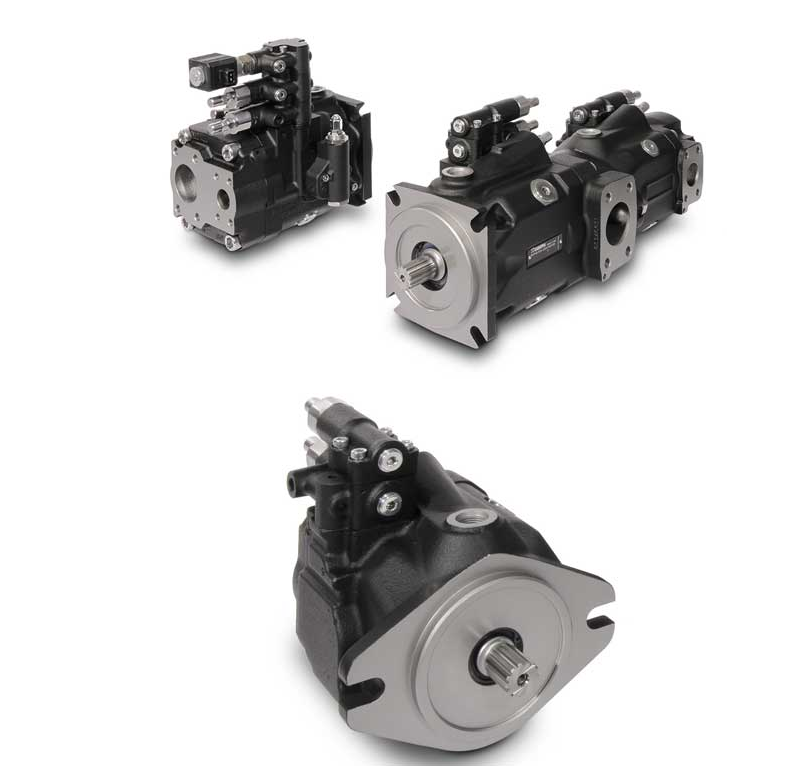
The Casappa MVP piston pump series is a variable displacement axial piston pump designed for open-circuit mobile hydraulic applications. This series features a proven swash plate design, compact construction, adjustable displacement, flexible control options, and the ability to operate under medium- to high-pressure conditions. It is widely used in hydraulic systems for construction machinery, agricultural equipment, and material handling equipment.
For equipment such as excavators, skid steer loaders, and telehandlers, hydraulic pumps are essential components that convert mechanical energy from the engine into hydraulic energy. Choosing the correct Casappa MVP piston pump requires consideration of not only displacement and pressure but also mounting flanges, drive shafts, rotation direction, port positions, and control methods.
This article introduces the working principles, main technical specifications, applications, selection methods, common problems, and maintenance requirements of the Casappa MVP piston pump series to help equipment technicians, hydraulic engineers, and parts buyers select the appropriate products.
What Is the Casappa MVP Piston Pump?
The Casappa MVP piston pump series is a variable displacement piston pump designed specifically for open-circuit hydraulic systems in mobile machinery.
Unlike fixed displacement gear pumps, MVP piston pumps can adjust their displacement according to hydraulic system requirements, thereby changing the output flow. When equipped with appropriate control mechanisms, the pump can adjust its operating conditions based on system pressure, load signals, or control commands, improving hydraulic system efficiency.
Main Features of the Casappa MVP piston pump
Compact Design
Casappa MVP piston pumps feature an integrated design that facilitates installation in the limited space available in construction machinery. Some configurations can be mounted directly to an engine or a suitable power drive unit.
Variable Displacement Design
The swash plate angle is adjusted to control piston stroke, thereby regulating the pump’s theoretical displacement and output flow.
Suitable for Medium- and High-Pressure Applications
This series is designed for construction machinery hydraulic systems and can operate continuously within specified pressure, speed, and temperature ranges.
Multiple Control Options
Depending on the specific model, available options may include pressure compensation, load sensing, torque limiting, and electro-hydraulic control.
Multiple Pump Configuration Capability
Certain models support through-drive or multiple-pump configurations, allowing the main pump and auxiliary pumps to be driven by the same power input.
Convenient Repair and Maintenance
MVP piston pump feature a modular mechanical structure, with major components including the cylinder block, pistons, valve plate, swash plate, and control mechanism, facilitating professional inspection and repair.
How Casappa MVP Piston Pump Work
The main components of a Casappa MVP piston pump include the drive shaft, cylinder block, piston shoe, slippers, swash plate, and valve plate.
When the engine or another power source rotates the drive shaft, the shaft drives the cylinder block to rotate. The pistons are arranged axially inside the cylinder block, with their slippers in contact with the inclined surface of the swash plate.
As the cylinder block rotates, the geometry of the swash plate causes the pistons to reciprocate within their bores, completing the suction and discharge processes.
Suction Process
When a piston moves outward, the volume of its chamber increases and the pressure decreases, allowing hydraulic oil to enter the piston chamber through the inlet section of the valve plate.
Discharge Process
As the cylinder block continues rotating, the piston moves inward, reducing the chamber volume. Hydraulic oil is discharged into the hydraulic system through the high-pressure section of the valve plate.
Displacement Adjustment
The MVP piston pump uses a control mechanism to adjust the swash plate angle, thereby changing the pistons’ reciprocating stroke.
- As the swash plate angle increases, the effective piston stroke increases, resulting in greater displacement.
- As the swash plate angle decreases, the effective piston stroke becomes shorter, reducing displacement.
- When displacement approaches its minimum setting, the pump’s output flow decreases accordingly.
For example, a hydraulic pump with a displacement of 45 cm³/rev operating at 2,000 rpm at maximum displacement has a theoretical flow rate of 90 L/min.
Actual flow depends on internal leakage, oil temperature, operating pressure, and volumetric efficiency.
Casappa MVP Series Technical Specifications
The Casappa MVP piston pump series covers various displacement specifications to meet different flow and pressure requirements in mobile hydraulic systems.
The following specifications are based on common MVP30, MVP48, and MVP60 configurations.
| Model | Displacement (cm³/rev) | Continuous Pressure (bar) | Peak Pressure (bar) | Maximum Speed (rpm) |
|---|---|---|---|---|
| MVP30-28D | 28 | 280 | 350 | 3500 |
| MVP30-34D | 34.8 | 250 | 315 | 2900 |
| MVP48-45D | 45 | 280 | 350 | 3000 |
| MVP48-53D | 53.7 | 250 | 315 | 2500 |
| MVP60-60D | 60 | 280 | 350 | 3000 |
| MVP60-72D | 72 | 280 | 350 | 2700 |
| MVP60-84D | 84.7 | 250 | 315 | 2300 |
Understanding These Specifications
Displacement
Displacement represents the theoretical volume of oil delivered per shaft revolution and is an important factor in determining hydraulic system flow requirements.
Continuous Operating Pressure
Continuous operating pressure indicates the pressure level at which the hydraulic pump can operate continuously under specified operating conditions.
Peak Pressure
Peak pressure indicates the maximum pressure permitted for short periods and should not be used as the continuous operating pressure.
Maximum Speed
Maximum speed indicates the highest permissible pump speed under specified inlet conditions, oil viscosity, and operating environments.
Main Applications of Casappa MVP piston pump Series
The Casappa MVP piston pump series is primarily used in open-circuit mobile hydraulic systems, particularly in machinery requiring variable flow control.
- Excavators
- Skid Steer Loaders
- Wheel Loaders and Backhoe Loaders
- Telehandlers
- Forklifts and Material Handling Equipment
- Agricultural Machinery
Casappa MVP piston pump Series Control Options
When selecting a variable displacement piston pump, the control method is just as important as displacement and mounting dimensions.
Pressure Compensator
Pressure compensation control adjusts pump displacement according to changes in system pressure.
When system pressure reaches the preset value, the control mechanism can reduce displacement to limit further increases in oil delivery.
Load Sensing
Load sensing control adjusts pump output based on load signals from the hydraulic system, allowing the oil supply to better match the requirements of hydraulic actuators.
Torque Limiter
The torque limiting function restricts the input torque absorbed by the hydraulic pump according to specified control characteristics, helping prevent the power source from exceeding its rated capacity under high-load conditions.
Electro-Hydraulic Control
Some configurations support electrical signals for displacement or pressure adjustment to meet the requirements of electronic equipment control systems.
MVP piston pump Series Mounting Configurations and Through-Drive Capability
The Casappa MVP series offers different drive shaft, mounting flange, and port configurations to accommodate various mobile machinery power systems.
Drive Shaft Types
Depending on the specific model, different drive connections, including splined shafts, may be available.
Port Positions
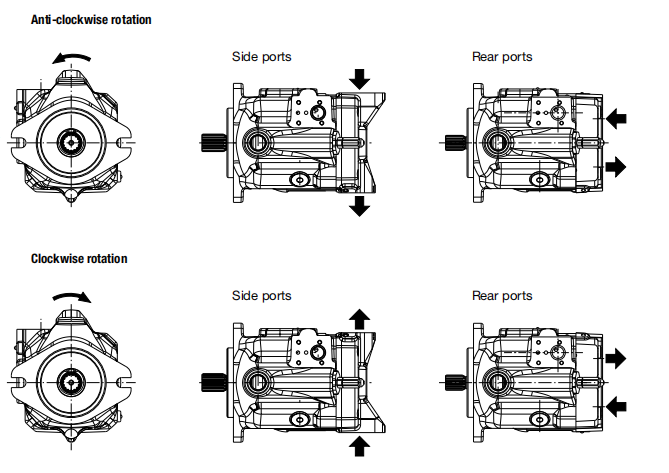
Different MVP configurations may feature different inlet and pressure port positions and connection types.
For example, certain models offer side port and rear port configurations.
Through-Drive and Multiple Pump Configurations
Some MVP models support through-drive configurations, allowing another hydraulic pump to be connected.
For example, under suitable design conditions, an MVP variable displacement piston pump can supply the main working hydraulic system while driving an auxiliary gear pump through its through-drive connection.
How to Choose the Right Casappa MVP Piston Pump?
When purchasing an MVP hydraulic pump, it is recommended to match the original pump nameplate and the hydraulic system specifications of the equipment.
Step 1: Confirm the Complete Model Number
For example: MVP48-45D-05S5L-RP0
Step 2: Verify Displacement and Pressure
Ensure that the replacement pump meets the original system’s flow, continuous pressure, peak pressure, and input power requirements.
Step 3: Check Mechanical Mounting Specifications
Pay particular attention to the mounting flange, shaft specifications, rotation direction, port positions, and available installation space.
Step 4: Confirm the Control Method
Pressure-compensated, load-sensing, and electro-hydraulically controlled pumps may use different control systems.
Casappa MVP Piston Pump Installation and Operating Precautions
Proper installation is essential for reliable hydraulic pump operation.
Pre-Installation Inspection
Check the pump housing, drive shaft, mounting flange, and ports for any damage sustained during transportation.
Keep the Hydraulic System Clean
Before installing the hydraulic pump, inspect the hydraulic reservoir, filters, pipelines, and related hydraulic valves.
Select the Correct Hydraulic Oil
Use hydraulic oil that meets CASAPPA technical requirements, ensuring that oil viscosity, operating temperature range, and cleanliness comply with specifications.
Check Inlet and Case Drain Lines
The inlet line should be free from air leaks and excessive inlet restrictions.
Proper Startup and Air Removal
Before the initial startup, fill the pump housing with oil, remove trapped air, and conduct pre-start inspections according to the manufacturer’s instructions.
After startup, check pressure, noise, temperature, and external leakage to avoid operation under insufficient lubrication or abnormal inlet conditions.
Regular Maintenance
Routine maintenance should focus on hydraulic oil cleanliness, filter condition, pipeline leakage, operating temperature, and abnormal noise.
Common Casappa MVP Piston Pump Problems and Repair Methods
During long-term operation, MVP piston pumps may experience reduced performance due to oil contamination, insufficient lubrication, abnormal system pressure, or mechanical wear.
| Common Problem | Possible Causes | Recommended Inspection |
|---|---|---|
| Insufficient Output Flow | Internal leakage, control malfunction, insufficient oil supply | Control mechanism, inlet lines, piston assemblies |
| Low System Pressure | Internal wear, relief valve or control malfunction | Control pressure, valve plate, cylinder block |
| Excessive Pump Noise | Cavitation, air entering the system, bearing damage | Inlet conditions, oil level, bearings |
| Excessive Operating Temperature | Internal leakage, abnormal hydraulic oil condition, system overload | Oil temperature, case drain flow, cooling system |
| Shaft Seal Leakage | Aging shaft seal, excessive case pressure | Shaft seal, drain lines, shaft surface |
| Abnormal Displacement Adjustment | Control mechanism failure or swash plate mechanism sticking | Controller, control oil circuit, swash plate |
| Increased Metal Wear Particles | Damage to pistons, cylinder block, bearings, or other components | Oil analysis and internal component inspection |
Common Casappa MVP Hydraulic Pump Repair Parts
For MVP piston pump that have been in service for an extended period, certain internal components may need to be replaced individually.
Common repair components include:
- Cylinder Block
- Piston Shoe
- Valve Plate
- Retainer Plate
- Swash Plate
- Drive Shaft
- Bearing
- Seal Kit
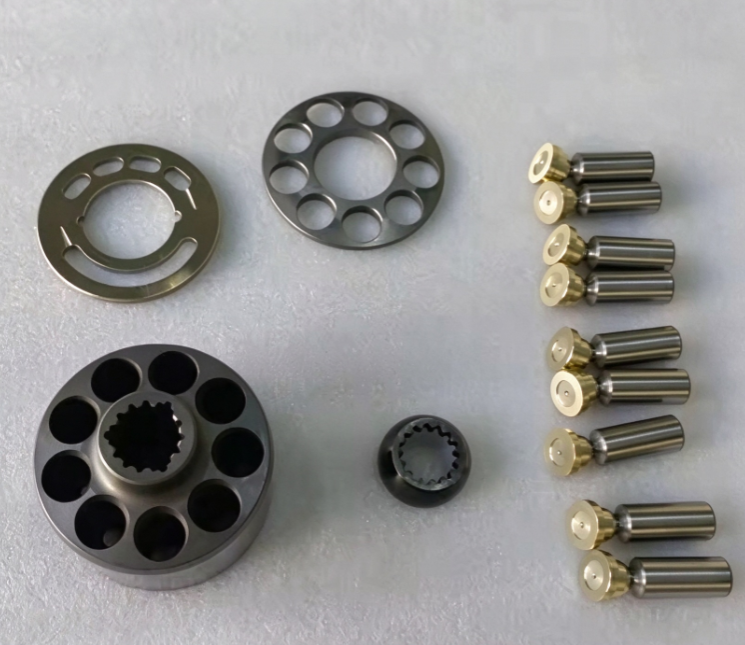
When ordering repair parts, provide the complete hydraulic pump model number, original part number, required component names, and any necessary photos and measurements.
Conclusion
The Casappa MVP piston pump series of variable displacement axial piston pumps features a compact design, adjustable displacement, multiple control options, and multiple-pump configuration capabilities, making it suitable for a wide range of construction machinery and mobile hydraulic applications.
For older pumps requiring repair, key components such as pistons, cylinder blocks, valve plates, and control mechanisms should also be inspected to determine whether to replace the complete hydraulic pump assembly or perform professional repairs using replacement components.
FarinParts provides quotation services for hydraulic pump assemblies and repair parts. If you are looking for Casappa MVP series hydraulic pumps or related repair components, please provide the complete model number, part number, product photos, and required quantity so that compatibility and availability can be verified.