

Nachi vane pump troubleshooting is essential for identifying and resolving common hydraulic pump problems, including oil suction failure, low output flow, pressure loss, and abnormal noise.
However, during actual operation, vane pumps may experience problems such as failure to draw oil, no output flow, insufficient flow, inability to build hydraulic pressure, and abnormal whining noises. These problems not only affect normal equipment operation but may also cause wear to the vanes, cam ring, rotor, and port plates in severe cases.
This article provides a detailed introduction to common Nachi vane pump troubleshooting and repair methods.
Common Symptoms of Nachi Vane Pump Troubleshooting
During Nachi vane pump troubleshooting, checking the hydraulic oil level, suction filter, and suction piping is essential for identifying common oil suction problems.
| Fault Symptoms | Possible Causes |
|---|---|
| The pump makes a sharp noise during operation | Air leakage in the suction line or blocked suction port |
| No pressure at the pump outlet | Incorrect pump rotation direction, stuck double vanes, or blocked suction check valve |
| The pump draws oil at low speed but fails at high speed | Clogged suction filter, insufficient suction pipe diameter, or rotor misalignment caused by bearing wear |
| The pump briefly draws oil after restarting but then stops | Minor air leakage at suction pipe fittings or air entering through a damaged shaft seal |
Nachi Vane Pump Troubleshooting(External )
Internal component inspection is an important part of Nachi vane pump troubleshooting, especially when external checks do not reveal the cause of the problem.
Check Whether the Oil Tank Level Is Too Low
When the oil level in the tank is insufficient, the suction port may draw in air, resulting in insufficient pump output flow, pressure fluctuations, and noticeable whining noises.
- Check the oil level gauge to ensure that the oil level meets equipment requirements during operation.
- Check whether the suction port remains fully submerged in hydraulic oil.
- Check whether the hydraulic oil contains excessive air bubbles or shows signs of emulsification.
- Check whether the internal baffles and suction port position in the oil tank are properly arranged.
Check Whether the Suction Filter Is Clogged
A clogged suction filter increases inlet resistance, preventing the pump from receiving sufficient hydraulic oil. In severe cases, it may also cause cavitation.
Check for Air Leaks and Collapsed Suction Hoses
Small air leaks in the suction line may not cause visible external oil leakage but can allow air to enter while the pump is operating. Focus on checking aging suction hoses, damaged flange seals, loose pipe fittings, collapsed hoses, and suction connections at the oil tank.
Check Hydraulic Oil Viscosity and Temperature
Excessively high hydraulic oil viscosity increases suction resistance, while overheated oil with excessively low viscosity may increase internal leakage within the pump. Hydraulic oil should be selected according to operating temperature, pressure rating, and pump model.
Nachi Vane Pump Troubleshooting(Installation )
Check the Vane Pump Rotation Direction
Nachi vane pumps are designed for single-direction rotation and direct flange mounting. The pump shaft cannot withstand radial loads, and incorrect installation can directly cause suction failure. Make sure the motor rotation direction matches the arrow marked on the pump housing.
Check Motor Speed
If the motor does not reach the specified operating speed, the actual pump output flow may be insufficient. Check the supply voltage, inverter frequency, motor load, rated motor speed, and allowable pump speed range.
Check the Coupling and Installation Alignment
A damaged coupling, shaft misalignment, or abnormal axial and radial loads can cause vibration and damage to the bearings and shaft seals
Internal Fault Inspection and Repair
When the external suction piping, motor drive, and hydraulic circuit have all been checked and found to be normal, internal pump wear, sticking, or seal failure should be considered.
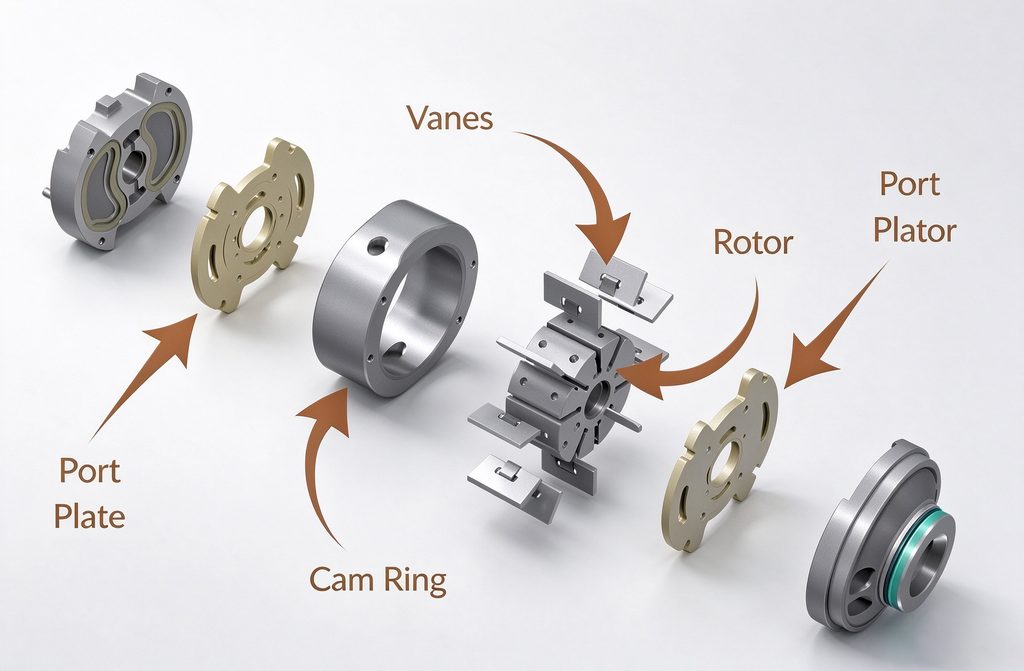
Vane tips: Contact the inner surface of the cam ring and are subjected to high pressure and high-speed friction, making them prone to wear.
Vane side surfaces: Experience sliding friction against the port plates, resulting in wear.
Contact surfaces between the vanes and rotor slots: The vanes move back and forth frequently within the slots, causing wear.
Vane Wear or Sticking
Vanes are essential components that enable a vane pump to draw in and discharge oil. If the vanes cannot move freely within the rotor slots, become severely worn, or break, internal leakage, reduced flow, and insufficient pressure may occur.
Cam Ring Inner Surface Wear
Wear, scoring, or deformation of the cam ring’s inner surface can disrupt normal sealing and oil distribution conditions within the pump chamber.
Port Plate Wear
Wear, scoring, or blockage of the oil distribution passages in the port plates or side plates may increase internal leakage within the pump.
Check whether the oil distribution ports are blocked, the sealing surfaces are damaged, or the end faces show abnormal wear. Minor contamination can be cleaned according to standard procedures. If deep scratches or excessive flatness deviations are found, the affected components should be replaced or inspected by a professional hydraulic repair facility.
Bearing and Pump Shaft Failure
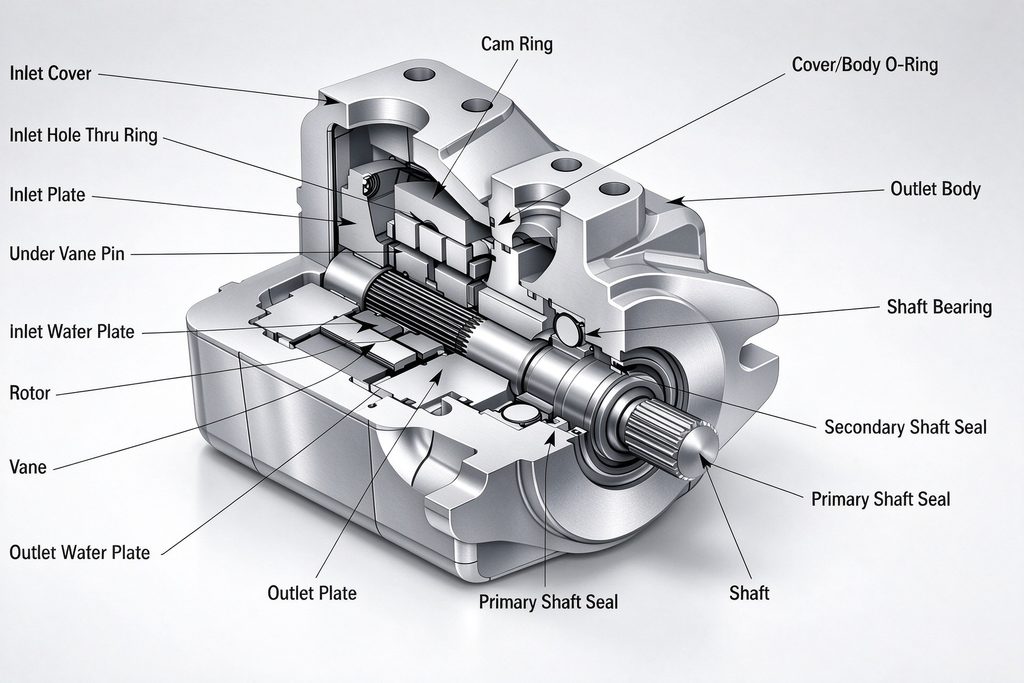
Bearing wear can cause vibration, abnormal noise, shaft runout, and further damage to related components.
Check whether the pump shaft rotates smoothly, whether the bearings have excessive clearance, and whether the shaft seal contact areas show signs of wear.
Shaft Seal and Internal Seal Damage
Aging shaft seals, O-rings, and internal sealing components may cause external oil leakage, air ingress, or internal leakage.
Check whether the seals are hardened, cracked, cut, or deformed, and whether the seal grooves are scratched.
Daily Maintenance Recommendations for Nachi Vane Pumps
Regular maintenance can help prevent common problems identified during Nachi vane pump troubleshooting and reduce unexpected equipment downtime.
- Keep hydraulic oil clean. Regularly check oil contamination levels and replace filters that meet equipment specifications.
- Inspect suction piping. Prevent hose aging, hose collapse, air leakage at fittings, and excessive suction resistance.
- Control hydraulic oil temperature. Avoid prolonged operation at high temperatures and preheat the oil according to equipment requirements before starting in low-temperature conditions.
- Inspect hydraulic system seals. Promptly address oil leakage, air ingress, and aging sealing components.
- Inspect the motor and coupling. Prevent incorrect rotation direction, shaft misalignment, and abnormal vibration.
- Avoid prolonged cavitation and overpressure operation. Stop the equipment and investigate the cause if continuous whining noises, abnormal pressure, or overheating occur.
Download Materials:
Technical Data for Nachi Vane Pump (VDR22).PDF
Technical Data for Nachi Hydraulic Pump.PDF
Conclusion
Proper Nachi vane pump troubleshooting helps identify oil suction failure, insufficient flow, pressure loss, and abnormal noise. Following a systematic inspection process can reduce downtime and prevent further damage to hydraulic pump components.
It is recommended to first check the oil tank level, suction filter, suction piping, motor rotation direction, and air bleeding conditions. Next, inspect the hydraulic system control circuit, and finally evaluate internal pump wear.
Timely detection of suction problems and proper repair measures can reduce downtime and prevent further damage to the hydraulic pump.