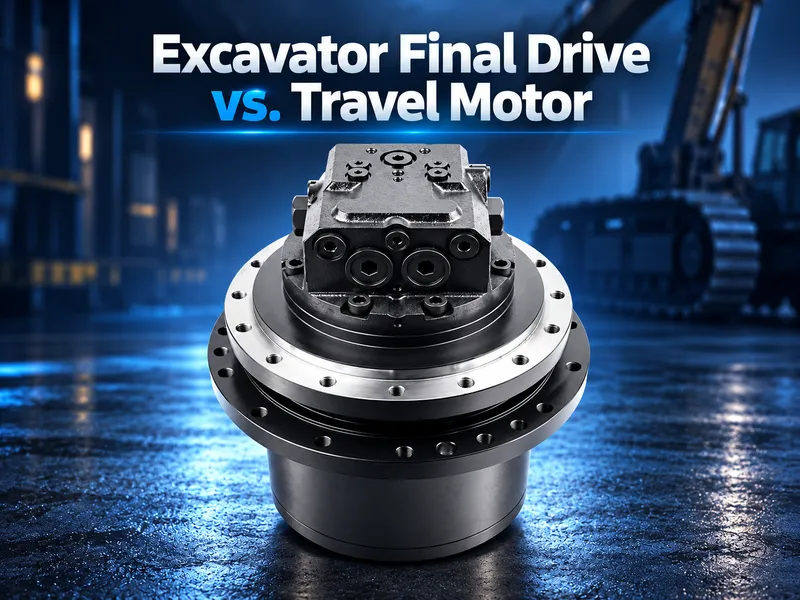


Excavator coupling are critical connecting components in an excavator’s hydraulic transmission system. Although they are typically small in size, they are responsible for transmitting the engine’s output torque to the hydraulic pump.
Understanding the structure, operating principles, and common failures of Coupling can help quickly pinpoint problems and avoid unnecessary hydraulic pump replacements.
This article will cover the main types of Coupling, symptoms of failure, inspection methods, and how to select the correct replacement parts.
What Is a Coupling?
A coupling is a mechanical transmission component used to connect the drive unit to the pump shaft.
In many hydraulic excavators, the engine drives the main hydraulic pump via a flywheel, a coupling, or other specialized connection mechanisms.
The hydraulic pump then converts mechanical energy into hydraulic energy, providing power to hydraulic actuators such as the boom, dipper arm, bucket, swing, and travel systems.
The excavator coupling primarily serves the following functions:
- Transmitting the engine’s output torque.
- Connecting the engine to the input shaft of the hydraulic pump.
- Compensating for a certain degree of installation misalignment based on its structural design.
- In Coupling that use elastic elements, absorbing impacts and torsional vibrations.
- Helping the drivetrain maintain stable operation.
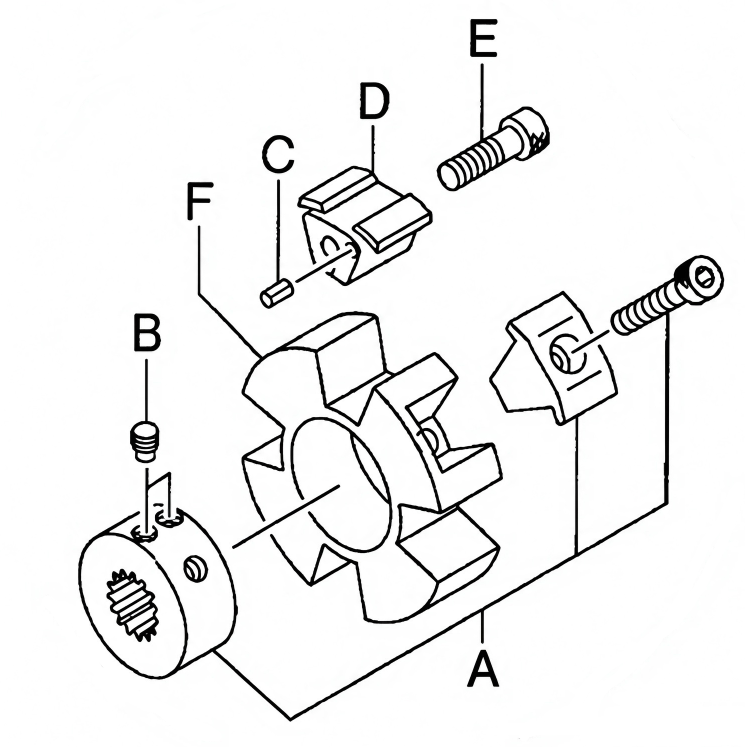
Common Types of Excavator Couplings
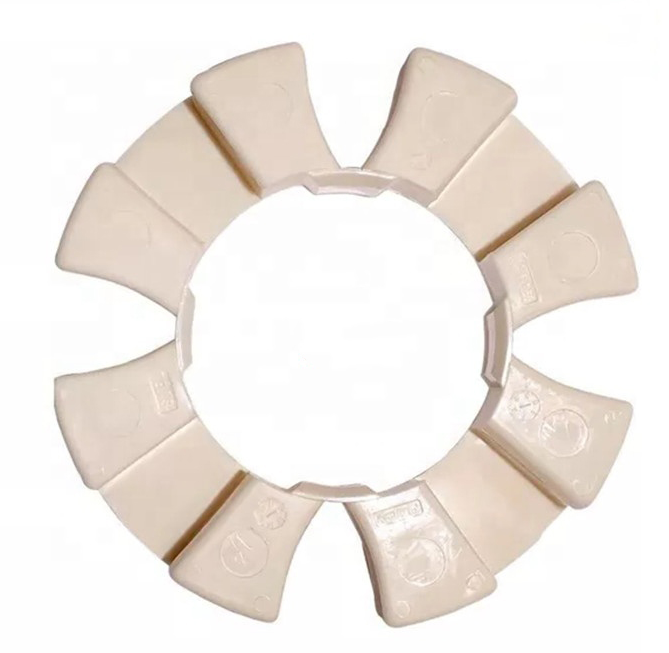
Rubber Coupling
Rubber Coupling use rubber or other elastic materials as part of the power transmission structure.
Their main feature is the ability to absorb some vibrations and impacts within the limits permitted by the design.
The rubber elastic elements can also mitigate the impact of certain transient torque fluctuations on the drive system.
Common Applications:
- Excavator hydraulic pump drive systems
- Power transmission systems for construction machinery
- Industrial pumps and machinery
Common Failures:
Rubber aging, cracking, permanent deformation, localized delamination, or damage due to overheating.
If the elastic elements are severely damaged, the coupling may fail to transmit torque properly.
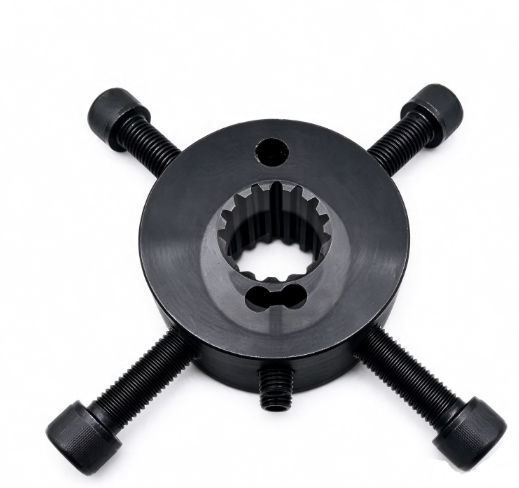
Spline Coupling
Spline Coupling transmit rotational torque through intermeshing inner and outer spline structures.
They are characterized by a large contact area and provide reliable mechanical power transmission.
Spline Coupling are widely used in the drive shafts of construction machinery, hydraulic pump input shafts, and related transmission structures.
Key Advantages:
- Compact design
- Suitable for transmitting high torque.
- Facilitates axial assembly according to design requirements.
- Enables precise axial alignment.
Common Failures:
- Wear on spline tooth surfaces
- Rust
- Insufficient lubrication
- Increased clearance
- Tooth Surface Damage
Coupling :price reference for excavator coupling
How Do Excavator Coupling Work?
In a typical engine-driven hydraulic pump system, the power transmission process is as follows:
Engine → Flywheel or drive end → Coupling → Hydraulic pump input shaft → Hydraulic system
The coupling itself does not regulate the hydraulic pump’s flow rate; rather, it is responsible for mechanical power transmission. If the coupling fails to transmit torque properly, the hydraulic pump may be unable to reach its normal operating speed; in cases of severe damage, the hydraulic pump may even lose its mechanical drive entirely.
Common Symptoms of Excavator Coupling Failure
Engine Runs Normally, but Hydraulic Operations Are Abnormal
When the engine starts normally but the excavator’s boom, mid-arm, bucket arm, swing, and travel movements all exhibit abnormalities simultaneously, check whether the hydraulic pump is receiving normal mechanical drive.
If the coupling is severely broken or slipping, it may affect the hydraulic pump’s output.
However, this symptom may also be caused by insufficient hydraulic fluid, control system malfunctions, or other hydraulic system issues.
Abnormal Noise in the Area Where the Engine Connects to the Hydraulic Pump
Worn Coupling or loose connecting parts may produce knocking, grinding, or other abnormal mechanical noises.
These noises may sometimes vary with engine speed. If the noise clearly originates from the area where the engine connects to the hydraulic pump, inspect the coupling, drive shaft, and nearby connecting components.
Cracking of Rubber Elastic Components
After rubber Coupling have been in use for some time, the following conditions may occur:
- Surface cracks.
- Rubber hardening.
- Localized deformation.
- Damage at the rubber-to-metal interface.
- Loss of elastic material.
Abnormal Vibration
Abnormal vibration may be caused by coupling damage, installation misalignment, or loose connecting parts.
Spline Wear
In spline connections, long-term load variations, lubrication issues, or misalignment may cause wear on the spline tooth surfaces.
Typical symptoms include damage to the tooth surfaces, increased connection clearance, or severe tooth profile wear.
If the splines are severely damaged, it may be necessary to inspect the mating shaft or hub as well.
How to Inspect an Excavator Coupling?
- Step 1: Identify the Symptoms
- Step 2: Rule out other hydraulic system faults
- Step 3: Inspect the coupling’s exterior
- Step 4: Inspect the connection structure
- Step 5: Determine whether replacement is necessary
How to Select the Right Excavator Coupling?
When purchasing a coupling, you should first determine its specific application.
The hydraulic pump model and the original part number of the coupling are particularly important.
For spline Coupling, it is also necessary to verify the number of teeth, spline dimensions, and fit specifications.
For rubber Coupling, you should also confirm the structure of the elastic elements, their hardness grade, and the applicable torque.
What is the difference between original coupling and aftermarket replacement parts?
Original coupling are typically supplied as part of the equipment manufacturer’s spare parts system. Aftermarket replacement parts may be supplied by independent manufacturers.
When selecting an aftermarket replacement coupling, pay attention to the materials, dimensional tolerances, torque capacity, elastic properties, and quality.
FAQ
Can a damaged coupling cause an excavator to stop working?
It is possible. If the coupling completely loses its ability to transmit torque, the corresponding hydraulic pump may not function properly.
If two excavator coupling are the same size, can they be directly substituted for one another?
Not necessarily. You must also verify the spline specifications, mounting configuration, rated torque, elasticity characteristics, and equipment compatibility information.
Can a coupling be replaced individually?
Not necessarily. For some Coupling, it is possible to replace individual elastic elements or assemblies; for others, the entire coupling assembly must be replaced.
How do I look up an excavator coupling part number?
We recommend providing the equipment model, part number, hydraulic pump nameplate, and a photo of the old coupling.
Conclusion
Coupling are essential components in the mechanical drive systems of hydraulic pumps.
The correct coupling must not only meet the installation dimensions but also comply with the transmission torque, shaft connection structure, and relevant technical requirements.
FarinParts provides procurement support for hydraulic systems and related replacement parts for construction machinery. If you need to confirm the model of a hydraulic pump coupling, please submit equipment information, the part number, and photos so we can further verify product specifications and availability.