
Parker PVP and PAVC series piston pumps are variable displacement axial piston pumps widely used in industrial hydraulic systems and construction machinery. Both series are designed for open-circuit hydraulic systems, offering adjustable flow, flexible pressure control, and reliable operation.
Although PVP and PAVC are both medium-pressure piston pumps, they differ significantly in operating pressure, displacement range, maximum speed, control structure, and hydraulic fluid compatibility.
PVP Piston Pumps Series: Suitable for hydraulic systems requiring higher operating pressures, multiple control options, and thru-shaft drive configurations.
PVP piston pump Series Models: PVP16, PVP23, PVP33, PVP41, PVP48. Legacy models include PVP60, PVP76, PVP100, and PVP140.
PAVC Piston Pumps Series: Offer advantages in high-speed operation, suction performance, cartridge-type control maintenance, and water-glycol hydraulic fluid applications.
PAVC piston pump Series Models: PAVC33, PAVC38, PAVC65, and PAVC100.
Parker PVP vs. PAVC Piston Pumps: Key Specifications
| Specification | PVP Series | PAVC Series |
|---|---|---|
| Pump Type | Variable Displacement Axial Piston Pump | Variable Displacement Axial Piston Pump |
| Hydraulic Circuit | Open Circuit | Open Circuit |
| Maximum Continuous Operating Pressure | 248 bar (3600 psi) | 207 bar (3000 psi) |
| Displacement Options | 16, 23, 33, 41, 48 cm³/rev | 33, 38, 65, 100 cm³/rev |
| Maximum Speed | 2400–3000 rpm, depending on model | 3000 rpm; PAVC100 typically 2600 rpm |
| Housing Material | High-Strength Cast Iron | High-Strength Cast Iron |
| Pressure Compensation | Available | Available |
| Load Sensing Control | Available | Available |
| Horsepower Limiting Control | Available | Available |
| Thru-Shaft Drive | Available in selected configurations | Available on PAVC100 |
| Built-in Supercharger | No PAVC-type built-in supercharger | Yes |
| Water-Glycol Compatibility | Requires verification of specific configuration and derating requirements | Compatible with water-glycol hydraulic fluids under manufacturer-specified conditions |
| Control Structure | Multiple Modular Control Options | Cartridge-Type Control Modules |
| Main Advantages | Higher Pressure, Flexible Controls, Easy Maintenance | High-Speed Suction Performance, Special Fluid Compatibility, Easy Control Module Maintenance |
Parker PVP Piston Pumps: Pros and Cons
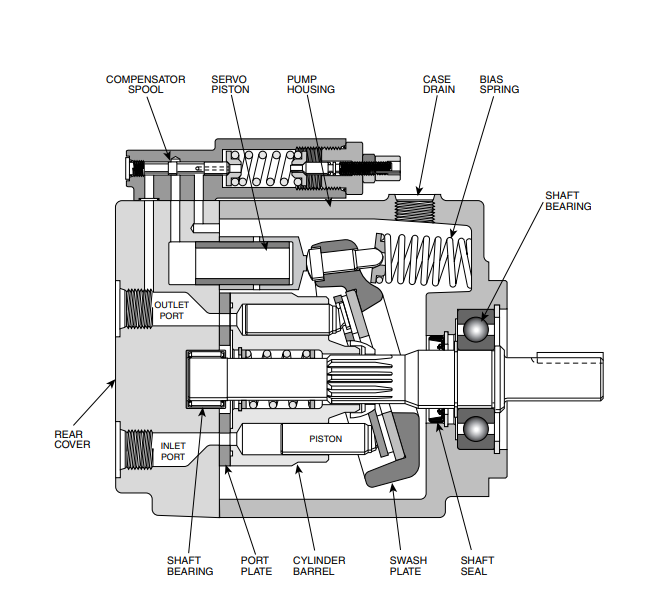
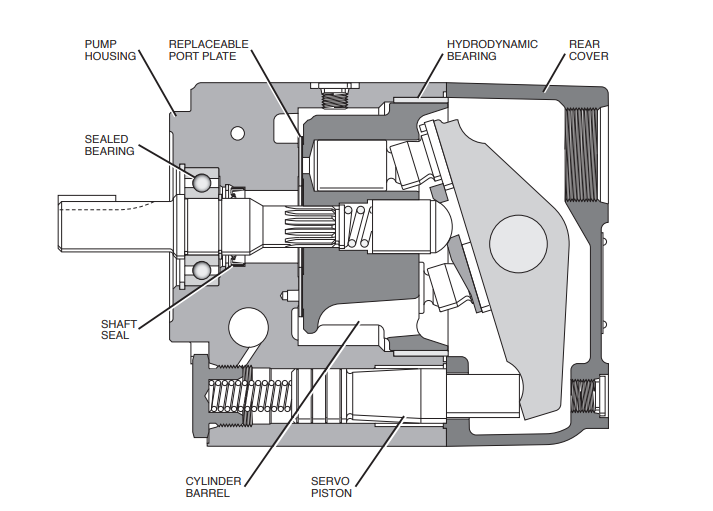
The Parker PVP piston pumps is a medium-pressure variable displacement axial piston pump featuring a swash plate design. By adjusting the swash plate angle, the pump changes the piston stroke to regulate output flow.
The PVP piston pumps offers fast control response, multiple control options, and thru-shaft drive capability. It is suitable for industrial hydraulic power units, material handling equipment, auxiliary hydraulic circuits in construction machinery, and other medium-pressure systems.
Advantages:
Higher Operating Pressure for Demanding Applications
Parker PVP piston pumps can achieve a maximum continuous operating pressure of 248 bar (3600 psi), higher than the 207 bar (3000 psi) rating of the PAVC series.
Multiple Control Options for Greater System Flexibility
The PVP series offers various hydraulic control options, allowing the pump to adjust output flow and pressure according to system requirements under different load conditions.
Available options include:
- Pressure Compensation
- Load Sensing
- Horsepower Limiting
- Remote Pressure Compensation
- Adjustable Maximum Volume Stop
- Low Pressure Standby
Thru-Shaft Drive for Multiple Pump Configurations
PVP piston pumps are available with thru-shaft drive configurations, allowing an additional hydraulic pump to be driven from the rear of the main pump.
Low Operating Noise
The PVP series features an optimized axial piston design that helps reduce noise levels in hydraulic power units under appropriate operating pressures, suction conditions, and installation environments.
Convenient Maintenance and Replaceable Wear Components
PVP piston pumps feature a two-piece housing design that facilitates disassembly and maintenance.
Disadvantages:
Lower Maximum Speeds on Certain Models
PVP16, PVP23, and PVP33 models can operate at speeds up to 3000 rpm, while PVP41 and PVP48 have relatively lower maximum speed ratings.
Higher Suction Requirements
Compared with PAVC piston pumps featuring a built-in supercharger, PVP pumps do not incorporate the same suction-boosting design.
Special Hydraulic Fluid Compatibility Requires Verification
When using water-glycol or other fire-resistant hydraulic fluids, the seal materials and operating pressure limits of the specific PVP model must be verified.
Parker PAVC Piston Pumps: Pros and Cons
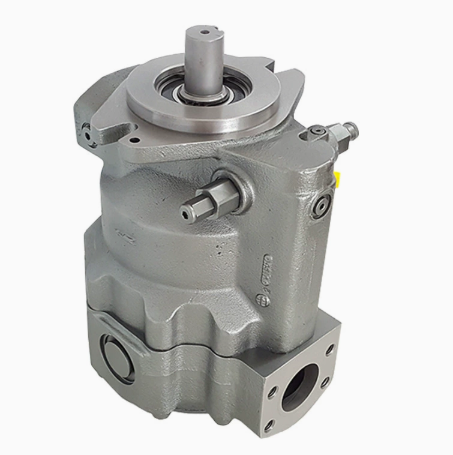
The Parker PAVC piston pumps is a medium-pressure variable displacement piston pump featuring a built-in supercharger. Main models include PAVC33, PAVC38, PAVC65, and PAVC100.
The PAVC piston pumps features a built-in supercharger, cartridge-type control modules, a two-piece housing, and good compatibility with special hydraulic fluids.
Advantages:
Built-in Supercharger for Improved High-Speed Suction Performance
PAVC piston pumps feature a built-in supercharger that helps improve inlet supply conditions.
Under specified operating conditions, PAVC33, PAVC38, and PAVC65 models can reach maximum speeds of 3000 rpm, while PAVC100 typically operates at a maximum of 2600 rpm.
Compatibility with Water-Glycol Hydraulic Fluids
One of the key advantages of PAVC piston pumps is their ability to operate with water-glycol hydraulic fluids under specified conditions while maintaining the applicable rated pressure.
This makes PAVC pumps suitable for industrial equipment requiring fire-resistant hydraulic fluids, including certain metallurgical, industrial processing, and specialized manufacturing applications.
Cartridge-Type Control Modules for Easier Maintenance
PAVC piston pumps feature cartridge-type controls.
Compared with some conventional control mechanisms that require more extensive disassembly, cartridge-type controls simplify the removal, inspection, and replacement of control modules.
Maintenance-Friendly Structural Design
PAVC piston pumps feature a two-piece housing, sealed bearings, and hydrodynamic bearing support.
Certain components also feature replaceable valve plates, allowing maintenance personnel to inspect internal wear more conveniently.
Multiple Variable Control Options
PAVC piston pumps also support pressure compensation, load sensing, horsepower limiting, and remote pressure compensation controls.
Disadvantages:
Lower Maximum Continuous Operating Pressure Than PVP
The maximum continuous operating pressure of PAVC piston pumps is approximately 207 bar, lower than the 248 bar rating of the PVP series.
Limited Displacement Options
PAVC piston pumps are mainly available in four displacement sizes: 33, 38, 65, and 100 cm³/rev.
For equipment requiring smaller displacement, PVP16 or PVP23 may be more suitable.
Limited Thru-Shaft Drive Options
Within the PAVC series, thru-shaft drive configurations are primarily available on the PAVC100.
For equipment requiring multiple pumps connected in series, the PAVC series offers fewer configuration options than the PVP series.
Proper Maintenance of Control Modules and Supercharger Components Is Required
Although the built-in supercharger and cartridge-type controls provide clear design advantages, maintenance personnel must understand the associated hydraulic circuits, control pressures, and component interactions.
Parker PVP vs. PAVC: Which Is Better for Construction Machinery?
| Application | Recommended Series | Main Reason |
|---|---|---|
| Industrial Hydraulic Power Units | PVP or PAVC | Depends on pressure, flow, and speed requirements |
| Material Handling Equipment | PVP | Flexible controls and smaller displacement options |
| Forklifts and Auxiliary Hydraulic Systems | PVP or PAVC | Depends on installation space and operating pressure |
| Construction Machinery Auxiliary Circuits | PVP | Higher pressure rating and thru-shaft options |
| High-Speed Industrial Hydraulic Equipment | PAVC | Built-in supercharger and high-speed capability |
| Equipment Using Water-Glycol Hydraulic Fluids | PAVC | Better compatibility with special hydraulic fluids |
| Multiple Pump Configurations | PVP or PAVC100 | Thru-shaft drive capability must be verified |
Common Problems with Parker PVP and PAVC Piston Pumps
Both PVP and PAVC series use variable displacement axial piston designs. During operation, they may experience insufficient pressure, reduced flow, excessive noise, overheating, or external leakage.
Insufficient Hydraulic Pressure
Possible causes include:
- Worn pistons and cylinder block
- Worn valve plate
- Faulty displacement control valve
- Incorrect pressure compensator adjustment
- Internal hydraulic system leakage
Abnormal Pump Noise
Possible causes include:
- Air entering the suction line
- Incorrect hydraulic oil viscosity
- Insufficient inlet pressure
- Damaged bearings
- Worn internal rotating components
For PAVC pumps, the built-in supercharger and associated oil supply conditions should also be inspected.
Excessive Pump Temperature
Common causes include excessive pressure relief losses, increased internal leakage, unsuitable hydraulic oil viscosity, insufficient cooling, or prolonged high-load operation.
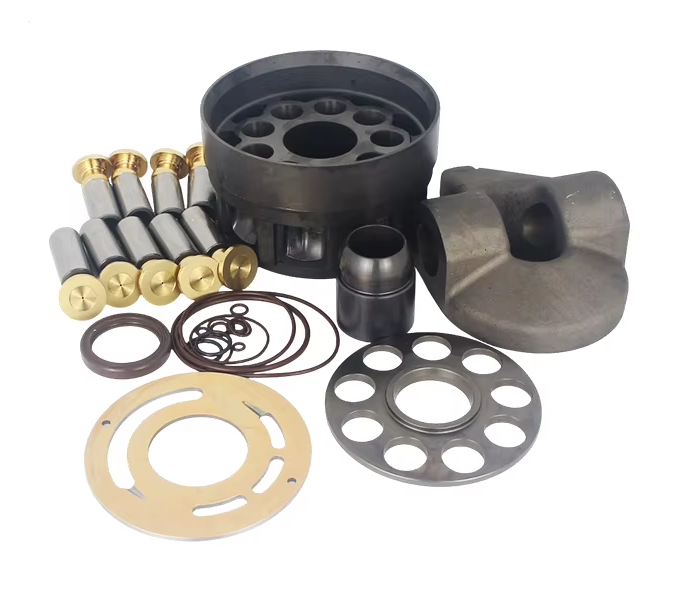
Common Replacement Parts
| Replacement Part | Main Function |
| Piston | Draws in and discharges hydraulic fluid |
| Cylinder Block | Forms working chambers with the pistons |
| Valve Plate | Controls inlet and outlet fluid distribution |
| Piston Slipper | Provides the contact surface between the piston and swash plate |
| Swash Plate | Adjusts piston stroke and pump displacement |
| Bearing | Supports the pump shaft and rotating assembly |
| Seal Kit | Provides sealing components |
FAQ
Can Parker PVP and PAVC piston pumps be directly interchanged?
Generally, no. The two series differ in mounting configurations, control modules, displacement options, and operating pressure ratings.
Which has a higher operating pressure, Parker PVP or PAVC?
The PVP series has a maximum continuous operating pressure of 248 bar, compared with 207 bar for the PAVC series.
Why is the PAVC series suitable for high-speed hydraulic systems?
The PAVC series features a built-in supercharger that helps improve pump suction conditions.
Which is easier to maintain, Parker PVP or PAVC?
Both series feature maintenance-friendly designs. PVP piston pumps have a two-piece housing and replaceable wear components, while PAVC piston pumps use cartridge-type control modules that simplify control component maintenance.
What information is required when purchasing Parker piston pump replacement parts?
Provide the complete pump model number, a photo of the nameplate, and the names of the required replacement parts.
Which is the better choice, Parker PVP or PAVC piston pumps?
Neither series is universally better for every application. The selection should be based on hydraulic system operating pressure, actual flow requirements, rotational speed, mounting dimensions, control options, and replacement parts availability.


