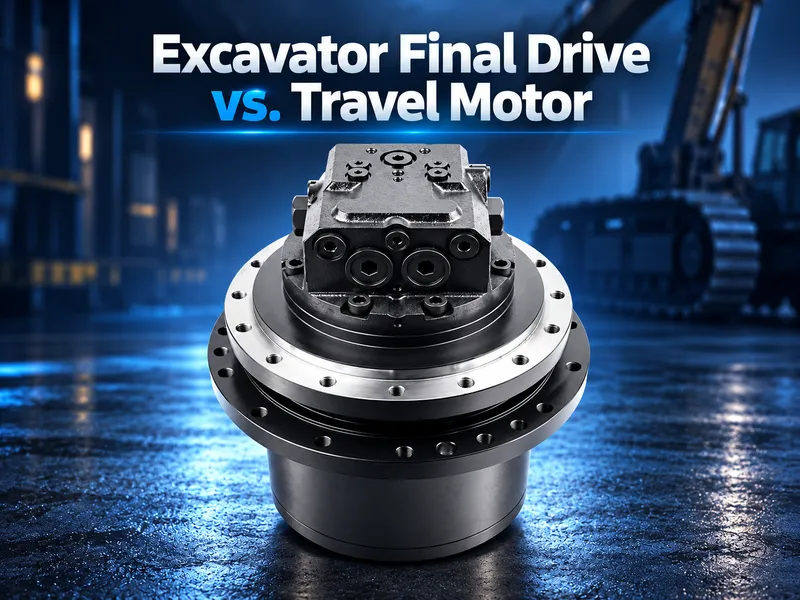


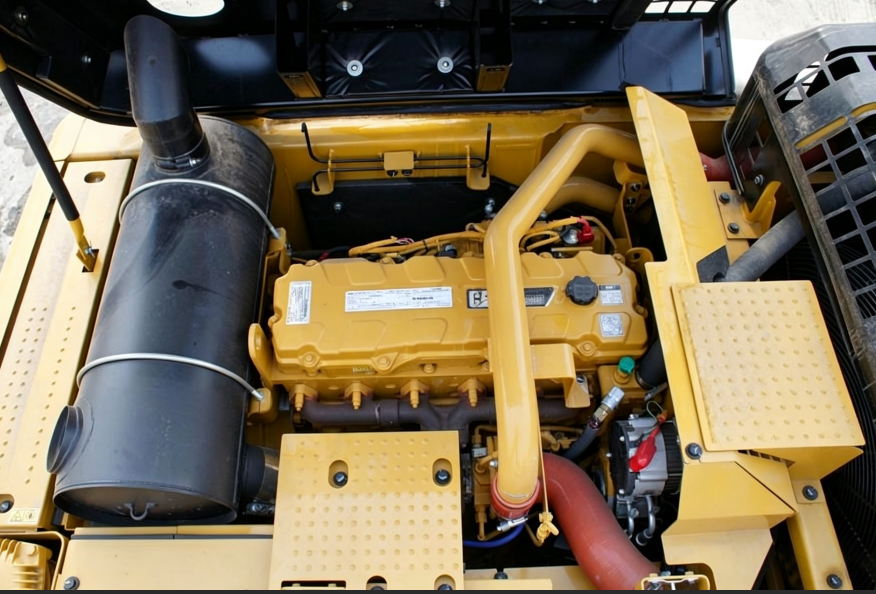
Caterpillar C7, C9, C13, C15, C18, and 3500 series engines are widely used in excavators, loaders, bulldozers, mining equipment, and generator sets. While different engines may utilize varying diagnostic systems, the function of fault codes remains consistent: they assist technicians in identifying faulty components, determining the nature of the malfunction, and guiding the troubleshooting process.
Caterpillar fault codes serve as a vital reference for diagnosing issues with engines and equipment. By reading these codes, technicians can rapidly pinpoint the affected system, classify the type of fault, and narrow down the scope of troubleshooting.
This article covers common Caterpillar fault codes, their underlying causes, diagnostic procedures, and repair methods—helping technicians minimize misdiagnoses and avoid unnecessary parts replacement.
What are Caterpillar fault codes?
Caterpillar fault codes are diagnostic trouble codes. The Engine Control Module (ECM) continuously monitors sensors, actuators, electrical circuits, and certain engine operating parameters. When the ECM detects an abnormal signal, a communication failure, an abnormal system response, or operating parameters that exceed the set range, it may generate a corresponding diagnostic code.
Fault codes typically contain two types of information:
Where did the fault occur?
- Coolant temperature sensor
- Engine speed sensor
- Fuel pressure sensor
- Oil pressure sensor
- ECM power supply system
- CAN communication system
- DPF aftertreatment system
What type of anomaly occurred?
- Voltage too high
- Voltage too low
- Open circuit
- Abnormal current
- Unstable signal
- Data communication interruption
- Abnormal mechanical system response
- Operating parameters outside normal range
Service technicians can use the Caterpillar fault codes information to determine the next steps in the diagnostic process.
How to interpret Caterpillar fault codes?
Caterpillar engines primarily use three types of diagnostic code structures.
| Type | Code Example | Description |
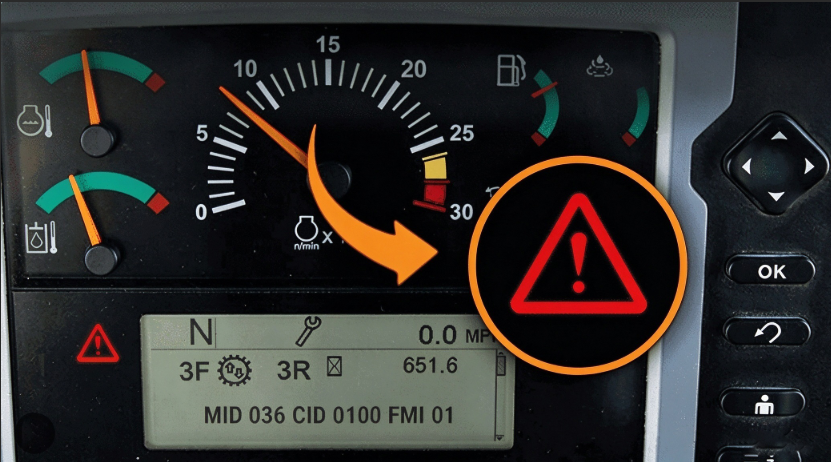
| CDL | MID 036 CID 0110 FMI 03 | Caterpillar-specific diagnostic |
| J1939 | SPN 110 FMI 0 | SAE J1939 standard diagnostic code |
| Event Code | E360 | Event indicating abnormal engine operation |
What do MID, CID, and FMI stand for?
- MID (Module Identifier): Identifies which control module reported the fault
- CID (Component Identifier): Identifies the faulty component
- FMI (Fault Mode Identifier): Describes the type of fault
MID Common Fault Codes:
| MID | Module or System |
| 036 | Engine ECM |
| 081 | Transmission ECM |
| 082 | Chassis or related control module |
| 116 | Monitoring system |
| 140 | Related equipment control module |
CID Common Fault Codes:
| CID | Module or System |
| 0041 | 8V DC Sensor Power Supply |
| 0091 | Throttle Position Sensor |
| 0110 | Engine Coolant Temperature Sensor |
| 0168 | Electrical System Voltage |
| 0190 | Engine Speed Sensor |
| 0248 | Data Link |
| 0262 | 5V Sensor Power Supply |
FMI Common Fault Codes:
| FMI | Fault Meaning |
| 0 | Data is valid, but the value is above the normal range; highest severity |
| 1 | Data is valid, but the value is below the normal range; highest severity |
| 2 | Data is unstable, intermittent, or incorrect |
| 3 | Voltage is above normal or short-circuited to a high-voltage power supply |
| 4 | Voltage is below normal or short-circuited to a low-voltage power supply |
| 5 | Current is below normal or there is an open circuit |
| 6 | Current is above normal or there is a ground short circuit |
| 7 | Abnormal mechanical system response |
| 8 | Abnormal frequency, pulse width, or period |
| 9 | Abnormal data update rate |
| 10 | Abnormal data change rate |
| 11 | Other fault modes |
| 12 | Smart device or component failure |
| 13 | Out of calibration range |
| 14 | Special operating instructions |
| 15 | Data is above the normal range; lowest severity |
| 16 | Data above normal range, medium severity |
| 17 | Data below normal range, lowest severity |
| 18 | Data below normal range, medium severity |
| 19 | Error in received network data |
| 31 | Specified fault condition exists |
For examples: MID 036 CID 0110 FMI 03 indicates that the engine ECM has detected an excessively high voltage from the coolant temperature sensor, which may be caused by a sensor malfunction, an open circuit, or a short circuit.
What is the relationship between SPN/FMI and emission standards?
SPN stands for Suspect Parameter Number in the SAE J1939 protocol, and FMI is used to describe the failure mode.
Tier 3, Tier 4 Final, and EU Stage V are emissions standards, while CDL and J1939 are diagnostic systems.
Emissions standards do not directly determine the format of fault codes. A single engine may support different communication protocols; therefore, the complete code as displayed should be used for lookup.
SPN is used to identify relevant parameters or systems.FMI is used to describe the fault mode.
For example: SPN 110 FMI 0(this indicates that the engine coolant temperature is above the normal operating range and has reached the corresponding severity level.)
Event Codes
In addition to diagnostic fault codes, Caterpillar also uses fault codes beginning with “E.”
For example:
- E360: High engine coolant temperature
- E361: Engine coolant temperature-related event
- E362: Engine oil pressure-related event
Caterpillar Fault Codes Diagnostic Tool
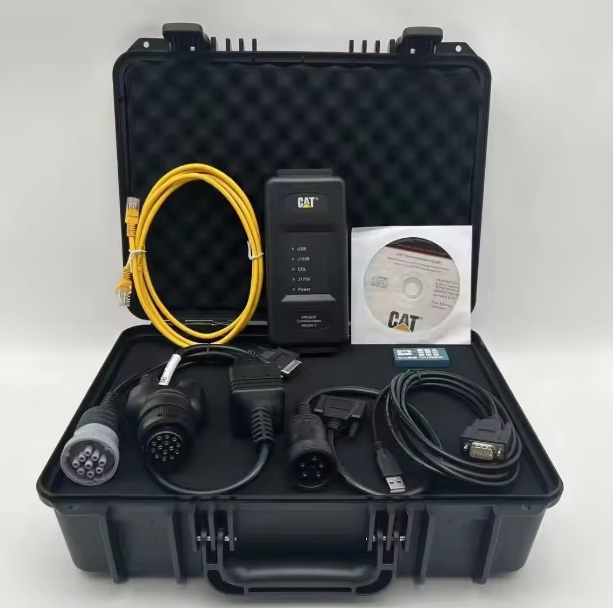
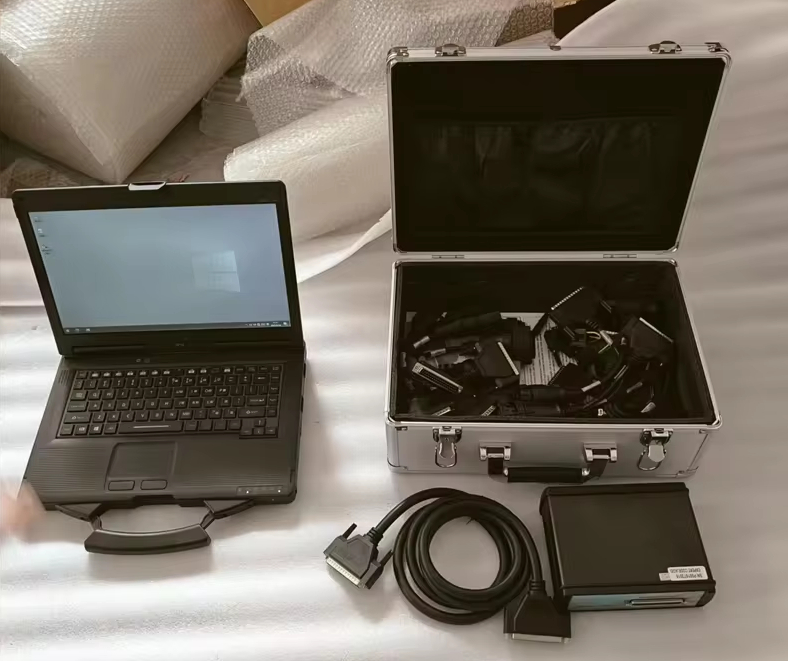
Two common types of diagnostic tools for Caterpillar fault codes are Caterpillar Electronic Technician and Jaltest.
Caterpillar Electronic Technician(Cat ET)
Cat ET is primarily used for diagnosing electronic systems in Caterpillar engines and equipment.
Key features include:
- Reading trouble codes.
- Viewing real-time engine operating parameters.
- Checking the status of sensors and actuators.
- Performing diagnostic tests.
- Viewing and adjusting parameters.
- Performing relevant repair operations on supported controllers.
Jaltest
Jaltest is a multi-brand diagnostic solution designed for the commercial vehicle, construction equipment, and agricultural machinery repair markets.
Key features include:
- Reading of diagnostic fault codes (DTCs)
- Clearing of diagnostic fault codes (DTCs)
- Viewing of live data streams
- Testing of related systems
- Guided diagnostics
- Maintenance and calibration procedures for certain components
- Aftertreatment system diagnostics
Common Caterpillar Fault Codes Reference Table
| Fault Code | Fault Description | Common Causes | Recommended Checks |
| 110-0 | Coolant temperature too high | Insufficient coolant, clogged radiator | Cooling system |
| 110-3 | Coolant temperature sensor voltage too high | Open circuit, faulty sensor | Sensor and wiring harness |
| 174-3 | Fuel temperature sensor voltage too high | Open circuit, connector issue | Fuel temperature sensor |
| 190-8 | Engine speed signal abnormal | Improper sensor installation, damaged wiring harness | Speed and timing sensor |
| 41-3 | 8V reference supply voltage too high | Short circuit in reference line | 8V supply circuit |
| 41-4 | 8V reference supply voltage too low | Short circuit to ground | 8V supply circuit |
| 168-1 | Electrical system voltage too low | Battery or charging system issue | ECM power supply |
| 100-1 | Engine oil pressure too low | Lubrication system fault | Oil pressure |
| 2458-2 | DPF differential pressure sensor signal abnormal | Clogged lines, faulty sensor | DPF differential pressure system |
| 2348-9 | J1939 communication data update abnormal | CAN communication issue | Data link |
Common Caterpillar Fault Codes: Causes and Diagnostic Methods
110-0,Coolant temperature too high
Fault meaning:the engine ECM has detected that the coolant temperature has exceeded the specified normal operating range.
Common Causes of Malfunctions:
- Low coolant level.
- Clogged radiator or reduced cooling efficiency.
- Thermostat fails to open properly.
- Faulty water pump or insufficient circulation capacity.
- Cooling fan malfunction.
- Internal leak in the cooling system.
- Prolonged operation of the engine under excessive load.
Common Symptoms:
- Significant increase in the temperature gauge reading.
- High-temperature warning appears on the instrument panel.
- Decreased engine power.
- Coolant overflow or steam formation.
- In severe cases, power reduction or shutdown protection is triggered.
Diagnostic Steps:
- Step 1: Shut down the engine safely and allow it to cool.
- Step 2: Check the coolant level and look for external leaks.
- Step 3: Inspect the radiator, fan, and coolant circulation system.
- Step 4: Check the operation of the thermostat and water pump.
- Step 5: Perform a cooling system pressure test if necessary.
- Step 6: Read the real-time coolant temperature; if the engine temperature remains high, do not continue operating under load.
Maintenance Recommendations:
First, check the actual operating condition of the cooling system. For engines equipped with an EGR cooler, also check for internal leaks in the EGR cooler based on the specific configuration.
190-8,Engine speed signal abnormal
Fault meaning:the engine ECM has detected an abnormality in the frequency, pulse width, or period of the RPM sensor signal. When the signal is abnormal, the engine may experience difficulty starting, run erratically, or stall unexpectedly.
Common Causes of Malfunctions:
- Sensor failure
- Incorrect air gap between the sensor and the signal gear
- Signal gear failure.
- Wiring failure
- Conflict with the auxiliary RPM sensor
Common Symptoms:
- Difficulty starting the engine.
- The starter motor operates normally, but the engine fails to start.
- The engine stalls intermittently.
- Unstable RPM data.
- The engine runs roughly.
Diagnostic Steps:
- Check the sensor connectors and wiring.
- Check the sensor clearance.
- Check the signal wheel for damage.
- Monitor the RPM sensor signal using real-time data—observe whether the signal is interrupted or shows abnormal readings at startup RPM.
- If the signal is normal at idle but is lost under load, suspect an intermittent wiring fault.
Maintenance Recommendations:
Speed sensors vary in structure and installation method depending on the engine type. Some sensors have a fixed installation design that does not allow for manual adjustment of the clearance.
41-3 and 41-4,8V Sensor Power Supply Failure
Some Caterpillar engines use the 8V reference power supply provided by the ECM to power related sensors. When the reference power supply malfunctions, multiple sensors may report faults simultaneously.
| Fault Code | Fault meaning |
| 41-3 | 8V DC supply voltage above normal range |
| 41-4 | 8V DC supply voltage below normal range |
Common Causes of Malfunctions:
41-3:
- A short circuit has occurred between the 8V power supply line and a power supply line with a higher voltage.
- The wiring harness insulation is damaged.
- Internal power supply failure in the ECM
41-4:
- Sensor short-to-ground:
- Damage to the 8V reference supply circuit.
- Internal power supply fault within the ECM (damage to the 8V supply circuit inside the Engine Control Module; this type of failure is relatively rare).
Maintenance Recommendations:
If multiple sensor fault codes appear simultaneously on a device, you should first verify whether these sensors share the same reference power supply. Once the common power supply issue is resolved, some of the associated diagnostic codes may clear automatically.
2458-2,DPF differential pressure sensor signal abnormal
Fault meaning:the data output from the DPF differential pressure sensor is unstable, intermittently abnormal, or incorrect.
Common Causes of Malfunctions:
- The DPF pressure measurement line is blocked.
- The pressure measurement line is broken or leaking.
- The differential pressure sensor is damaged.
- The sensor connector has a poor connection.
- There is an abnormality in the sensor signal line.
- The pressure line is connected incorrectly.
Common Symptoms:
- DPF fault warning.
- Regeneration malfunction.
- Aftertreatment system fault code activated.
- Power limitation on some vehicles.
Diagnostic Steps:
- Use a diagnostic tool to read the current trouble codes.
- Inspect the DPF differential pressure sensor and associated lines.
- Check the pressure measurement lines for carbon buildup or blockages.
- Check the lines for leaks or incorrect connections.
- Test the sensor’s power, ground, and signal lines.
- Check the differential pressure data against the engine’s operating conditions.
- Perform additional diagnostic tests as specified in the service manual.
Engine Aftertreatment Fault Code
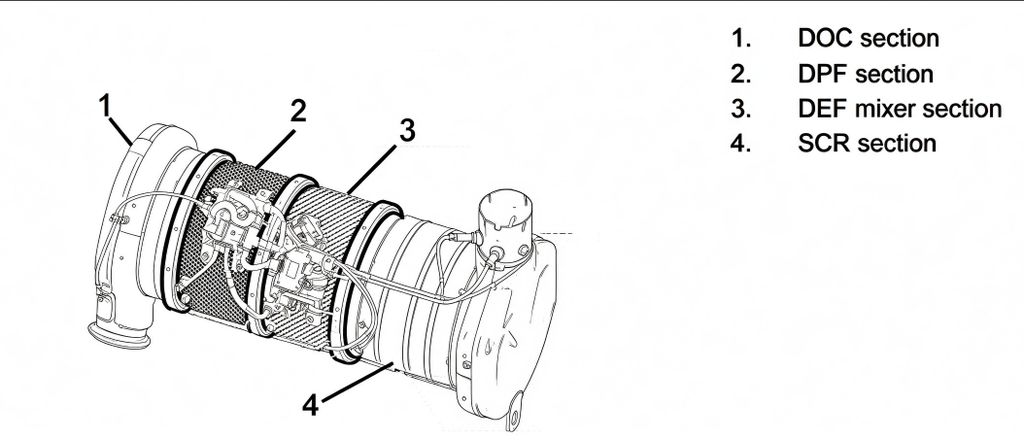
Some Caterpillar engines utilize emission control technologies, including DOC, DPF, SCR, and DEF.
DOC: Diesel Oxidation Catalyst
Used to treat some pollutants in exhaust gases and support related aftertreatment functions.
DPF: Diesel Particulate Filter
Used to capture particulate matter in diesel engine exhaust.
DEF: Diesel Exhaust Fluid
Typically used in engines equipped with an SCR system.
SCR: Selective Catalytic Reduction System
Reduces nitrogen oxide emissions through catalytic reactions.
Reference Table for Common Aftertreatment Fault Codes
| Fault Code | Fault Description | Common Troubleshooting Areas |
| 2458-2 | Abnormal DPF differential pressure sensor signal | Pressure sensing lines, sensor, wiring harness |
| 3251-2 | Abnormal particulate filter differential pressure signal | Differential pressure sensor and sensing lines |
| 3251-0 | Particulate filter differential pressure too high (critical severity) | DPF clogging, exhaust backpressure |
| 3216-2 | Abnormal NOx data at SCR inlet | Upstream NOx sensor and communication |
| 3226-2 | Abnormal NOx data at SCR outlet | Downstream NOx sensor and communication |
| 3719 Series | DPF soot load-related issues | Regeneration system, soot accumulation |
| 3031 Series | DEF tank temperature-related issues | Temperature sensor, heating system |
| 1761 Series | DEF tank level-related issues | DEF fluid level, level sensor |
| 3364 Series | DEF quality or concentration-related issues | DEF quality, concentration detection |
| 5246 Series | SCR-related emission inducement or restriction | SCR system and associated faults |
If you would like to learn more about Caterpillar engine aftertreatment systems, please refer to “Four Things To Know About Engine Aftertreatment”
How to clear Caterpillar fault codes?
Once the cause of the fault has been resolved, you can use a compatible diagnostic tool to view and clear any clearable historical fault records.
Using Cat ET
- Navigate to the diagnostic codes page.
- Review currently active and historical faults.
- Confirm that the relevant faults have been repaired.
- Clear historical codes using the options provided within the software.
- Restart the equipment and verify that the faults do not recur.
Using Jaltest
- Read the current fault codes.
- Inspect and repair the faults.
- Use the supported “clear” function to remove historical fault records.
- Re-check the system status.
Viewing Faults via the Equipment Monitoring System
- Some Caterpillar heavy equipment allows fault information to be viewed directly on the in-cab monitoring display.
- Procedures vary by model; please refer to the specific Operation and Maintenance Manual for your equipment.
- It is not recommended to attempt to clear faults by randomly unplugging diagnostic connectors, disconnecting terminal resistors, or repeatedly disconnecting the battery.
- Such actions may cause new communication issues and generally fail to resolve the underlying faults.
Cat ET vs. Jaltest: Which Diagnostic Tool Is a Better Fit?
If repair services are primarily focused on Caterpillar engines and construction equipment, Cat ET, used in conjunction with official repair manuals, is generally the better choice.
If a repair shop services equipment from different brands—such as Caterpillar, Volvo, Komatsu, and Cummins—it may be worth considering a multi-brand diagnostic platform like Jaltest.
FAQ
Can a Caterpillar engine continue to operate when a fault code is triggered?
It depends on the type and severity of the fault, and whether the engine’s protective control systems have been activated.
In the case of certain minor faults, the equipment may be allowed to operate for a short period.
Why does the fault light come back on after I have cleared the Caterpillar fault codes?
Because the underlying fault still exists. You should repair the fault first, and only then clear the associated history records.
Can Caterpillar fault codes be cleared by disconnecting the battery?
This is not recommended. Some electronic control systems store diagnostic information in non-volatile memory, and disconnecting the battery usually does not reliably clear fault records. The correct procedure is to inspect and repair the fault, then use an appropriate diagnostic tool to clear codes that are permitted to be cleared.