


Black smoke, slow hydraulics, engine warnings, and track wear can signal different Hitachi excavator problems. Start with the symptom and check visible causes before testing components.
This guide groups common questions by engine, hydraulics, undercarriage, and operation. Use the service manual for your machine when a procedure depends on its model.
Engine, Fuel, and Cooling
Engine Preheating vs. Hydraulic Oil Warmup
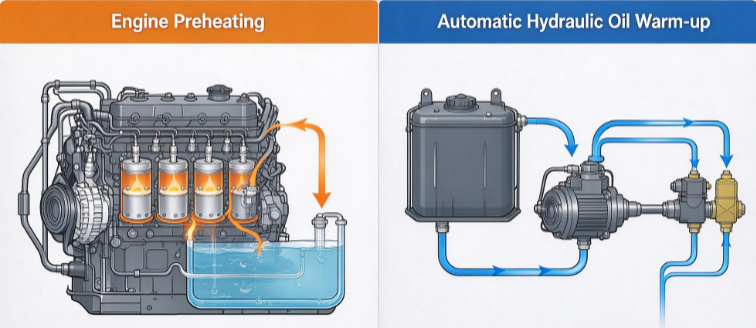
Engine preheating helps a diesel engine start in cold conditions. Some Hitachi models use glow plugs and the QOS preheating control system. Automatic hydraulic oil warmup serves a different purpose: after startup, the control system on some models adjusts engine speed and hydraulic operation to warm the oil.
Turbocharger vs. Intercooler
The turbocharger uses exhaust energy to drive a compressor, moving more air into the cylinders and increasing engine output at the same displacement. The intercooler cools that compressed air, increasing its density and the oxygen available for combustion.
Black Exhaust Smoke
A brief puff under sudden load can occur while fuel supply and intake air adjustment catch up. Continuous black smoke suggests incomplete combustion. Check the air filter, turbocharger, intercooler, and intake piping, then inspect injector atomization and the fuel injection system.
For a machine-specific example, see Hitachi ZX200-3 Black Smoke and Engine Stalling: Hydraulic Pump & Control System Troubleshooting. If testing identifies a faulty injector, the catalog lists an 8-97622035-1 fuel injector. Confirm the machine and engine before selecting it.
High Oil Consumption and Exhaust Residue
A small amount of oil can enter combustion through the piston rings, cylinder liners, turbocharger, or other areas. If consumption rises, check for external leaks and inspect crankcase ventilation, the turbocharger, and internal engine wear. Oil mist from crankcase ventilation can also condense in the lower exhaust pipe. Heavy dripping, blue smoke, or abnormal crankcase pressure calls for closer inspection of the rings, liners, and ventilation system.
Engine Overheating
Begin with coolant level and visible leaks, then check the radiator for external blockage. Other possible causes are a faulty thermostat, water pump or fan drive, or scale blocking the radiator internally.
Engine Oil Pressure Warning
Stop the machine safely and check oil level and leaks. A low level, clogged oil filter, oil pump failure, or internal lubrication leak can trigger the warning. If the level is normal but the warning persists, measure actual oil pressure before deciding on a repair.
Fan Belt Tension
A loose belt can slip and reduce fan or alternator drive; an overtight belt can increase bearing load. Use the fasteners and belt-tension procedure in the service manual for the exact ZX model.
Drain Below the Muffler
Some Hitachi exhaust systems have a drain that releases accumulated condensate and reduces water buildup inside the system.
Hydraulics and Work Equipment
Noise at the Boom, Arm, or Bucket
Check the joints for missing grease, worn bushings, excess clearance, and damaged pins or retainers. Lubricate the pins; if noise remains, inspect the pins and bushings for wear. The Excavator Common Problems: 20 Faults and Repair Guide covers related faults across machine systems.
Discolored Cylinder Rod
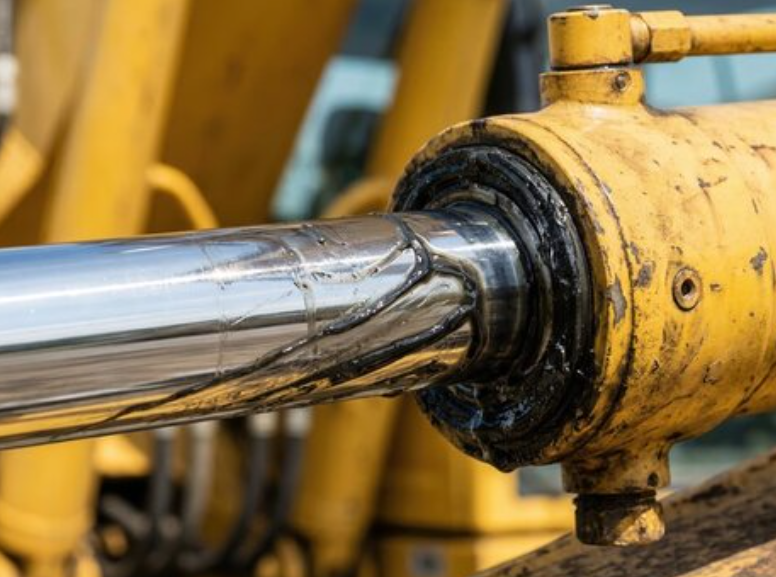
Oil additive deposits, friction-related heat, or contamination can change a piston rod’s color. Color alone does not establish failure if there are no scratches, rust, or seal damage. Inspect the rod and seals if you find corrosion, pitting, scratches, or oil leakage.
Excess Bucket-to-Arm Clearance
Too much clearance can cause wobble, impact, and faster joint wear. Some Hitachi models use shims to control it. Park on firm, level ground, release hydraulic pressure safely, and follow the service manual when adjusting shims. Do not add or remove them arbitrarily; that can affect the connection and work equipment movement.
Hydraulic Cylinder Drift
If the boom or arm slowly lowers after the machine stops, inspect pipes and fittings for leaks. Internal leakage in the control valve, damaged piston seals, or abnormal anti-drift valve operation may also be responsible.
Slow Hydraulic Operation
Start with oil level and condition, then inspect filters and the suction strainer. Check actual engine speed before testing pump output pressure and flow, the main control valve, and pilot pressure. Loss of pump efficiency, control faults, or leakage at the swing or travel motor can also slow operation. See 10 Signs of Hydraulic Pump Failure for pump symptoms.
If testing identifies a motor problem, the catalog includes an HMS072 swing motor repair parts kit and a 9156719 travel motor assembly. Match the listed component and machine before ordering.
Safety: Depressurize the hydraulic system before loosening fittings. Never check a suspected high-pressure leak by hand.
Auto Idle, Auto Acceleration, and Boost
Auto idle (A/I) lowers engine speed when its conditions are met and the levers stay neutral, then restores working speed when operation resumes. Auto acceleration (A/A) adjusts engine speed with load and hydraulic demand to balance efficiency and fuel use.
- HP mode: Adjusts engine output characteristics for higher-load work.
- Power boost: Briefly raises available hydraulic pressure to increase digging force.
- Auto power boost: Triggers boost according to operating load.
Grease Selection and Application
Grease requirements vary by point: lithium-based grease for routine points, extreme-pressure grease for higher contact pressure, molybdenum-based grease for some high-load wear points, and water-resistant grease where moisture is common.
For boom, arm, and bucket pins, park safely, clean the grease nipples, and apply grease slowly with a gun. Watch for old grease being expelled and check the joints for abnormal clearance.
Tracks, Bucket, and Travel Gear
Track Tension
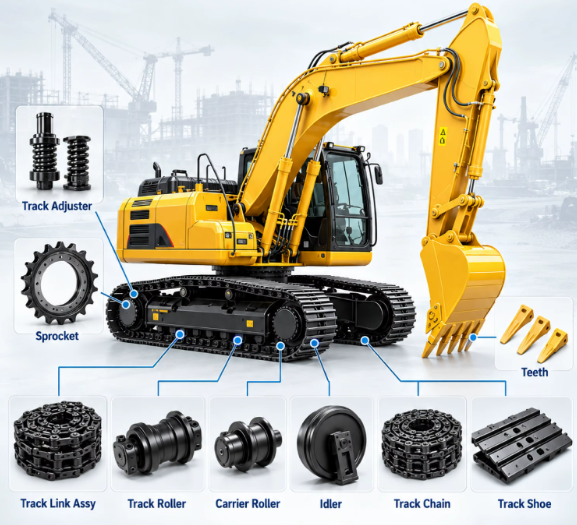
Track tension affects travel resistance, chain wear, and undercarriage life. Set tracks slightly tighter on flat, firm ground and slightly looser on rocky, uneven, or soft ground. Check the service manual before setting tension.
Bucket Teeth and Bucket Wear
Inspect teeth for wear or breakage, adapters for looseness, side plates for cracks, the bottom plate for severe wear, and pins and fasteners for damage. Replace severely worn teeth to avoid lower digging efficiency and extra adapter wear.
Bucket Welding
A bucket may be repaired or reinforced based on its wear, but adding weld material blindly can increase weight, alter stresses, and reduce digging efficiency. Confirm the base material, matching filler, welding process, and structural location; use qualified repair personnel when needed.
Pin and Bushing Wear
Pins and bushings face impact, friction, and working loads. Poor lubrication, excess clearance, mud or sand ingress, and prolonged overload can speed wear. If a joint wobbles or makes noise, inspect its pins, bushings, and connection holes, then replace worn parts as needed.
Travel Gearbox Oil Level
The travel reduction gearbox usually has drain, fill, and level-check ports. Follow the model’s service manual for machine position and plug orientation when checking oil. The wrong position can produce a false reading and lead to too little or too much gear oil.
Operation, Storage, and Identification
Finding the Manufacturing Date
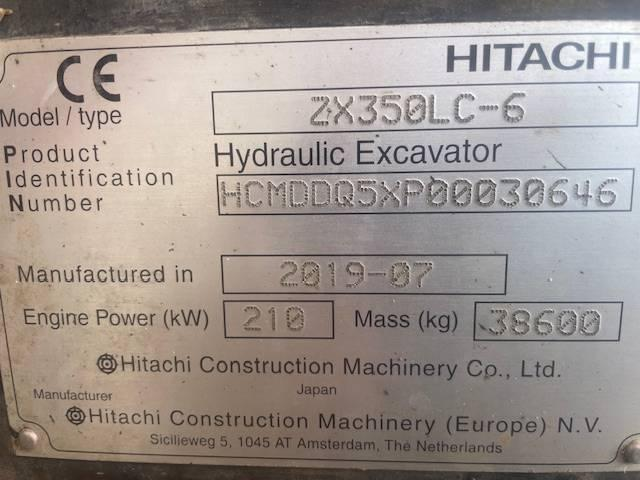
Check the equipment and engine nameplates, the frame serial number, and the manufacturer’s parts catalog. The Hitachi online parts finder is the manufacturer’s parts catalog resource.
Long-Term Storage
Clean the tracks, bucket, and undercarriage; inspect and repair visible damage; and check engine oil, hydraulic fluid, and coolant. Replace filters due under the maintenance schedule. Retract cylinder rods into a safe position as far as possible, protect the battery and exposed metal per storage guidance, and park on firm, level ground. Before returning to service, check fluid levels, piping, the electrical system, and work equipment.
How can an excavator avoid tipping over during operation?
Avoid high-load work on unstable ground, soft edges, unconfirmed slopes, and sudden turns on steep slopes. Avoid fast swinging with a full bucket. When traveling with a suspended load, follow the machine’s rated capacity and operating manual.
Choosing Travel Speed
Fast travel is generally suited to firm, flat, safe ground. Use slow travel in narrow spaces, complex terrain, slopes, and loading or unloading. For long travel, follow the specified travel time and cooling requirements while monitoring travel motor and reduction gearbox temperature.
What precautions should be taken when loading an excavator onto a flatbed trailer?
Confirm trailer capacity, ramp strength, and ground stability. Use suitable ramps, secure the trailer wheels, disable unnecessary auto idle functions, and select low-speed travel. Avoid steering or abrupt moves on the ramps, then secure the machine with the specified devices.
Break-In After Purchase or Overhaul
Follow manufacturer requirements when breaking in a new or overhauled engine, hydraulic system, and transmission components. Avoid prolonged full-load or continuous high-speed operation. Preheat as required, monitor engine and hydraulic temperatures, check for noise or leaks, and complete the first maintenance and fluid checks.
What to Do Next
Identify the symptom and check fluid levels, visible leaks, filters, and wear before testing pressure or replacing components. Compare any replacement with the machine’s model and service information. Browse hydraulic parts or request a parts quote with the machine and part details.


