

Unusual hydraulic pump noise is often an early warning sign of hydraulic system failure. Identifying the causes of hydraulic pump noise in time can help prevent further equipment damage.
This article explains the three most common causes of hydraulic pump noise: air ingress, mechanical wear, and hydraulic fluid problems. It also provides targeted troubleshooting methods and solutions to help identify the source of the problem quickly.
Air Ingress: Continuous Humming or Gurgling Noise
If the hydraulic pump produces a continuous humming or gurgling noise similar to bursting bubbles, air entering the hydraulic system should be the first thing to check.
When air enters the hydraulic oil, it forms numerous tiny bubbles. As these bubbles enter a high-pressure area and suddenly collapse, they produce abnormal noise, similar to the gurgling sound made when drinking through a straw.
What to Check:
- Check suction line connections and seals for air leaks.
- Make sure the hydraulic oil level in the reservoir is not too low.
- Check whether the return line is above the oil level, as this may cause air bubbles to form when oil returns to the tank.
Solutions:
After locating the air leak, replace damaged seals and tighten the pipe connections. Refill the hydraulic oil to the recommended level and adjust the return line so that it remains below the oil surface. These measures can help reduce air entering the system.
Mechanical Wear: Abnormal Metallic Noise
Regular clicking, knocking, or metallic friction noises usually indicate mechanical problems inside the hydraulic pump.
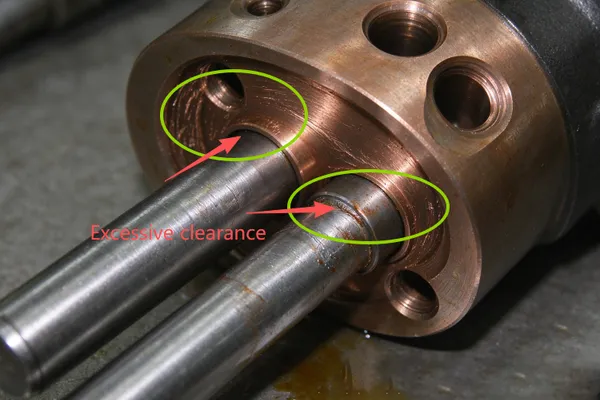
This is similar to the noise made by a bicycle chain without sufficient lubrication. Common causes include worn bearings, excessive clearance between the pistons and cylinder block, and improper coupling alignment. These noises usually become more noticeable as the pump speed increases.
What to Check:
- Check whether the bearings are worn.
- Inspect the clearance between the pistons and cylinder block.
- Check whether the coupling is damaged or improperly aligned.
Solutions:
Stop the machine immediately and inspect the internal hydraulic pump components and drive connection parts.
Components that are severely worn, damaged, or have clearances beyond the specified limits should be repaired or replaced to prevent further damage.
Continuing to operate the pump under faulty conditions can easily cause scoring on critical components such as the valve plate and rotor, potentially resulting in complete hydraulic pump failure.
Hydraulic Fluid Problems: Continuous Low-Pitched Rumbling Noise
When the hydraulic oil temperature is too high or its viscosity does not meet equipment requirements, the hydraulic pump may produce a continuous, low-frequency rumbling noise.
Hydraulic oil with excessively low viscosity can increase internal leakage and reduce volumetric efficiency. On the other hand, excessively high viscosity may increase suction resistance and lead to insufficient oil supply.
In addition, a clogged filter can restrict oil flow, resulting in insufficient oil supply to the pump inlet. This may even cause cavitation, which produces a characteristic high-pitched whistling noise.
What to Check:
- Low hydraulic oil viscosity: May increase internal leakage and reduce volumetric efficiency.
- High hydraulic oil viscosity: May increase suction resistance and cause insufficient oil supply.
- Excessively high oil temperature: May reduce oil viscosity and increase internal leakage.
- Clogged filter: May restrict oil flow and result in insufficient oil supply to the pump inlet.
Solutions:
Monitor hydraulic oil temperature regularly, use hydraulic oil that meets the equipment manufacturer’s specifications, and clean or replace filters according to the maintenance schedule to ensure a sufficient and uninterrupted oil supply.
The key to diagnosing hydraulic pump noise is to identify the problem by listening to the sound.
Hydraulic Pump Noise Troubleshooting Quick Reference
| Noise Type | Possible Causes | Priority Inspection Areas |
|---|---|---|
| Humming or gurgling noise | Air ingress, cavitation | Suction line, oil seals, oil level |
| Metallic noise | Mechanical wear | Bearings, pistons, slippers |
| Low-pitched rumbling noise | Incorrect oil viscosity, internal leakage | Hydraulic oil, oil temperature, pump interior |
| High-pitched whistling noise | Insufficient suction, cavitation, abnormal pressure | Filters, suction line, control valve |
If you would like to learn about more potential faults in hydraulic pumps, please refer to “Hydraulic Pump Failure? 10 Signs and How to Confirm It”
For further information on repairing hydraulic pumps, please refer to “When to Choose Hydraulic Pump Repair vs Replacement”.
For more detailed troubleshooting information, refer to the Parker Hydraulic Pump Service Manual, which provides additional guidance on common hydraulic pump problems.
Conclusion
The key to diagnosing hydraulic pump noise is to identify the problem by listening to the sound:
- Humming or gurgling noise: Check for air entering the hydraulic system.
- Metallic noise: Inspect internal mechanical components for wear.
- Low-pitched rumbling noise: Check hydraulic oil viscosity, oil temperature, and the internal condition of the pump.
- High-pitched whistling noise: Check for insufficient suction, cavitation, and abnormal pressure.
Understanding the characteristics of different hydraulic pump noises and knowing where to look can help identify faults quickly, reduce equipment downtime, and lower maintenance costs.
FAQ
Why is my hydraulic pump making a loud noise?
A hydraulic pump may produce loud noise due to air entering the system, cavitation, worn internal components, incorrect hydraulic oil viscosity, or a clogged filter. Check the suction line, oil level, filters, and pump components to identify the cause.
How can I tell if my hydraulic pump is experiencing cavitation?
Hydraulic pump cavitation often produces a high-pitched whining or rattling noise. Common causes include a clogged suction filter, restricted suction line, low oil level, or excessively high oil viscosity. Check the pump inlet and oil supply system to prevent further damage.
Can low hydraulic oil levels cause pump noise?
Yes. A low hydraulic oil level can allow air to enter the suction line, causing abnormal humming or gurgling noises. It may also lead to insufficient oil supply and cavitation. Always maintain the oil level within the manufacturer’s recommended range.
What type of hydraulic oil should I use to prevent pump noise?
Always use hydraulic oil with the viscosity grade recommended by the equipment manufacturer. Incorrect oil viscosity can increase internal leakage or suction resistance, resulting in abnormal pump noise and reduced performance.
Can I continue operating an excavator if the hydraulic pump makes abnormal noise?
No. Continuing to operate an excavator with abnormal hydraulic pump noise may cause further damage to internal components, such as bearings, pistons, and the valve plate. Stop the machine and inspect the hydraulic system to identify the problem before resuming operation.


