


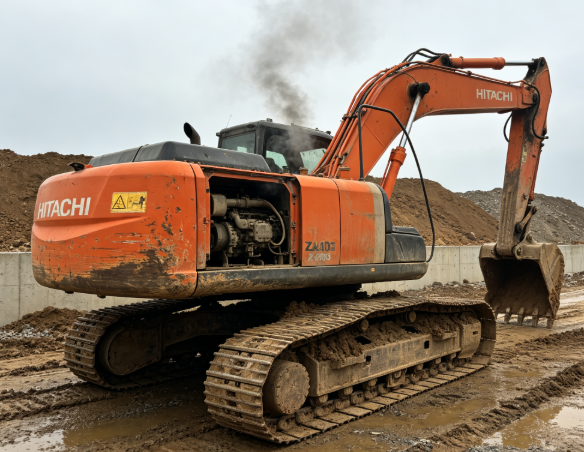
Hitachi ZX200-3 black smoke and engine stalling can occur when the engine is overloaded by the hydraulic system or when the pump control system fails to regulate pump output correctly.
The engine ran normally during standalone testing after the overhaul. However, after the engine was reinstalled in the excavator, it began producing black smoke and would stall when the hydraulic controls were operated.
Because the engine itself operated normally when disconnected from the hydraulic system, troubleshooting focused on the relationship between engine output, hydraulic pump load, and the electronic pump control system.
When diagnosing Hitachi ZX200-3 black smoke, it is important to inspect both the engine and the hydraulic pump control system rather than assuming the engine itself is faulty.
Fault Symptoms
After the engine was reinstalled, the following symptoms were observed:
- The engine produced noticeable black smoke at idle.
- The engine sounded as though it was already under load even when the control levers were in neutral.black smoke
- Black smoke became heavier as engine speed increased.
- The engine stalled almost immediately when a boom, arm, bucket, swing, or travel function was operated.
Since the engine had operated normally during standalone testing, the initial diagnosis suggested that the problem was not necessarily an internal engine failure.
Instead, excessive hydraulic load or incorrect pump control became the primary suspect.
Check the Hydraulic Pump First
One possible cause of black smoke and engine stalling is excessive hydraulic pump displacement.
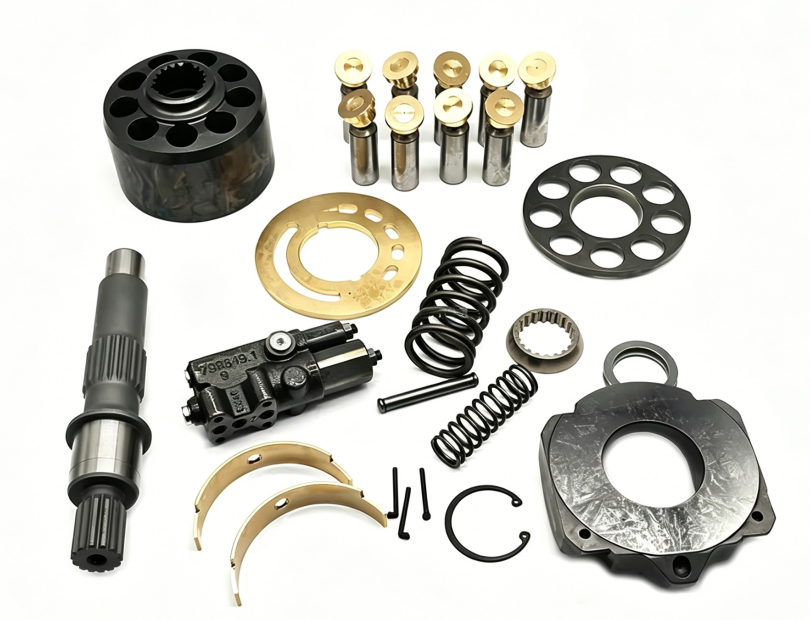
The ZX200-3 uses two variable-displacement axial-piston main pumps. Its hydraulic system also incorporates an engine speed sensing control system intended to coordinate pump output with engine power.
If the pump regulator, swash plate, or internal rotating group becomes stuck, the pump may remain at an excessive displacement.
This can place a heavy load on the engine even before significant hydraulic work is performed.
Possible mechanical causes include:
- Sticking pump regulator
- Swash plate malfunction
- Piston or cylinder block damage
- Internal pump seizure
- Regulator spool sticking
- Incorrect pump adjustment
To separate an engine problem from a hydraulic load problem, the pump drive and hydraulic loading conditions should be checked carefully.
If the engine runs normally when hydraulic pump load is removed, attention should shift toward the pump and its control system.
Inspect the Hydraulic Pump Internally
If excessive pump loading is suspected, inspect the hydraulic pump for mechanical damage.
Important components include:
- Swash plate
- Piston shoe
- Cylinder block
- Valve plate
- Pump shaft
- Bearing
- Pump regulator
- Internal moving parts
Check for:
- Scoring
- Seizure
- Abnormal wear
- Broken components
- Metal contamination
- Restricted movement
If the pump rotating group and regulator move normally and no significant mechanical damage is found, do not immediately replace the complete hydraulic pump.
The next step is to check the electronic and hydraulic pump control system.
Troubleshooting Focus Shifts to the Electronic Control System
The ZX200-3 control system includes:
- MC — Main Controller
- ECM — Engine Control Module
- ICF — Information Controller
- Monitor unit
- Pump delivery pressure sensors
- Pump control pressure sensors
- Engine speed information
- Torque control solenoid valve
- Related wiring and CAN communication
The MC, ECM and ICF as key controllers in the ZX200-3 system.
How ZX200-3 Pump Control Works
The ZX200-3 uses speed sensing control to prevent excessive hydraulic pump load from stalling the engine.
The operating principle is roughly as follows:
- The operator sets the required engine speed with the engine control dial.
- The ECM detects actual engine speed.
- Engine-speed information is transmitted to the MC through CAN communication.
- The MC compares target engine speed with actual engine speed.
- The MC sends a signal to the torque control solenoid valve.
- The torque control solenoid valve changes pilot pressure to the pump regulator.
- The regulator adjusts the main pump swash angle and pump delivery flow.
If engine speed falls because hydraulic load becomes too high, the system should reduce pump swash angle and pump flow, decreasing the load placed on the engine.
This function is particularly important when the machine is operating under high hydraulic load.
Why a Control Failure Can Cause Black Smoke and Stalling
If the electronic pump control system does not respond correctly, the main pumps may continue demanding excessive engine power.
Possible causes include:
- Torque control solenoid valve failure
- Pump regulator sticking
- Pump control pressure sensor fault
- Pump delivery pressure sensor fault
- Engine speed signal fault
- MC power supply problem
- ECM communication fault
- CAN communication problem
- Damaged wiring or electrical connectors
- Incorrect electrical connection after engine installation
Under these conditions, the engine may behave as though it is continuously overloaded.
Typical symptoms can include:
- Heavy black smoke
- Engine speed dropping sharply
- Engine bogging under hydraulic load
- Engine stalling when a control lever is operated
- Slow or abnormal hydraulic response
Check the MC, ECM and Related Signals
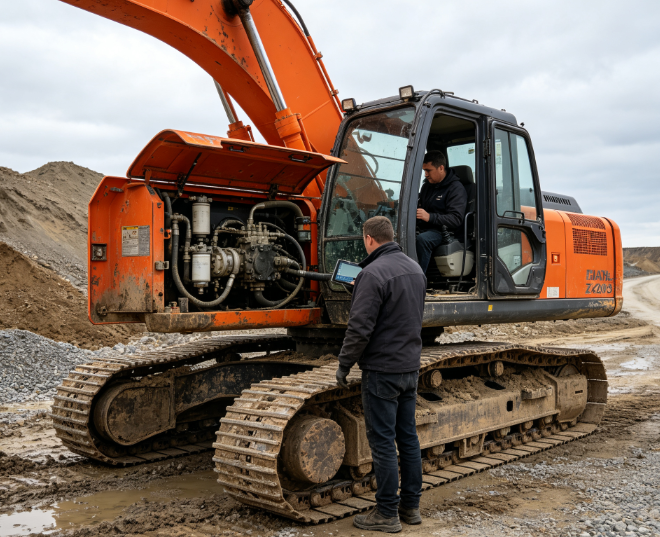
Before disassembling the hydraulic pump again, check the electronic control system.
Start with:
MC Power Supply
Check:
- Battery voltage
- Main controller power supply
- Grounds
- Fuses
- Connectors
A poor power supply or ground connection can prevent the MC from correctly controlling pump output.
ECM and Engine Speed Signal
The MC relies on actual engine-speed information supplied through the engine control system.
If engine speed information is missing or incorrect, pump torque control may not respond properly.
Check:
- Engine speed data
- ECM connectors
- CAN communication
- Related wiring harnesses
- Pump Delivery Pressure Sensors
The ZX200-3 monitors Pump 1 and Pump 2 delivery pressure.
Incorrect pressure sensor signals can cause the controller to calculate hydraulic load incorrectly.
Inspect:
- Sensor connectors
- Wiring
- Supply voltage
- Signal voltage
- Pressure readings
Compare displayed or measured values with the actual hydraulic pressure where possible.
Pump Control Pressure Sensors
Pump control pressure information is also used by the machine control system.
A damaged sensor or disconnected harness may interfere with pump control calculations.
Inspect both Pump 1 and Pump 2 control pressure circuits.
Inspect the Torque Control Solenoid Valve
The torque control solenoid valve is particularly important when diagnosing a ZX200-3 that stalls under hydraulic load.
The MC controls this solenoid to regulate pilot pressure to the pump regulator.
That pilot pressure changes the main pump swash angle and therefore pump delivery flow.
If the solenoid valve:
- Sticks
- Loses electrical power
- Has an open or short circuit
- Receives an incorrect command
- Has contaminated internal components
pump output may no longer match engine power.
Check:
- Coil resistance
- Connector condition
- Wiring continuity
- Power and control signal
- Solenoid movement
- Hydraulic pilot pressure
Inspect Wiring After Engine Removal and Installation
Because the symptoms appeared after the engine was removed, repaired, and reinstalled, wiring disturbed during the overhaul should receive particular attention.
Check all disconnected connectors around:
- Engine
- ECM
- Main pump
- Pump sensors
- Torque control solenoid
- Engine speed-related circuits
- Main controller wiring
Look for:
- Bent terminals
- Corrosion
- Water contamination
- Oil contamination
- Loose pins
- Damaged insulation
- Pinched wiring
- Incorrectly connected plugs
Connectors that were left exposed during engine repair may allow water, oil, dirt, or other contamination to enter.
This can create intermittent signals, shorts, open circuits, or abnormal sensor readings.
Check the Fuses — But Use the Correct Rating
For the ZX200-3, check the appropriate fuse box and control circuits according to the machine electrical diagram.
Never install a higher-rated fuse simply because the correct fuse repeatedly blows.
A blown fuse indicates that the underlying circuit should be inspected for:
- Short circuit
- Damaged wiring
- Water intrusion
- Failed solenoid
- Failed controller or sensor
Using a fuse with a higher amperage rating can allow excessive current to damage wiring or electronic controllers.
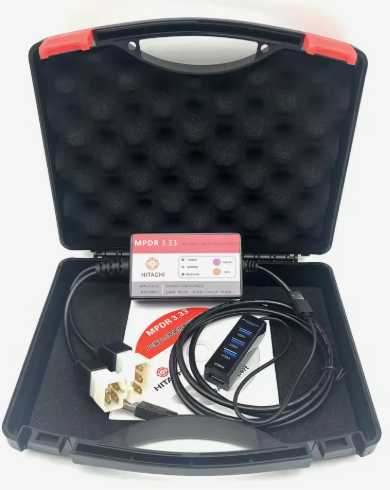
Use Diagnostic Data Before Replacing Components
The ZX200-3 has a considerably more advanced electronic control system than earlier EX-series machines.
Diagnostic information should therefore be checked before replacing expensive hydraulic components.
Useful information includes:
- Engine speed
- Pump 1 delivery pressure
- Pump 2 delivery pressure
- Pump control pressure
- Hydraulic oil temperature
- Sensor status
- Controller fault codes
- CAN communication faults
refers to Dr. ZX diagnostic functions used with the machine control system.
A diagnostic check can help determine whether the problem is mechanical, hydraulic, or electronic.
Do Not Replace the Main Pump Too Quickly
When a ZX200-3 produces black smoke and stalls when the hydraulic controls are operated, it is tempting to conclude that the hydraulic pump has failed.
However, similar symptoms can also result from:
- Incorrect pump regulation
- Torque control solenoid failure
- Sensor faults
- MC faults
- ECM communication problems
- Wiring problems
- Abnormal pilot control pressure
Therefore, the pump should not be replaced until both its mechanical condition and control system have been tested.Hitachi also offers remanufactured hydraulic pumps for selected excavator models, including the ZX200-3.
Recommended Troubleshooting Sequence
For a Hitachi ZX200-3 showing black smoke and stalling under hydraulic load, a practical troubleshooting sequence is:
- Step 1: Verify the engine itself operates normally.
- Step 2: Check whether the engine is already under hydraulic load with all control levers in neutral.
- Step 3: Check main pump mechanical condition and regulator movement.
- Step 4: Inspect pump delivery and pump control pressures.
- Step 5: Check the torque control solenoid valve.
- Step 6: Check MC and ECM power supplies and grounds.
- Step 7: Inspect engine speed and pressure sensor signals.
- Step 8: Check CAN communication and fault codes.
- Step 9: Inspect wiring and connectors disturbed during the engine overhaul.
- Step 10: Only after these checks should the main pump or controller be considered for replacement.
Repair Precautions
Protect Electrical Connectors During Engine Removal
Whenever an engine or hydraulic component is removed, immediately cap or seal exposed electrical connectors.
Prevent:
- Water
- Diesel fuel
- Engine oil
- Hydraulic oil
- Dust
- Metal contamination
from entering connectors.
Before reconnecting the harness, inspect and clean each plug.
Do Not Change Fuse Ratings
Always replace a blown fuse with the correct specified rating.
Never use:
- Higher-amperage fuses
- Copper wire
- Steel wire
- Other conductors
as substitutes.
Doing so can eliminate circuit protection and damage expensive electronic modules.
Check Electronic Control Before Pump Disassembly
If the machine has:
- Black smoke
- Engine bogging
- Engine stalling when controls are operated
- Abnormally heavy hydraulic load
- Poor engine-to-pump matching
check the electronic control system before repeatedly disassembling the hydraulic pump.
Conclusion
A Hitachi ZX200-3 excavator that produces black smoke and stalls when the hydraulic controls are operated may initially appear to have a serious engine or main hydraulic pump problem.
However, the ZX200-3 uses an electronically controlled pump system in which the MC, ECM, pressure sensors, torque control solenoid valve, and pump regulators work together to match hydraulic pump output with available engine power.
If this control system fails, the main pump may demand excessive engine power, causing:
- Heavy black smoke
- Engine speed drop
- Engine bogging
- Stalling under hydraulic load
For this reason, troubleshooting should include not only the engine and hydraulic pump, but also:
- MC
- ECM
- Torque control solenoid valve
- Pump pressure sensors
- Engine speed signal
- Pump regulators
- CAN communication
- Wiring harnesses and connectors
A systematic diagnosis can prevent unnecessary replacement of an expensive main hydraulic pump when the actual problem is electrical or control-related.
FAQ
What causes Hitachi ZX200-3 black smoke?
Hitachi ZX200-3 black smoke may be caused by excessive engine load, incorrect hydraulic pump displacement, pump regulator problems, a faulty torque control solenoid, sensor faults, or engine-related issues.
Why does my Hitachi ZX200-3 engine stall when I move the control lever?
If the engine stalls when the boom, arm, bucket, swing, or travel controls are operated, the hydraulic pump may be demanding more power than the engine can provide. The hydraulic pump, regulator, torque control solenoid, pressure sensors, wiring, and electronic control system should all be checked.
Does black smoke always mean the engine is faulty?
No. Black smoke can be caused by an engine or fuel-system problem, but on an excavator it may also occur when excessive hydraulic load causes the engine to bog down. The engine and hydraulic system should therefore be diagnosed together.
Can a hydraulic pump problem cause the engine to stall?
Yes. If the main hydraulic pump remains at excessive displacement or the pump regulator cannot reduce pump output correctly, the engine may experience excessive load and stall when hydraulic functions are operated.
What should be checked before replacing the ZX200-3 hydraulic pump?
Before replacing the complete pump, check the pump regulator, swash plate and internal components, pump delivery pressure, pump control pressure, torque control solenoid valve, pressure sensors, controller power supply, wiring, and electrical connectors.
What does the torque control solenoid do on a Hitachi ZX200-3?
The torque control solenoid works with the pump regulator and electronic control system to help adjust hydraulic pump output according to available engine power. A fault in this circuit may result in poor engine-to-pump power matching.
Can wiring problems cause hydraulic pump control issues?
Yes. Loose connectors, damaged wiring, corrosion, oil or water contamination, poor grounds, or incorrect connections can interfere with sensor and control signals. Wiring should be inspected carefully, especially after engine or hydraulic component removal.
What should I check after an engine overhaul if the ZX200-3 begins stalling?
Check all wiring harnesses and electrical connectors that were disconnected during the overhaul. Also inspect engine speed signals, pump pressure sensors, controller power and grounds, torque control solenoid wiring, and pump regulator operation.
Should I replace the main hydraulic pump immediately if the engine stalls under load?
Not necessarily. Similar symptoms can result from electronic or hydraulic control faults even when the pump rotating group is still mechanically serviceable. A complete diagnosis should be performed before replacing the pump.
What are the common signs of a ZX200-3 hydraulic pump control problem?
Common symptoms may include:
- Engine black smoke
- Engine speed dropping under load
- Engine stalling when controls are operated
- Abnormally heavy engine load
- Slow hydraulic response
- Poor combined operation
- Abnormal pump noise
- Hydraulic performance that changes unexpectedly
Can a faulty pressure sensor affect hydraulic pump performance?
Yes. Incorrect pump pressure or control-pressure signals can interfere with the controller’s ability to regulate hydraulic pump output correctly. Sensor wiring and actual pressure readings should be checked during troubleshooting.
Why should fault codes be checked before disassembling the hydraulic pump?
Fault codes and machine operating data can help identify sensor, wiring, communication, or control-system problems. This can prevent unnecessary disassembly or replacement of an expensive hydraulic pump.


