

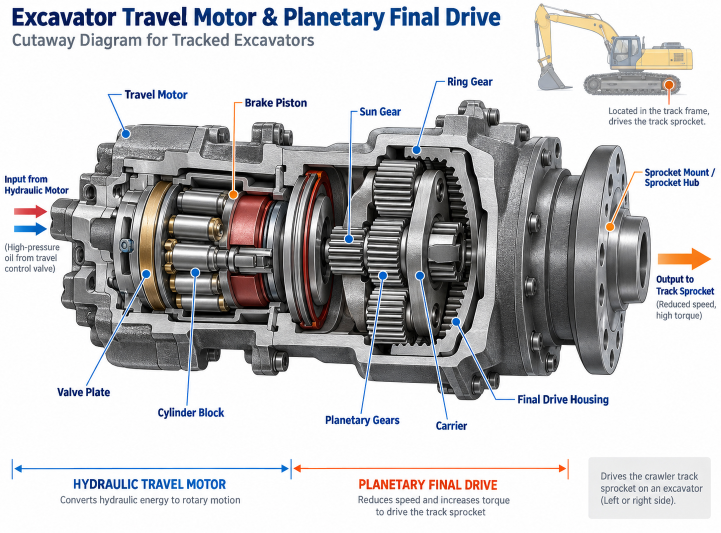
Excavator final drive is one of the most important components in an excavator travel system. It transfers power from the hydraulic travel motor through a reduction gearbox, increasing torque before driving the sprocket and track.
When an excavator final drive begins to fail, early symptoms may include unusual noise, gear oil leakage, overheating, jerking, or poor travel performance. If these warning signs are ignored, relatively minor wear can develop into damaged bearings, planetary gears, shafts, seals, or even a completely seized final drive.
One important point should be understood before troubleshooting: the travel motor and the final drive are related, but they are not the same component.
The hydraulic travel motor converts hydraulic pressure and flow into rotational force. The final drive reduction gearbox then reduces speed and increases torque before transferring power to the sprocket.

1、Common Faults of Excavator Final Drive
1.1 Abnormal Final Drive Noise
Unusual noise is one of the clearest warning signs of an excavator final drive problem.
A healthy reduction gearbox should operate relatively smoothly. Grinding, clicking, knocking, growling, or high-pitched whining may indicate mechanical wear inside the gearbox.
Common causes include worn planetary gears, damaged bearings, insufficient lubrication, damaged gear teeth, excessive shaft play, or contaminated gear oil.
The type of noise can sometimes provide useful clues.
A repetitive clicking or knocking sound may indicate damaged gear teeth or excessive backlash. A grinding sound often points toward bearing or gear damage, while a growling noise that increases with travel speed may indicate severe internal wear.
However, a high-pitched hydraulic whining sound does not always mean the final drive gearbox itself has failed. Hydraulic pressure problems, cavitation, or internal wear inside the travel motor can create similar symptoms.
For this reason, noise should always be diagnosed together with oil condition, hydraulic performance, temperature, and travel behavior.
1.2 Final Drive Gear Oil Leakage
The reduction gearbox depends on gear oil to lubricate its gears and bearings. Continued leakage lowers the oil level and can quickly lead to overheating, increased friction, and serious internal damage.
Common leak sources include:
- floating seal
- damaged shaft seal
- deteriorated O-rings
- excessive bearing play
- damaged sealing surfaces
- cracked housings
- excessive internal pressure
Overfilling the final drive with gear oil can also contribute to leakage.
When checking a leak, determine whether the fluid is actually gear oil from the reduction gearbox or hydraulic oil from the travel motor.
Gear oil is normally thicker and has a characteristic odor, while hydraulic oil is usually thinner. Identifying the fluid type helps determine which side of the assembly requires inspection.
1.3 Final Drive Overheating
Abnormally high final drive temperature is another important warning sign.
Some heat is normal during operation, especially during long travel periods or heavy-duty work. However, one final drive operating significantly hotter than the opposite side should be investigated.
Possible causes include:
- insufficient gear oil
- contaminated lubricant
- incorrect oil viscosity
- bearing damage
- gear wear
- excessive track tension
- internal binding
- sustained heavy-load operation
A final drive that continues overheating after the gear oil has been checked may already have internal mechanical damage.
Comparing left- and right-side temperatures under similar operating conditions can help identify an abnormal condition.
If the housing becomes excessively hot, stop operating the machine and inspect the system before continuing work.
1.4 Metal Particles in Final Drive Oil

Final drive oil can provide valuable information about internal gearbox condition.
When changing the gear oil, inspect both the drained oil and the magnetic drain plug.
A small amount of very fine metallic paste may occur as components wear normally over time. However, obvious metal flakes, chips, sharp fragments, or unusually large amounts of metallic material can indicate serious gear or bearing damage.
Metal debris may originate from planetary gears, the sun gear, ring gear, bearings, shafts, or other internal components.
Water contamination is another major concern. Milky or cloudy gear oil may indicate that water has entered the gearbox.
Contaminated oil reduces lubrication quality and can accelerate corrosion and wear.
If large metal particles are found, simply replacing the gear oil is usually not enough. The final drive should be opened and inspected before further operation.
1.5 Jerking, Binding, or Track Lock-Up
A final drive with severe internal damage may no longer rotate smoothly.
The machine may jerk while traveling, stop intermittently, or feel as if one track is binding.In severe cases, the track may lock completely.
Possible mechanical causes include:
- damaged planetary gears
- broken gear teeth
- failed bearings
- seized shafts
- debris trapped inside the reduction gearbox
Track and undercarriage problems should also be ruled out.
An overly tight track, damaged rollers, seized idlers, or foreign material trapped in the undercarriage can create resistance that feels similar to final drive failure.
Before removing the final drive, inspect the complete undercarriage and confirm that the track can move freely.
1.6 Weak or Slow Travel
Weak travel is commonly blamed on the final drive, but this diagnosis is often made too quickly.
A reduction gearbox with damaged gears or bearings can reduce travel performance, but weak travel is more commonly associated with the hydraulic side of the system.
Possible causes include travel motor internal leakage, low hydraulic pressure, insufficient pump flow, control valve problems, center swivel leakage, restricted hoses, brake release problems, or excessive case drain flow.
A useful clue is whether the machine becomes weaker after the hydraulic oil heats up.
If travel performance is acceptable when cold but becomes noticeably weaker at operating temperature, internal hydraulic leakage inside the travel motor may be more likely than a mechanical final drive problem.
If the gearbox produces no mechanical noise and the gear oil contains no metal debris, hydraulic testing should usually be performed before replacing the final drive.
1.7 Final Drive Gear Oil Contamination
Dirty or degraded gear oil can significantly shorten final drive life.
Common contamination sources include:
- water
- internal metal wear
- damaged seals
- degraded lubricant
- dirt introduced during maintenance
Old oil can lose viscosity and lubrication performance after repeated exposure to heat and heavy loads.During maintenance, check the oil for discoloration, burnt odor, water, suspended metal particles, and unusual thickness.
Using the correct oil specification is equally important.
Oil that is too thin may not provide adequate film strength, while oil that is too thick may increase drag and reduce lubrication during cold operation.
2、Excavator travel motor vs Excavator final drive: how to tell which one is bad?
This is one of the most important parts of diagnosing excavator travel problems.
| Symptom | More Likely Travel Motor / Hydraulic System | More Likely Final Drive Gearbox |
|---|---|---|
| Weak or slow travel | Yes | Sometimes |
| Performance becomes worse when hot | Yes | Less common |
| Excessive case drain flow | Yes | No |
| Hydraulic pressure abnormal | Yes | No |
| Grinding or mechanical clicking | Less likely | Yes |
| Metal debris in gear oil | No | Yes |
| Gear oil leak | No | Yes |
| Final drive locks or binds | Possible | Yes |
| Hydraulic oil leaking from motor | Yes | No |
| Damaged planetary gears | No | Yes |
The key distinction is relatively simple:
- Travel motor problems are usually hydraulic performance problems.
- Final drive gearbox problems are usually mechanical transmission problems.
If an excavator is weak but operates smoothly without grinding, binding, or metal contamination, check the hydraulic system first.
If the machine makes strong mechanical noises, gear oil contains metal particles, or the track periodically locks, the final drive gearbox deserves closer inspection.
3、How to Diagnose Excavator Final Drive Problems
A systematic inspection is more reliable than replacing parts based only on symptoms.
3.1 Visual Inspection
Inspect the final drive housing, gaskets, and oil seals for damage, wear, or oil leakage/dripping.
Check the tension of the tracks and sprockets; tracks that are too tight or damaged place extra strain on the final drive, leading to power loss and overheating.
Inspect the housing’s drain filter element; a clog restricts hydraulic oil flow and causes abnormal travel performance.
3.2 Auditory Diagnosis
Listen for unusual noises during operation: grinding, roaring, or whining sounds, as well as machine vibration, are all signs of bearing or gear wear.
Test at various travel speeds and loads to observe changes in noise; a high-pitched whine at high speeds often indicates insufficient hydraulic pressure or internal component wear. Do not continue operating the machine if abnormal noises are detected.
3.3 Hydraulic Pressure Testing
Hydraulic pressure determines the output performance of the final drive. Test the pressure against the manufacturer’s specifications.
Common causes of low pressure include clogged filter elements, damaged hydraulic lines, or hydraulic motor failure.
Simultaneously check fittings for looseness or leaks. Issues such as the excavator pulling to one side or heavy steering are often linked to insufficient hydraulic pressure. Regular pressure testing helps prevent sudden failures and extends the service life of components.
3.4 Gear Oil & Hydraulic Oil Analysis
The oil serves as a “health report” for the final drive; its condition allows for the prediction of internal wear.
- Contamination Check: Oil that is cloudy, discolored, or contains impurities/water indicates contamination and lubrication failure; it must be drained and replaced.
- Oil Level Monitoring: Low oil levels lead to insufficient lubrication, overheating, and wear; excessively high levels put pressure on oil seals, causing leaks. Fill according to manufacturer specifications.
- Oil Quality Assessment: Prolonged exposure to high temperatures and pressures causes the oil to age and thicken, losing its lubricating properties and increasing the risk of component damage.
- Wear Assessment: The presence of metal particles in the oil indicates gear or bearing wear, requiring disassembly and inspection.
4、Excavator Final Drive :rapid fault diagnosis and resolution plans
4.1 Handling Oil Leakage
- Locate the leak source and inspect oil seals and gaskets; replace any seals that are worn or aged.
- After repair, check the oil level and top up with gear oil to the standard range; do not overfill, as this can damage the oil seal again.
- Continue to monitor for leaks to prevent recurrence.
4.2 Handling Overheating
- Check gear oil first: insufficient oil or contamination are common causes. Drain old oil, clean the housing, and fill with fresh, compliant gear oil.
- Inspect the hydraulic circuit: replace clogged filter elements and repair damaged hoses to ensure smooth oil circulation.
- Avoid overloading and reduce continuous load on the final drive; if a high-temperature alarm triggers, shut down immediately to cool the unit and investigate the cause.
4.3 Troubleshooting Insufficient Travel Power
- Test hydraulic system pressure; replace clogged filters and repair damaged lines to restore proper pressure.
- Check gear oil and hydraulic oil; perform a complete oil change if contamination is found.
- Operate according to specifications and avoid prolonged overloading. If power loss is particularly noticeable when operating under heavy loads on slopes, focus on inspecting gears and bearings for wear.
4.4 Eliminating Abnormal Noise
- Identify the type of noise: friction sounds usually indicate gear or bearing wear; low-speed rumbling or high-speed whining is often related to hydraulic pressure.
- Visually inspect final drive components; tighten loose parts and replace damaged ones.
- Check oil level and quality; replace with new oil if the level is low or the oil is contaminated.
- Test hydraulic system pressure and address any line blockages or leaks.
- Test under various operating conditions to see if the noise intensifies during heavy loading or hill climbing, helping to assess the extent of wear.
5、When Should Excavator Final Drive Be Repaired or Replaced?
Minor problems such as an external leak may sometimes be repaired without replacing the complete assembly.

A full rebuild or replacement becomes more likely when the gearbox has broken gear teeth, severe bearing damage, damaged shafts, extensive metal contamination, cracked housings, or repeated seizure.
Before ordering a replacement final drive, confirm the exact machine and component information.
6、Excavator Final Drive Maintenance Tips
- Regularly check the gear oil level and top up as needed, ensuring not to overfill;
- Monitor the condition of the oil; replace it immediately if discoloration, impurities, or water ingress are detected;
- Regularly clean or replace the housing’s oil drain filter element to ensure proper hydraulic oil flow;
- Routinely inspect oil seals and gaskets, and promptly address any leaks;
- Periodically check gears, bearings, and sprockets for wear, and replace damaged components proactively.
7、Proper operating habits protect the excavator final drive.
Operating habits directly determine the service life of the excavator final drive:
- Strictly prohibit overloading; do not exceed the equipment’s rated load.
- Perform travel, starting, stopping, and steering movements smoothly; avoid abrupt starts or sharp turns that could shock the drive components.
- Reduce travel speed on rugged, rocky terrain to avoid impact.
- Avoid prolonged high-speed travel; sustained high speeds cause rapid temperature rises and accelerate component wear.
8、Conclusion
Excavator final drive failures do not occur suddenly; oil leaks, abnormal noises, overheating, and sluggish travel performance are all early warning signs. Consistent daily visual inspections, fluid analysis, proper operation, and preventive maintenance can significantly reduce travel system failures, lower major overhaul costs, and ensure continuous site operations. However, should complex issues arise—such as severe internal component wear or housing damage
FAQ
1.What does a failing excavator final drive sound like?
A failing final drive may produce grinding, clicking, knocking, growling, or repetitive mechanical noises. Noise that changes directly with travel speed may indicate gear or bearing wear.
2.Can a bad final drive cause weak travel?
Yes, severe mechanical damage can reduce travel performance. However, weak travel is often caused by the travel motor or hydraulic system, so hydraulic pressure and case drain flow should be checked before replacing the final drive.
3.Why is my excavator final drive leaking oil?
Common causes include worn floating seals, damaged shaft seals, excessive bearing play, damaged sealing surfaces, overfilled gear oil, or housing damage.
4.Why is there metal in my final drive oil?
Metal particles generally indicate internal wear. Fine metallic paste may occur gradually, but visible flakes, chips, or fragments can indicate damaged bearings or gears and require further inspection.
5.Can a excavator final drive fail suddenly?
Severe failures can appear sudden, but many final drive problems give earlier warning signs such as abnormal noise, oil leakage, overheating, metal contamination, or intermittent binding.
Farinparts supplies replacement final drives, travel motors, hydraulic components, and related heavy-equipment parts for excavators and construction machinery.


