


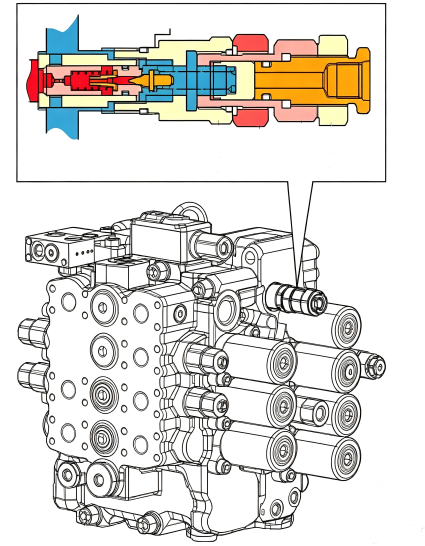
Excavator relief valve is one of the most important pressure-control components in an excavator hydraulic system. It is commonly installed in the main control valve, travel motor circuit, swing motor circuit, and other hydraulic circuits to limit maximum pressure and protect the hydraulic pump, hoses, cylinders, motors, and valves from excessive pressure.
The main relief valve determines the maximum pressure that the main hydraulic system is allowed to reach.
If the relief valve spring is damaged, the valve spool sticks, the set pressure is too low, or internal leakage occurs, the excavator may show symptoms such as slow operation, weak digging force, weak travel or swing, unstable hydraulic pressure, overheating, or even complete loss of hydraulic function.
For this reason, the relief valve should always be included in hydraulic troubleshooting before an expensive pump or actuator is replaced.
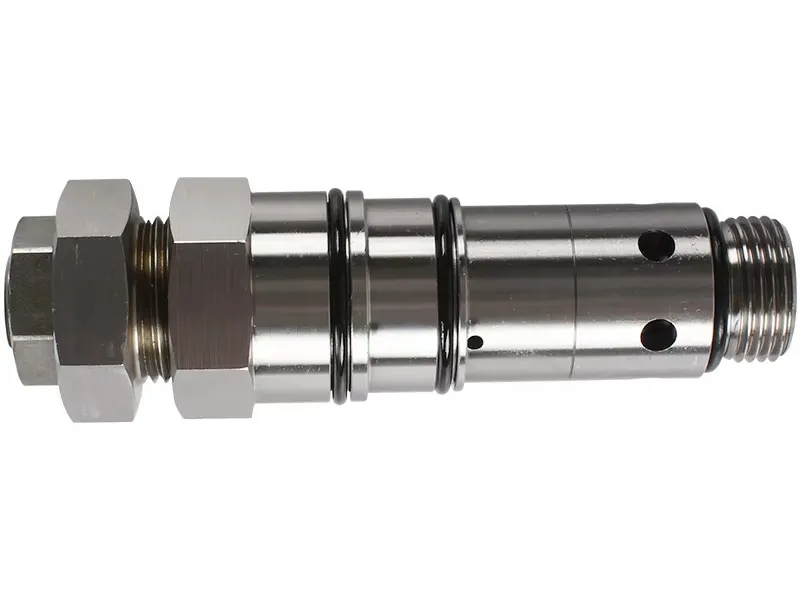
1.How Does an Excavator Relief Valve Work?
When system pressure is below the relief valve setting, the valve remains closed and hydraulic oil flows from the main pump to the cylinders, motors, and other actuators.
When system pressure reaches the preset relief pressure, the valve opens and allows part of the high-pressure oil to return to the tank or low-pressure side.
The basic operating principle is:
Normal pressure → Relief valve closed → Oil flows to actuator
Pressure exceeds setting → Relief valve opens → Excess pressure is released
If the valve cannot close correctly, the hydraulic system may fail to build pressure.
If the valve cannot open correctly, system pressure may rise excessively and damage hydraulic components.
2.Hydraulic System Pressure Fluctuation
Pressure fluctuation means the hydraulic pressure does not remain stable. The pressure gauge may move continuously, or the excavator may feel inconsistent, with movements becoming faster and slower.
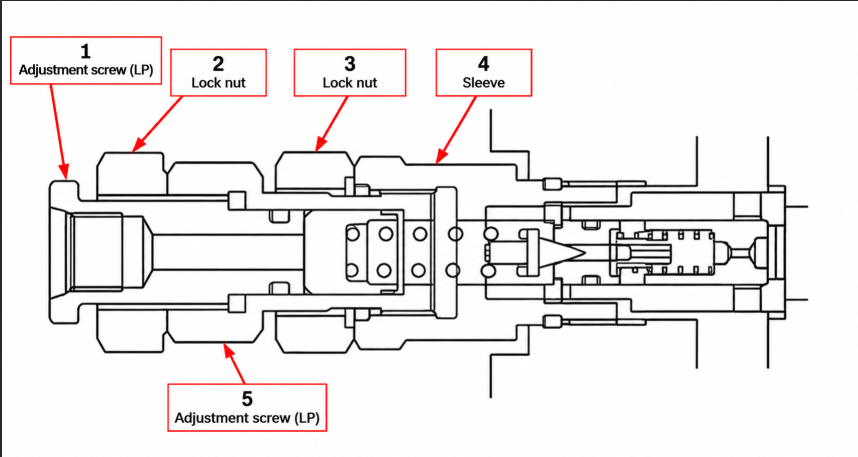
2.1 One common cause is a loose pressure-adjusting screw or locknut. Long-term machine vibration can cause the adjustment mechanism to move, changing the relief pressure.
2.2 Contaminated hydraulic oil is another major cause. Fine dust, metal particles, or other contamination can make the valve spool move unevenly. This may cause irregular pressure changes or even make the spool stick.
2.3 A partially blocked damping orifice can also create unstable pressure. Pilot-operated relief valves normally use small internal orifices to control pressure balance. If these passages become contaminated, the main spool may repeatedly open and close.
2.4 Poor contact between the valve spool and valve seat can also cause unstable pressure. Wear, scratches, deformation, contamination, or misalignment on the sealing surfaces can prevent the valve from closing consistently.
2.5 A bent, weakened, or damaged pilot spring may also cause unstable relief pressure.
Troubleshooting Methods:
Check the hydraulic oil and filters first.If the oil is contaminated, clean the hydraulic tank, replace the hydraulic oil, replace the filters, and clean the relief valve and related control valves.
Clean the hydraulic tank → Replace the hydraulic oil → Replace the filter element → Clean the relief valve and associated control valves.
Then check:
- Pressure adjustment screw
- Lock nut
- Valve spool
- Valve seat
- Damping orifice
- Spring
Worn or damaged components should be repaired or replaced.
3.Hydraulic System Cannot Build Pressure
If system pressure is extremely low or cannot rise at all, several possible causes should be investigated.
3.1 Blocked Main Spool Damping Orifice
Dirty hydraulic oil or contamination introduced during assembly may completely block the damping orifice.This can disturb the internal pressure balance of the pilot-operated relief valve and prevent the main spool from operating correctly.
Handling Method:remove the relief valve and clean it thoroughly
- Damping orifice
- Main valve spool
- Internal valve body oil passage
The condition of the hydraulic oil should also be checked.
3.2 Main Spool Stuck in the Open Position
If the main spool is stuck open because of contamination, wear, or poor assembly, high-pressure oil continuously returns through the relief valve.
The result is:
Pump produces flow → Relief valve continuously bypasses oil → System cannot build pressure
The excavator may become very slow or completely unable to move hydraulic functions.
3.3 Broken or Damaged Return Spring
If the main spool return spring is broken, bent, or severely fatigued, the valve may not fully close.
The spring should be inspected for damage, deformation, and loss of free length.
3.4 Pilot Valve Failure
A pilot valve problem can also prevent system pressure from building.
Common issues include:
- Broken pressure-regulating spring
- Spring incorrectly installed
- Damaged poppet valve
- Missing steel ball
- Damaged valve seat
The pilot section should be disassembled and inspected, and damaged parts should be replaced.
3.5 Remote Control Circuit Failure
Some excavators use solenoid valves to control unloading or change hydraulic pressure,if
- the solenoid valve is not properly energized,
- the spool valve is stuck,
- there is an open circuit in the control line, or
- the control pressure is abnormal,
In this situation, the hydraulic pump may be operating normally while the system still cannot build pressure.
3.6 Main Hydraulic Pump Failure
If the relief valve is working correctly but pressure still cannot be established, the main hydraulic pump should be checked.
May include:
- Severe internal pump wear
- Wear on the plunger or cylinder block
- Valve plate damage
- Regulator malfunction
- Abnormal pump control pressure
On modern excavators, special attention should be paid to the variable-displacement piston pump and its regulator system.
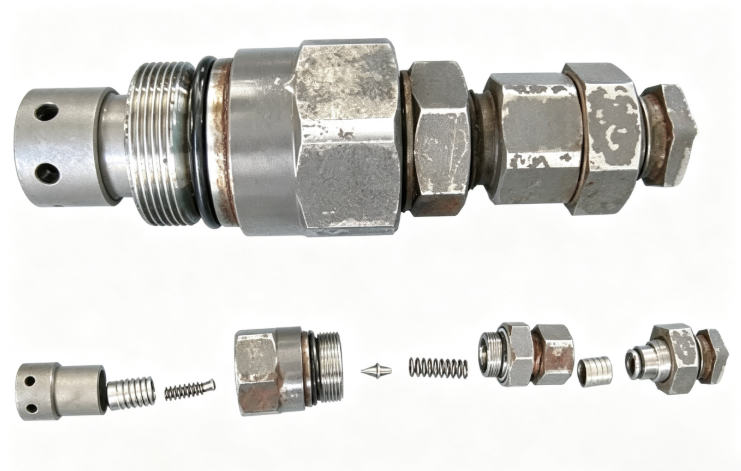
4.Hydraulic System Pressure Is Too Low
This condition is different from having no pressure at all.The machine still works, but maximum system pressure is below the manufacturer’s specification.
Typical symptoms include slow operation, weak digging force, poor travel performance, reduced climbing ability, or weak combined hydraulic functions.
4.1 Worn Main Spool or Valve Seat
The spool sealing surface and valve seat are exposed to high-speed hydraulic oil for long periods.
Wear can prevent proper sealing and create continuous internal leakage.
4.2 Contamination on the Valve Seat
Small particles can become trapped between the spool and valve seat, preventing the valve from fully closing.
This type of fault may appear intermittently.
4.3 Sticking Valve Spool
If the spool cannot move freely back to the fully closed position, the valve may begin relieving pressure earlier than it should.
4.4 Damaged Seals
A damaged O-ring, gasket, backup ring, or cover seal may cause internal or external leakage.
4.5 Weak Pilot Spring
A fatigued or shortened spring can cause the relief valve to open at a lower pressure than specified.
Troubleshooting Methods:
- Remove and inspect the relief valve.
- Light contamination can usually be cleaned.
If there are already visible signs of:
- grooving
- pitting
- severe wear
- deformation
Do not simply tighten the pressure-adjusting screw to compensate for low hydraulic pressure.
If the real problem is internal leakage or pump wear, artificially increasing the relief setting may damage the pump, hoses, cylinders, or motors.
5.Hydraulic Pressure Suddenly Becomes Too High
Sudden excessive pressure is a potentially dangerous hydraulic fault.
5.1 Main Spool Stuck Closed
If the relief valve spool cannot open, high-pressure oil cannot be released normally.
System pressure may rise rapidly.
5.2 Contamination Causes the Spool to Stick
Dirty hydraulic oil is one of the most common causes of sudden valve sticking.
5.3 Pilot Valve Sticking
If the pilot poppet sticks to the valve seat, the relief valve may not open at the preset pressure.
5.4 Incorrect Spring Adjustment
A bent spring, incorrect installation, or excessive adjustment can also increase relief pressure beyond the specified limit.
Troubleshooting Methods:
Stop heavy machine operation if abnormally high pressure is detected.
Inspect the main spool, pilot valve, damping orifice, spring, and pressure-adjustment mechanism.
The hydraulic oil should also be checked for contamination.
6.Hydraulic Pressure Suddenly Drops
If the excavator was working normally and hydraulic pressure suddenly falls, several conditions should be checked.
6.1 Main Spool Suddenly Sticks Open
Contamination may enter the valve and prevent the spool from closing.
High-pressure oil then continuously bypasses to the low-pressure side or tank, causing the whole machine to become weak.
6.2 Sudden Seal Failure
A damaged internal O-ring, gasket, or valve cover seal may cause sudden pressure loss.
6.3 Broken Spring
The main spring or pilot adjustment spring may suddenly break, causing the relief pressure to fall sharply.
6.4 Electrical Control Failure
On machines with remote pressure control or unloading circuits, a sudden electrical failure can immediately reduce system pressure.
Possible causes include a disconnected connector, broken wire, burned solenoid coil, or loss of electrical power.
6.5 Control Line Failure
A broken pilot hose, loose fitting, or damaged remote control line can also cause pressure to drop suddenly.
Troubleshooting Methods:
Clean hydraulic valves if contamination is suspected.
Replace damaged components and seals.
Inspect electrical circuits, solenoid valves, connectors, and control pressure lines.
7.Vibration and Noise During Unloading or Pressure Switching
Some excavators may develop strong hydraulic vibration, shock, or noise when pressure rapidly changes from high pressure to low pressure.
This can occur when stored hydraulic energy is released too quickly.
Typical symptoms include hose vibration, valve-body vibration, knocking sounds, or hydraulic whine.
Depending on the machine design, a fixed orifice, damping orifice, anti-shock valve, or pressure-control valve may be used in the remote control circuit to slow the pressure transition.
A smoother pressure reduction reduces hydraulic shock.
Do not modify damping orifices or hydraulic control circuits without proper technical data.
8.How to Tell Whether the Relief Valve or Hydraulic Pump Is Faulty
This is one of the most common diagnostic questions.
step 1 :If hydraulic pressure is low, the main pump should not automatically be blamed.
A better troubleshooting process starts by measuring system pressure and comparing it with the manufacturer’s specifications.
step 2 :If all hydraulic functions are weak,please check:
- Main Relief Valve
- Main Hydraulic Pump
- Pump Control System
- Engine Power
step 3 :If only a specific movement lacks power, the corresponding circuit should be inspected for:
- Port Relief Valve
- Main Control Valve
- Cylinder
- Hydraulic Motor
- Related pilot circuit
step 4 :If only one hydraulic function is weak, check the corresponding port relief valve, main control valve section, actuator, hydraulic motor, and pilot circuit.
The relief valve should then be inspected for correct pressure setting, free spool movement, spring condition, damping-orifice condition, internal contamination, and valve-seat sealing.
If the relief valve is confirmed to be working correctly, the main pump can then be tested using pressure, flow, case drain, and regulator checks.
This step-by-step process helps prevent unnecessary pump replacement.
9.Excavator Main Relief Valve VS Port Relief Valve
An excavator may have several relief valves.
The Main Relief Valve controls the maximum pressure of the main hydraulic system. If its setting is too low, several hydraulic functions may become weak at the same time.
A Port Relief Valve protects an individual work circuit, such as the boom, arm, bucket, travel, or swing circuit.
If only one hydraulic function has abnormal pressure while the others operate normally, the corresponding port relief valve should be checked.
10.Important Precautions When Repairing a Relief Valve
Relief valves are precision hydraulic components.
Particular attention should be paid to the following points during disassembly and assembly:
- Thoroughly clean the area around the valve body before disassembly.
- Do not indiscriminately sand or grind the precision valve spool.
- Avoid arbitrarily interchanging valve spools and bodies.
- Ensure O-rings and backup rings are of the correct specifications and materials.
- Lubricate with clean hydraulic oil after cleaning and before reassembly.
- Verify the actual pressure using a pressure gauge after making adjustments.
- Do not exceed the maximum pressure specified by the equipment manufacturer.
- If the valve spool or seat is severely worn, prioritize replacement over attempting a repair.
11.How to Reduce Relief Valve Failures
Many relief valve problems are caused not by the valve itself, but by hydraulic contamination.
To extend relief valve service life, keep the hydraulic oil clean, replace filters at the recommended intervals, avoid prolonged high hydraulic oil temperatures, correct water contamination quickly, and maintain clean working conditions during hydraulic repairs.
Extra attention is required after replacing a hydraulic pump, hose, control valve, or hydraulic motor.
Metal particles, seal fragments, and other debris left in the system can easily block the small damping passages inside a relief valve.
12.Conclusion
The excavator relief valve is a relatively small component, but it has a major influence on hydraulic pressure and machine performance.
A worn, contaminated, incorrectly adjusted, or sticking relief valve can cause pressure fluctuation, low system pressure, complete pressure loss, excessive pressure, sudden pressure drop, hydraulic shock, or abnormal noise.
When an excavator becomes slow, weak, or develops unstable hydraulic pressure, the hydraulic pump should not be the only component inspected.
A more effective diagnostic process is:
Measure hydraulic pressure → Determine whether the problem affects one circuit or the whole system → Inspect the relief valve → Check the control circuit → Test the hydraulic pump
This method reduces misdiagnosis and helps avoid unnecessary replacement of expensive hydraulic components.
Important: Relief pressure settings and adjustment procedures vary between excavator brands and models. Always use the service manual for the exact machine when testing or adjusting hydraulic pressure.
FAQ
1.What does an excavator relief valve do?
An excavator relief valve limits maximum hydraulic pressure and protects pumps, hoses, cylinders, motors, and control valves from excessive pressure.
2.What are the symptoms of a bad relief valve?
Common symptoms include weak hydraulic functions, slow operation, pressure fluctuation, low system pressure, sudden pressure loss, overheating, hydraulic noise, or unusually high pressure.
3.Can I increase hydraulic pressure by tightening the relief valve adjustment screw?
Technically the setting can be changed on adjustable valves, but it should not be done blindly. Increasing relief pressure above the manufacturer’s specification can damage the hydraulic pump, hoses, cylinders, motors, or seals.
4.What is the difference between a main relief valve and a port relief valve?
The main relief valve limits pressure for the overall hydraulic system. A port relief valve protects an individual hydraulic circuit such as boom, arm, bucket, travel, or swing.
5.Why does hydraulic pressure suddenly become too high?
A relief valve spool stuck closed, pilot valve sticking, contaminated oil, or incorrect spring adjustment can prevent the valve from opening at the correct pressure.
6.Why does hydraulic pressure suddenly drop?
Possible causes include a valve spool stuck open, broken spring, damaged seal, failed solenoid valve, electrical interruption, or leakage in a remote control or pilot line.
7.Can a relief valve cause hydraulic overheating?
Yes. If the relief valve opens continuously or leaks internally, hydraulic oil is repeatedly forced across a pressure drop, generating heat and reducing system efficiency.
8.Should I replace or repair a worn relief valve?
Minor contamination or sticking may sometimes be corrected by cleaning. If the spool, valve seat, spring, or sealing surfaces are badly worn or damaged, replacement is usually more reliable.
9.Should relief pressure be adjusted without a pressure gauge?
No. Relief pressure should always be checked with a properly installed pressure gauge and compared with the manufacturer’s service specifications.


