


The excavator swing motor is one of the core components of the swing system. Most hydraulic excavators use an axial piston hydraulic motor. It converts the high-pressure hydraulic oil supplied by the hydraulic pump into rotational torque and transmits the power through the output shaft to the swing reduction gearbox. After speed reduction and torque multiplication, the power is transmitted to the swing bearing and ring gear, allowing the upper structure of the excavator to rotate left and right.
The operating condition of the swing motor directly affects the excavator’s swing speed, output torque, starting and stopping performance, and parking brake performance. Once the swing motor or related control components develop problems, it can not only reduce operating efficiency but also cause weak swing, slow speed, different left and right swing speeds, unstable swing, abnormal noise, or even complete loss of swing function.
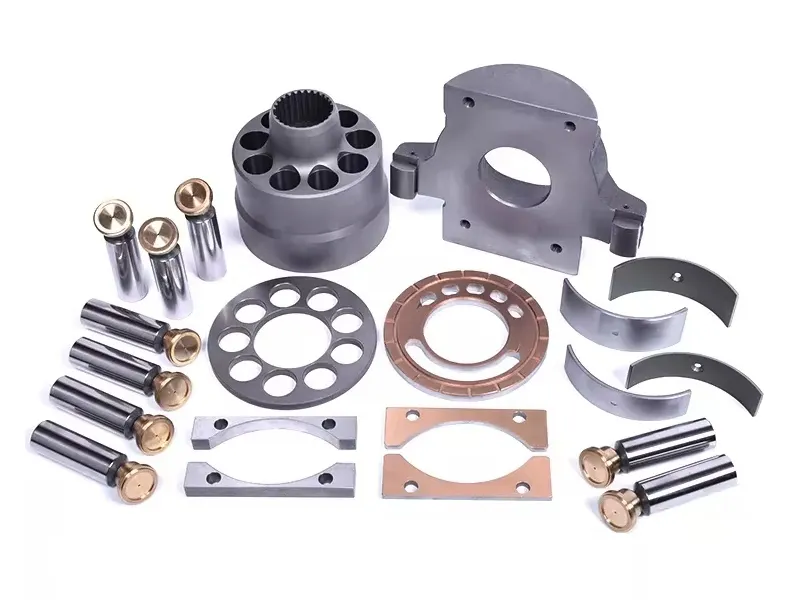
As the excavator accumulates operating hours, internal swing motor components such as the pistons, cylinder block, valve plate, piston shoes, bearings, and seals gradually wear. At the same time, failures of the swing relief valve, make-up valve, and parking brake control system can cause similar swing problems.
In particular, some excavators with long operating hours may work normally when cold but become noticeably slower or weaker after the hydraulic oil temperature rises. This is usually related to internal swing motor wear, increased clearances, and increased internal leakage at higher operating temperatures.
So, what are the most common excavator swing motor problems? How can you determine whether the problem comes from the swing motor itself, the control valves, or the hydraulic system? Below, we will analyze the symptoms, common causes, testing methods, and repair solutions in detail.

1. Common Causes and Testing Methods for Weak Excavator Swing
Weak excavator swing is one of the more common hydraulic system problems. Typical symptoms include noticeably slower upper-structure rotation after operating the swing control, delayed starting, insufficient output torque, and, in severe cases, fluctuating swing speed or different operating conditions between left and right swing.
Some machines operate normally when cold, but as the hydraulic oil temperature gradually rises, especially when the oil temperature reaches approximately 60°C or higher, weak swing, reduced speed, or unstable rotational speed may begin to occur. This type of “normal when cold, weak when hot” problem is usually related to increased internal leakage within the hydraulic system.
As the hydraulic oil temperature increases, the oil viscosity decreases. If the pistons, cylinder block, valve plate, piston shoes, and other moving mating components inside the swing motor have already experienced significant wear, the increased clearances allow high-pressure oil to leak more easily through the worn gaps into the low-pressure side or motor housing.
As internal leakage increases, the volumetric efficiency and output torque of the swing motor decrease, resulting in slow and weak swing. At the same time, if the motor case drain is restricted or case leakage increases significantly, internal housing pressure may also rise, further increasing oil temperature and accelerating internal leakage and wear.
Therefore, when an excavator becomes noticeably weaker after warming up, in addition to checking the main hydraulic pump, main control valve, and swing relief valve, the swing motor should also be inspected carefully for abnormal internal wear or leakage.
Troubleshooting Tests:
(1) Flow Test
A flow test can be used to determine the actual hydraulic flow supplied to the swing motor and whether there is significant internal leakage inside the motor.
During testing, a hydraulic flow meter suitable for the system’s flow and pressure range can be installed in series with the appropriate hydraulic circuit to measure the following while the swing motor is operating:
- Inlet flow;
- Return flow;
- Working pressure;
- Flow changes under different speeds or load conditions.
The measured data should then be compared with the standard specifications in the equipment service manual.
If the flow entering the swing motor is normal, but the actual swing speed is noticeably low and motor leakage is high, internal swing motor wear should be suspected.
If the flow supplied to the motor itself is insufficient, further inspection of the main hydraulic pump, main control valve, pilot control system, and related hydraulic circuits is required.
(2) Pressure Test
Pressure testing is one of the important methods for diagnosing swing system problems.
A pressure gauge can be installed at the A and B working ports of the swing motor or at the test ports specified by the equipment manufacturer to measure the working pressure during left and right swing operation.
The following operating conditions should normally be compared during testing:
No-Load or Light-Load Swing Pressure
Observe whether the pressure is normal during left and right swing operation and whether there is a noticeable difference between the two directions.
High-Load or System Relief Pressure
Apply a load to the swing system according to the procedures specified in the service manual so that the swing pressure rises to the relief valve opening range, and then measure the maximum system pressure.
By comparing the pressures in both swing directions, it can help determine:
- Whether the swing relief valve opens prematurely;
- Whether abnormal pressure loss exists in one direction;
- Whether there is internal leakage in the main control valve;
- Whether there is serious internal leakage inside the swing motor.
For example, if the maximum pressure in one direction is significantly lower than the standard value while the opposite direction is normal, the corresponding swing relief valve, main control valve, and related hydraulic circuit should be inspected carefully.
If the pressure in both directions reaches the normal value but the swing speed is still noticeably slow, further inspection should be carried out for internal swing motor leakage, incomplete release of the parking brake, and mechanical resistance in the swing reduction mechanism.

(3) Case Drain Leakage Test
When internal swing motor wear is suspected, a case drain leakage test usually provides valuable diagnostic information.
Measure the swing motor case drain flow and compare it with the specified allowable value.
If case leakage significantly exceeds the standard range, it usually indicates serious wear between the pistons and cylinder block, between the valve plate and cylinder block surface, or between other internal moving components.
Especially in cases where the machine operates normally when cold but becomes noticeably slower after warming up, it is recommended to perform case leakage tests under both cold-oil and hot-oil conditions. Comparing the two sets of data can provide a clearer indication of the degree of internal wear.
2. Common Problems of Major Internal Swing Motor Components
The pistons, cylinder block, valve plate, piston shoe, bearings, and brake components inside the swing motor are core components responsible for converting hydraulic energy into mechanical energy. Once these components become worn, leak, or are damaged, common symptoms include weak swing, reduced speed, difficult starting, abnormal noise, incomplete brake release, or unstable swing operation.
Common problems mainly include the following:
(1) Piston and Cylinder Block Wear
As operating time increases, the clearance between the outer surface of the piston and the piston bore in the cylinder block may gradually increase. Excessive clearance allows high-pressure hydraulic oil to leak between the piston and cylinder block, reducing the volumetric efficiency of the swing motor.
Common symptoms include reduced swing speed, weak swing, and increased hydraulic oil temperature.
Solution:
Inspect the degree of wear and mating clearance between the pistons and cylinder block. Minor wear may be professionally repaired depending on actual conditions. If wear is severe, the pistons, cylinder block, or piston-cylinder block assembly should be replaced.
(2) Aging or Damaged Internal Seals
O-rings, oil seals, and other sealing components are continuously exposed to high temperature, high pressure, and hydraulic oil and may eventually harden, crack, deform, or lose elasticity.
Seal failure can result in internal or external leakage and further affect the working pressure and efficiency of the swing motor.
Solution:
Disassemble and inspect the relevant sealing areas, replace aged or damaged seals, and check the seal grooves and mating surfaces for scratches or abnormal wear.
(3) Reduced Spring Force or Damaged Internal Springs
Some internal swing motor mechanisms rely on springs to maintain proper clamping force. If a spring becomes fatigued, deformed, or broken, the clamping force between related mating surfaces may become insufficient, allowing abnormal cross-leakage between high-pressure and low-pressure oil passages.
This condition usually increases internal leakage and reduces swing speed and output torque.
Solution:
Check the spring length, spring force, and deformation. Springs showing fatigue, breakage, or obvious deformation should be replaced promptly.
(4) Parking Brake System Seal Failure
Swing motors are normally equipped with a parking brake mechanism. If the seals inside the brake piston or hydraulic cylinder become aged or damaged, control pressure may leak, preventing the brake from fully releasing.
In this situation, even if the swing motor receives normal hydraulic pressure, excessive swing resistance may occur because the brake discs remain partially engaged.
Common symptoms include:
Difficult swing starting;
Slow swing in both directions;
Swing motor overheating;
Abnormally high temperature around the brake area.
Solution:
Inspect the parking brake piston, seals, brake discs, and control oil circuit, and replace damaged seals or brake components.
(5) Piston Ball Head and Piston Wear
The piston ball head and piston are high-speed moving friction components. Poor lubrication conditions, contaminated hydraulic oil, or extended service life may cause abnormal wear.
When wear becomes severe, the piston shoe may no longer properly contact the load-bearing surface, and the oil film may be damaged, increasing friction, heat generation, and internal leakage.
In severe cases, the shoe plate, swash plate, or thrust plate may also be damaged.
Solution:
Inspect the piston ball head, piston surface, and related load-bearing surfaces for wear. If obvious scoring, burning, shoe separation, or severe wear is found, the affected components should be replaced.
(6) Swing Motor Bearing Damage
Bearings support the swing motor shaft and maintain the correct position of the rotating components. If the bearings become worn, the rolling elements are damaged, or bearing clearance becomes excessive, shaft positioning accuracy may decrease.
Possible symptoms include:
- Abnormal swing noise;
- Increased vibration;
- Shaft runout;
- Abnormal oil seal wear;
- Uneven wear of internal rotating components.
Solution:
Check bearing clearance and rotational condition. If looseness, seizure, pitting, or damage is found, replace the bearing promptly and inspect the shaft and bearing housing for related damage.
(7) Wear Between the Valve Plate and Cylinder Block Distribution Surface
The valve plate and cylinder block end face must maintain proper sealing and oil film conditions. After long-term operation, scratches, scoring, burning, or uneven wear on the valve plate or cylinder block distribution surface may allow internal leakage between the high-pressure and low-pressure chambers.
This is one of the common causes of weak swing, reduced speed, and increased internal leakage.
Solution:
Inspect the flatness and wear condition of the valve plate and cylinder block end surface. Minor wear may be evaluated by a professional repair technician to determine whether repair is possible. If deep scoring, burning, or obvious deformation is present, replacement of the valve plate or cylinder block is recommended.
(8) Wear of the Safety Relief Valve Sealing Surface
The safety relief valve on the swing motor limits the maximum pressure of the swing system. If the valve spool, valve seat, or sealing surface becomes worn, the valve may begin relieving pressure prematurely or leak continuously even before the system reaches its normal set pressure.
This may result in:
- Low swing pressure;
- Weak swing;
- Abnormal swing in one direction;
- Different left and right swing speeds.
Solution:
Inspect the safety relief valve spool, valve seat, spring, and sealing surfaces. Minor contamination can be cleaned. If the sealing surface is worn or components are damaged, the relief valve should be repaired or replaced.
Repair Recommendations
When the swing motor becomes slow, weak, noisy, or overheats, it is not recommended to diagnose a specific damaged component based only on the symptoms.
Before repair, the swing pressure test, motor leakage inspection, hydraulic oil contamination condition, and internal component inspection should be considered together to determine the actual cause.
If only seals, springs, or an individual valve component are damaged, they can be replaced individually. If the pistons, cylinder block, piston shoes, and valve plate have developed combined wear, the related friction components should normally be inspected together to avoid another failure shortly after replacing only one component.
3.Swing Relief Valve
The swing relief valve is also called a safety relief valve or overload relief valve. It is normally installed on the swing motor valve body or valve cover. Many swing motors use two relief valves, with one corresponding to each swing direction.
During normal swing operation, the relief valve usually remains closed. When swing system pressure exceeds the set value, the relief valve automatically opens and directs part of the high-pressure oil to the low-pressure side or return passage, limiting the maximum system pressure and preventing overload damage to the swing motor, hydraulic lines, and related hydraulic components.
If the swing relief valve becomes stuck, leaks, suffers spring fatigue, or has an incorrect pressure setting, the following problems may occur:
- Different left and right swing speeds, with one side faster than the other;
- Weak swing in one direction;
- Noticeably reduced swing speed;
- Difficult swing starting;
- Swing pressure unable to reach the normal value;
- In severe cases, one swing direction may stop working completely.
If only one swing direction shows an obvious problem while the opposite direction operates normally, the corresponding swing relief valve should be inspected for internal leakage, sticking, or incorrect pressure setting.
4.Delay Valve / Brake Control Valve
The delay valve in the swing motor normally works together with the parking brake system and is also commonly referred to by technicians as the brake valve, braking control valve, or parking brake control valve.
After the excavator stops swinging, the upper structure still tends to continue rotating due to inertia. The swing brake system must release or apply the brake in the correct sequence to prevent premature brake engagement while ensuring that the machine remains securely positioned after stopping.
When the delay valve or brake control circuit malfunctions, the following symptoms may occur:
- Slow swing in both directions;
- Failure to start swinging normally;
- Swing speed alternates between fast and slow;
- Unstable swing operation;
- Noticeable delay after operating the control lever;
- Abnormal stopping after releasing the control lever;
- Parking brake fails to release properly.
These problems are not always caused by damaged pistons or cylinder blocks inside the swing motor. The valve spool may become stuck due to contamination, sludge, or metal particles.
During inspection, pay particular attention to whether the delay valve spool, orifice, and control oil circuit are blocked. If the problem is caused only by minor contamination, cleaning may restore normal operation. However, if the valve spool or valve bore is worn, the affected components should be replaced.
Therefore, keeping the hydraulic oil clean and replacing the hydraulic oil and filters at the recommended intervals is very important for reducing this type of failure.
5. Make-Up Valve
The make-up valve is also known as a replenishing valve, compensation valve, or anti-cavitation valve. Its main function is to supply hydraulic oil to the low-pressure side of the swing motor during deceleration, stopping, or rapid load changes.
The excavator upper structure has considerable rotational inertia. When the operator suddenly stops the swing operation, the swing motor may continue rotating due to inertia. If the low-pressure side does not receive enough hydraulic oil, a local vacuum or cavitation may occur.
The make-up valve supplies hydraulic oil from the return passage or low-pressure circuit to the low-pressure side of the motor, reducing cavitation and hydraulic shock and helping protect internal swing motor components such as the pistons, cylinder block, valve plate, and other friction surfaces.
If the make-up valve becomes stuck, blocked, or develops poor sealing, the following symptoms may occur:
- Slow swing acceleration;
- Insufficient swing speed;
- Unstable starting;
- Noticeable impact when swing operation stops;
- Abnormal noise during swing operation;
- In severe cases, cavitation, vibration, or abnormal wear of internal components.
Therefore, when troubleshooting slow swing, swing shock, or abnormal noise, in addition to checking the main pump pressure and internal swing motor components, the make-up valve should also be inspected to confirm that it opens and closes properly.
Weak swing, abnormal speed, and unstable swing operation are relatively common problems during long-term excavator operation. When a problem occurs, the specific symptoms should be considered together with hydraulic pressure, flow, control valves, and internal swing motor components to systematically identify the fault location before cleaning, adjusting, repairing, or replacing the affected parts.
Timely troubleshooting and proper repair can prevent the problem from becoming more serious, reduce secondary damage to other hydraulic components, and help restore stable swing motor performance, ensuring normal excavator swing efficiency and overall machine operation.
If inspection confirms that internal swing motor components such as the pistons, cylinder block, valve plate, piston shoes, bearings, seals, or relief valves are worn or damaged, the correct replacement parts should be selected according to the excavator model, swing motor model, and part number.

FAQ
1. What causes an excavator swing motor to become weak?
A weak excavator swing motor can be caused by internal leakage, worn pistons and cylinder block, a worn valve plate, a faulty swing relief valve, insufficient hydraulic flow, or a parking brake that does not fully release. Pressure, flow, and case drain tests can help identify the actual cause.
2. Why does my excavator swing slowly when the hydraulic oil gets hot?
When hydraulic oil temperature rises, oil viscosity decreases. If the swing motor already has worn pistons, cylinder block, valve plate, or other internal components, the thinner oil can leak more easily through increased clearances. This reduces volumetric efficiency and can cause the swing to become slow or weak when hot.
3. How do I know if an excavator swing motor has internal leakage?
Common signs include weak swing, slow rotation, overheating, and normal system pressure with poor motor performance. A swing motor case drain test is one of the most useful methods for checking internal leakage. Excessive case drain flow usually indicates internal wear.
4. Can a worn valve plate cause weak excavator swing?
Yes. Wear, scoring, or damage between the valve plate and cylinder block can allow high-pressure oil to leak internally into the low-pressure side. This reduces motor efficiency and can cause weak swing, slow speed, and excessive heat.
5. What happens when a swing relief valve fails?
A faulty swing relief valve may open too early, leak internally, become stuck, or operate at the wrong pressure setting. Symptoms can include weak swing in one direction, different left and right swing speeds, low swing pressure, slow rotation, or failure to swing in one direction.
6. What does the make-up valve do in an excavator swing motor?
The make-up valve supplies hydraulic oil to the low-pressure side of the swing motor during deceleration, stopping, or rapid load changes. It helps prevent cavitation and hydraulic shock. A faulty make-up valve can cause slow acceleration, abnormal noise, vibration, or harsh stopping.
7. Can the parking brake cause an excavator to swing slowly?
Yes. If the parking brake piston, seals, or brake control valve fails, the brake may not release completely. This creates additional resistance and can cause slow swing in both directions, difficult starting, overheating, and abnormal brake temperatures.
8. Should I replace only the damaged swing motor part?
Not always. Pistons, cylinder blocks, piston shoes, and valve plates operate as closely matched friction components. If several parts show related wear, they should be inspected together. Replacing only one severely worn component may result in another failure after a short operating period.
9. What tests should be performed before rebuilding a swing motor?
Typical diagnostic procedures include:
- Hydraulic pressure testing
- Hydraulic flow testing
- Swing motor case drain testing
- Inspection of swing relief valves
- Parking brake release testing
- Hydraulic oil contamination inspection
- Internal component inspection after disassembly
The test results should be compared with the specifications in the excavator service manual.
You can find replacement excavator swing motor parts, cylinder blocks, piston sets, valve plates, seal kits, and other hydraulic components at Farinparts.


