

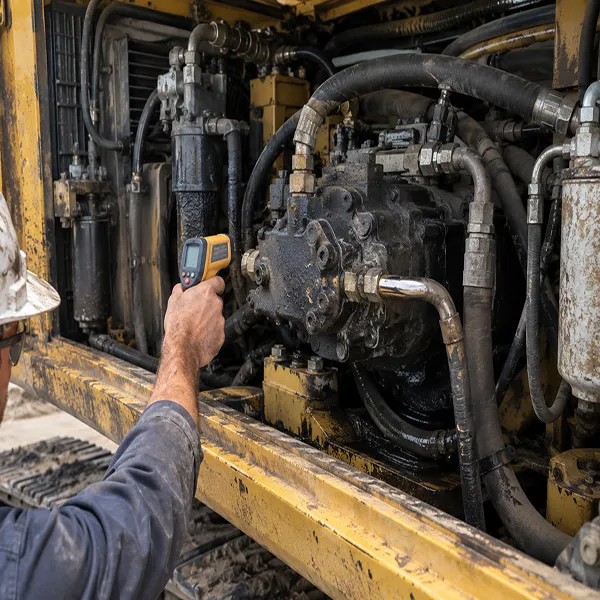
Excavator hydraulic oil overheating is a common problem in construction equipment, especially after the machine has been working for an extended period.. Under normal operating conditions, the constant temperature of hydraulic oil in an excavator is between 30-55°C (the temperature of the oil pump is 5-10°C higher).
When the hydraulic oil is within this temperature range, its viscosity and lubricity are at their optimal levels. If the temperature exceeds this range significantly, it indicates overheating of the hydraulic system.
The malfunction is characterized by the following: When the excavator is cold, all its actions are normal. However, after about an hour of operation, as the hydraulic oil temperature rises, the excavator’s actuators become weak and slow, especially exhibiting insufficient digging force and difficulty in walking and steering.
If hydraulic oil overheating is not addressed promptly, the following effects may occur:
(1). Decreased oil viscosity and increased leakage will further exacerbate system overheating, creating a vicious cycle;
(2). Accelerated oil oxidation will form a gel-like substance, blocking the small holes in components, causing hydraulic components to malfunction or become stuck, rendering them unable to work;
(3). It will cause rubber seals and hoses to age and fail;
(4). It will exacerbate the wear of the oil pump and hydraulic valves, even leading to their scrapping.
一.Common Causes of Excavator Hydraulic Oil Overheating
1. Poor Cooling Performance
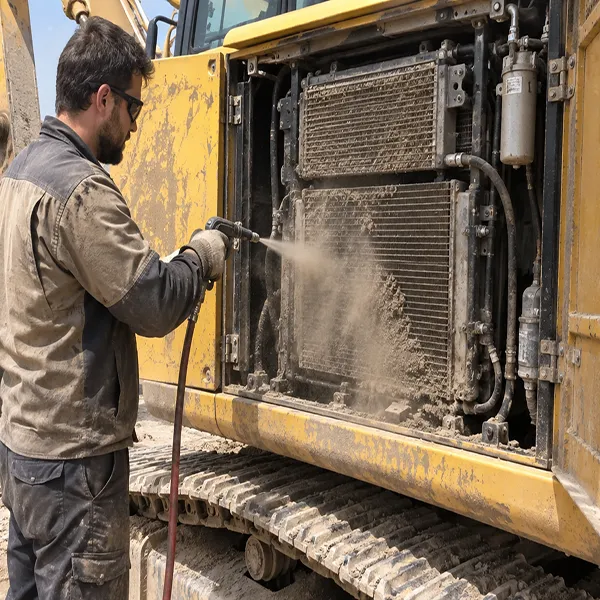
One of the first areas to inspect is the hydraulic oil cooler.Dust, mud, oil residue, grass, and debris can accumulate on the cooler surface and restrict airflow.
Poor cooling may result from:
- Dirty hydraulic oil cooler
- Blocked radiator fins
- Damaged cooling fan
- Incorrect fan speed
- Restricted airflow
- Low hydraulic oil level
If the oil level is too low, the system has less oil available to absorb and dissipate heat.
2. Incorrect Hydraulic Oil
Using hydraulic oil with the wrong viscosity can affect lubrication, leakage, and heat generation.
Oil that is too thick may cause:
- Increased flow resistance
- Higher pressure losses
- Poor cold-start performance
Oil that is too thin may result in:
- Increased internal leakage
- Reduced lubrication
- Loss of hydraulic efficiency
3.Incorrect Hydraulic Pressure
Incorrect system pressure can generate excessive heat.
For example, if a relief valve is set too high or remains partially open, hydraulic power may be continuously converted into heat.
Other possible causes include:
- Incorrect relief-valve setting
- Excessive back pressure
- Restricted return line
- Clogged return filter
- Internally damaged hose
- Incorrect pressure-control adjustment
A return hose can sometimes deteriorate internally even when the outside still looks acceptable. Internal separation may restrict oil flow and increase back pressure.
4.Pump Cavitation or Air Entering the System
If the hydraulic pump cannot receive enough oil, it may experience cavitation or aeration.
Possible causes include:
- Blocked suction strainer
- Restricted suction hose
- Low hydraulic oil level
- Loose suction fittings
- Damaged suction hose
- Air entering through seals or connections
Cavitation, dry startup, restricted suction, and incorrect oil can also cause serious damage to a replacement pump. For more information, see Why a New Hydraulic Pump Fails After Installation. Why a New Hydraulic Pump Fails After Installation:
- Abnormal noise
- Vibration
- Foaming oil
- Pump damage
- Rapid temperature increase
A hydraulic pump should never be allowed to operate with an inadequate oil supply.
5.Excessive Internal Leakage
Internal leakage is one of the most important causes of hydraulic overheating.
Possible sources include:
- Worn hydraulic pump
- Worn travel motor
- Worn swing motor
- Internal cylinder leakage
- Control valve leakage
- Damaged relief valve
For a hydraulic pump, case-drain testing can be useful when excessive internal leakage is suspected. If you are still diagnosing whether the pump itself is worn, see FarinParts’ 10 Signs of a Failing Excavator Hydraulic Pump for other symptoms such as weak operation when hot, abnormal noise, low pressure, and excessive case-drain flow. 10 Signs of a Failing Excavator Hydraulic Pump
A worn pump may still create pressure when the oil is cold, but become much weaker as the hydraulic oil reaches operating temperature.
6.Excessive Component Wear
Hydraulic components rely on precisely controlled clearances.When these components wear, internal leakage increases.
Common wear areas include:
- Pump cylinder block
- Valve plate
- Pistons
- Piston shoes
- Bearings
- Control valve spools
- Hydraulic motor components
As leakage increases, more hydraulic energy becomes heat.
The rising temperature then lowers oil viscosity, which can increase leakage even further.
This is another common overheating cycle:
Wear → internal leakage → heat → lower viscosity → more leakage → more heat
二.How to Prevent Excavator Hydraulic Oil Overheating
1.Clean the Hydraulic Oil Cooler Regularly.
Excavators often operate in dusty, muddy, or debris-filled environments.Over time, contaminants can block the cooler.
Avoid damaging the cooler fins during cleaning.
- Hydraulic oil cooler
- Radiator
- Fan area
- Cooling passages
Avoid damaging the cooler fins during cleaning.
2.Use the Correct Hydraulic Oil
- Consider the local operating environment.
- Cold climates may require oil with better low-temperature characteristics, while high-temperature environments may require a viscosity grade suitable for sustained heat.
The correct choice should be based on the OEM viscosity recommendation rather than simply choosing “thicker oil” for summer or “thinner oil” for winter.
3.Verify Hydraulic Pressure Settings
Relief valves and pressure-control valves should be checked if overheating occurs.
On fixed-displacement systems, excess flow passing continuously across a relief valve can generate substantial heat.
On variable-displacement pump systems, incorrect pump regulation or pressure-control settings can also reduce efficiency.
Always measure pressure before making adjustments.
Do not increase hydraulic pressure simply to make a weak excavator feel stronger.
The real cause may be pump wear, valve leakage, or another hydraulic fault.
4.Maintain Filters and Oil Lines
Restricted oil flow can increase system temperature.
Regularly inspect and maintain:
- Suction strainer
- Return filter
- Pilot filter
- Hydraulic hoses
- Suction pipe
- Return pipe
- Tank breather
Also inspect hydraulic connections for air entry and leakage.
A damaged suction hose or loose connection may allow air to enter without producing a large visible oil leak.
5.Inspect Hydraulic Pumps and Motors
Hydraulic pumps and motors are high-load components.
If their internal leakage becomes excessive, hydraulic oil temperature may rise quickly.
Check for:
- Abnormal noise
- High case-drain flow
- High case pressure
- Reduced output flow
- Metal contamination
- Weak performance when hot
A pump should not be replaced based on oil temperature alone.
Pressure, flow, and case-drain tests can help determine whether the pump is actually worn.
三.Why Does an Excavator Become Weak When the Oil Gets Hot?
This is one of the most common questions related to hydraulic overheating.
Suppose the excavator works normally after startup.
After 30–60 minutes:
- Boom becomes slow
- Digging force decreases
- Travel becomes weak
- Hydraulic response becomes sluggish
One possible cause is excessive internal leakage.
When the oil is cold, its higher viscosity may partially compensate for worn internal clearances.
When the oil becomes hot and thinner, leakage increases.
This may reveal wear inside the:
- Hydraulic pump
- Main control valve
- Travel motor
- Swing motor
- Hydraulic cylinder
However, overheating alone does not prove the pump is faulty.
Cooling problems, pressure settings, return restrictions, oil viscosity, and other components should also be checked.
If the excavator becomes weak only after the hydraulic oil warms up, do not assume that the main pump is automatically defective. Internal leakage may also occur in cylinders, control valves, travel motors, or swing motors. FarinParts’ guide to hydraulic system oil leakage explains how internal leakage can reduce efficiency and increase oil temperature. Hydraulic System Oil Leakage Guide.
四.Excavator Hydraulic Oil Overheating Troubleshooting Checklist
If your excavator hydraulic oil is overheating, check the following in order:
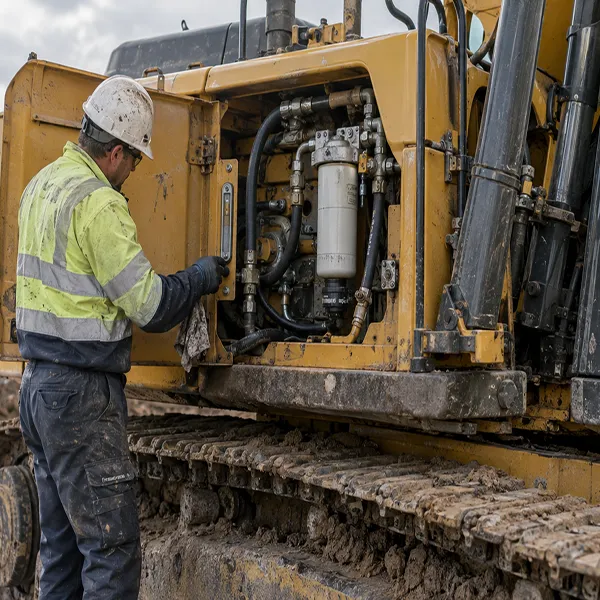
- Hydraulic oil level
- Hydraulic oil condition and correct viscosity
- Hydraulic oil cooler cleanliness
- Cooling fan operation
- Suction strainer and suction hose
- Return filter and return line
- System pressure
- Relief valve operation
- Hydraulic pump case-drain flow
- Pump output flow
- Main control valve leakage
- Cylinder internal leakage
- Travel and swing motor condition
- Hydraulic oil contamination
Avoid replacing expensive components until the cause has been properly diagnosed.
五、When Should a Hydraulic Pump Be Suspected?
A worn hydraulic pump becomes more likely when several symptoms occur together:
- Machine is stronger when cold and weak when hot
- Case-drain flow is excessive
- Pump output flow is below specification
- Hydraulic pressure cannot be maintained under load
- Abnormal pump noise is present
- Metal particles are found in the hydraulic oil
- Pump housing temperature is unusually high
The most reliable diagnosis combines:
Pressure + Flow + Oil Temperature + Case Drain + Machine Symptoms
rather than relying on one symptom alone.
Conclusion
Excavator hydraulic oil overheating is usually a symptom of an underlying hydraulic problem rather than a fault by itself.
Common causes include:
- Poor cooling
- Incorrect hydraulic oil
- Incorrect pressure settings
- Restricted oil flow
- Cavitation
- Internal leakage
- Worn hydraulic components
The best repair strategy is to identify where the hydraulic energy is being lost and converted into heat.
FAQ
What temperature is too hot for excavator Hydraulic Oil ?
There is no single temperature limit for every excavator, because the acceptable range depends on the machine model, hydraulic oil grade, ambient temperature, and system design. As a general guideline, many hydraulic systems operate efficiently around 40–60°C (104–140°F). Sustained temperatures above roughly 70–80°C (158–176°F) should be investigated, especially if the machine begins to lose power or hydraulic response. Always follow the excavator manufacturer’s temperature specification.
Why does my excavator get weak when the hydraulic oil gets hot?
Hot hydraulic oil becomes thinner and its viscosity decreases. If the hydraulic pump, control valve, cylinders, or motors have excessive internal wear, thinner oil can leak more easily through internal clearances. This reduces pressure and flow available for useful work, causing slow movement, weak digging force, or poor travel performance when the machine is hot.
Can a worn hydraulic pump cause overheating?
Yes. A worn hydraulic pump can develop excessive internal leakage. Hydraulic energy that should be used to power the machine is instead lost through internal clearances and converted into heat. Common signs include weak performance when hot, increased case-drain flow, abnormal pump noise, reduced output flow, and high hydraulic oil temperature.
Can a clogged hydraulic filter cause overheating?
Yes. A clogged hydraulic filter can restrict oil flow and increase pressure loss in the system. This creates additional resistance and heat. A severely restricted return filter may also increase back pressure. Check the filter condition, filter restriction indicator, return line, and hydraulic oil cleanliness if overheating occurs.
Does low hydraulic oil cause overheating?
Yes. A low hydraulic oil level reduces the amount of oil available to absorb and dissipate heat. It can also allow air to enter the suction circuit, which may cause aeration or cavitation. Both conditions can increase oil temperature and damage the hydraulic pump.
How do I cool down an overheating hydraulic system?
First, stop heavy operation and allow the machine to cool safely. Then check the hydraulic oil level, oil cooler, cooling fan, filters, suction and return lines, hydraulic oil condition, relief-valve settings, and pump condition. Cleaning the oil cooler and correcting restricted oil flow may solve simple overheating problems, but persistent overheating should be diagnosed with pressure, flow, temperature, and case-drain tests before replacing major components.
At FarinParts, we recommend checking the complete hydraulic system before replacing a pump, motor, valve, or seal kit.


