


The Caterpillar C7 Injector is a core component of the engine fuel system. It is responsible for injecting the correct amount of fuel into the combustion chamber at the proper time, allowing the diesel fuel to atomize effectively and burn efficiently.
Caterpillar C7 engines are widely used in construction machinery, heavy-duty vehicles, industrial power equipment, and oilfield applications. During long-term operation, injectors are continuously exposed to fuel contamination, temperature changes, and wear caused by high-speed operating cycles. Therefore, injector condition directly affects engine power, fuel economy, emissions, and operating stability.
Basic Structure of the Caterpillar C7 Injector
The Caterpillar C7 injector consists of several precision components that work together to control fuel injection.
Its main components include the solenoid, control valve, intensifier piston, plunger, needle valve, nozzle, spring, seals, and internal oil and fuel passages.
These components allow the injector to control fuel delivery, injection timing, and atomization during engine operation.
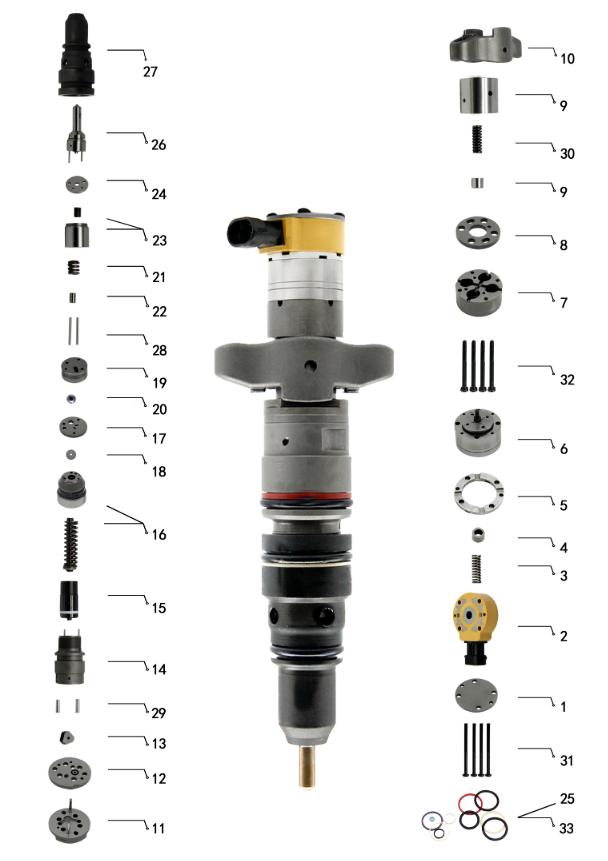
| No. | DESCRIPTION | No. | DESCRIPTION |
| 1 | solenoid cover | ||
| 2 | solenoid | 18 | check plate |
| 3 | spring | 19 | valve plate |
| 4 | spacer shim | 20 | ceramic ball |
| 5 | solenoid spacer | 21 | spring |
| 6 | control valve | 22 | limited block |
| 7 | spacer plate | 23 | middle plate |
| 8 | spool valve spacer | 24 | nozzle gasket |
| 9 | spool valve | 25 | gasket |
| 10 | connecting flange | 26 | nozzle assembly |
| 11 | transfer slab | 27 | nozzle cap nut |
| 12 | throttle plate | 28 | positioning pin |
| 13 | check plate | 29 | positioning pin |
| 14 | injector body | 30 | spring |
| 15 | piston | 31 | screw |
| 16 | plunger and barrel assembly | 32 | screw |
| 17 | valve block | 33 | Repair kit |
Caterpillar C7 Injector Applications
| Series | Main Features | Common Applications |
|---|---|---|
| Cat C7 | 7.2L, earlier C7 platform | Trucks, buses, RVs, construction machinery |
| Cat C7 ACERT | 7.2L, ACERT emissions technology, commonly uses HEUI fuel system | Highway trucks, industrial equipment, oilfield equipment |
| Cat C7.1 | Newer approximately 7.0L platform; structure and fuel system differ from C7 | Construction machinery, industrial, agricultural, mining equipment |
| C7.1 Tier 3 / Stage IIIA | Lower-emission version | Off-highway equipment |
| C7.1 Tier 4 Final / Stage V | Equipped with DOC/DPF/SCR aftertreatment | Industrial and construction machinery |
What Are the Symptoms of Caterpillar C7 Injector Failure?
When an injector begins to wear or operate abnormally, the engine usually develops more than one symptom.
| Symptom | Possible Cause |
|---|---|
| Loss of engine power | Incorrect fuel delivery, nozzle wear, internal injector leakage |
| Hard starting | Injector leakage, insufficient fuel pressure, abnormal HEUI actuation oil pressure |
| Rough idle or engine vibration | Abnormal injector output in one cylinder |
| Black smoke | Poor fuel atomization, excessive fuel injection, or incomplete combustion |
| White smoke | Poor cold combustion, abnormal injection, or cylinder combustion problems |
| Increased fuel consumption | Incorrect fuel delivery, nozzle leakage, reduced combustion efficiency |
| Abnormal engine noise | Abnormal injection or irregular combustion in one cylinder |
| Fault codes | Injector circuit, HEUI control, or engine management system problems |
Caterpillar C7 Injector Faults and Solutions
Poor Injector Atomization
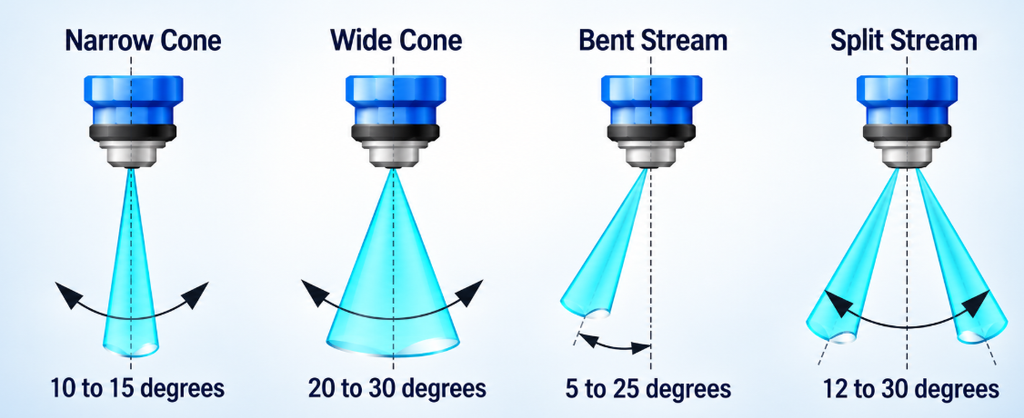
Poor atomization is one of the typical fuel injection problems associated with the Caterpillar C7 Injector.
Under normal conditions, the nozzle should atomize diesel fuel into a fine and uniform spray so that the fuel can mix properly with air.
If carbon deposits form on the nozzle, the nozzle holes become worn, or internal precision components are damaged, the fuel may form larger droplets or an uneven spray pattern.
The engine may then experience reduced power, increased black smoke, higher fuel consumption, rough idle, and abnormal combustion noise.
Possible causes of poor atomization include nozzle carbon deposits, contaminated fuel, worn nozzle holes, internal needle valve wear, and abnormal injector pressure control.
Injector Needle Valve Sticking
The needle valve controls the opening and closing of the injector nozzle.
If the diesel fuel contains water, fine particles, or other contaminants, or if carbon deposits build up inside the nozzle over time, needle valve movement may gradually become restricted.
In severe cases, the needle valve may stick.
If the needle valve cannot open normally, the affected cylinder may receive insufficient fuel or no fuel at all. If the needle valve cannot close properly, fuel leakage or injector dripping may occur.
Common symptoms include engine vibration, abnormal cylinder operation, loss of power, hard starting, and abnormal exhaust smoke.
Injector Dripping or Improper Closing
After fuel injection stops, the needle valve should quickly close the nozzle.
If the sealing surfaces of the needle valve and valve seat become worn, eroded, or contaminated with carbon deposits, fuel may continue leaking from the nozzle when injection should have stopped.
This condition is commonly referred to as injector dripping or improper nozzle closing.
When the engine is cold, symptoms may include hard starting and white smoke. As engine temperature increases, black smoke, higher fuel consumption, and abnormal combustion may occur.
Long-term injector dripping may also lead to:
Increased carbon deposits → Reduced combustion efficiency → Increased contamination of the piston crown and combustion chamber
How to Test a Caterpillar C7 Injector
Unlike conventional mechanical injectors, a Caterpillar C7 Injector should not be diagnosed only with a standard manual injector pressure tester.
A more appropriate diagnostic method combines electronic diagnostics with professional injector testing.
First, read ECM fault codes and monitor engine operating data. Depending on the situation, perform tests such as a Cylinder Cutout Test and Injector Solenoid Test.
Fuel supply pressure and HEUI actuation oil pressure should also be checked.
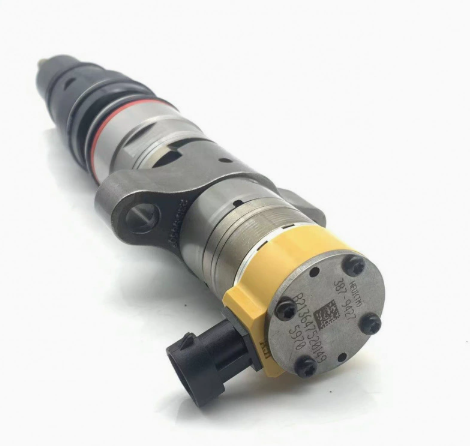
If a mechanical problem with an injector is suspected, the injector can be removed and tested on a professional HEUI injector test bench.
Testing may include:
Fuel delivery, injection consistency, internal leakage, response condition, and atomization performance.
How to Maintain the Injector
Keep the Diesel Fuel Clean
Water, dust, and metal particles in the fuel can accelerate wear on the nozzle, needle valve, and other precision components.
Fuel filters and water separators should be replaced according to engine maintenance requirements.
Avoid Unstable or Low-Quality Diesel Fuel
Poor-quality diesel may contain water, contaminants, or other impurities.
Long-term use may result in:
Nozzle carbon deposits, wear of precision components, needle valve sticking, and reduced injection performance.
Pay Attention to Engine Oil Condition
HEUI uses engine oil as the hydraulic actuation medium for the injector. Therefore, the following factors can affect the fuel injection system:
Oil viscosity, cleanliness, oil level, and oil change intervals.
Inspect the Seals Regularly
Several O-rings and related seals are normally used around the injector installation area.
Prevent seal deterioration from causing abnormal leakage between engine oil, diesel fuel, or related pressure areas.
Maintain Normal Engine Operating Temperature
Long-term engine overheating can accelerate:
Lubricating oil oxidation, seal deterioration, and wear of precision components.
If the engine temperature is too low, fuel atomization and combustion may become poor.
Therefore, the cooling and preheating systems should be maintained in proper working condition.
Conclusion
The Caterpillar C7 Injector is a high-precision core component of the engine fuel system.
For common C7 ACERT HEUI systems, the injector relies not only on fuel but also on:
High-pressure engine oil + ECM electronic control
Therefore, when symptoms such as:
Loss of power, black smoke, white smoke, hard starting, increased fuel consumption, rough idle, or engine vibration
occur, the injector should not be replaced based on a single symptom alone.
Proper diagnosis should include:
Fuel Supply → HEUI Oil Pressure → ECM / Electrical Control → Injector Performance
At the same time, keeping the fuel clean and replacing the fuel filters and engine oil according to maintenance requirements are important measures for extending injector service life.


