


Vickers vane pumps are widely used in industrial hydraulic systems, construction machinery, agricultural machinery, machine tools, and various mobile hydraulic equipment due to their low operating noise, stable flow output, compact structure, high reliability, and ease of maintenance.
To meet different operating requirements, Vickers vane pumps are available in various configurations and displacement options, including single vane pumps, double vane pumps, and fixed displacement pumps with different pressure ratings. Understanding their classifications, working principles, model identification methods, and maintenance requirements helps users select the right hydraulic pump and improve equipment operating efficiency.
Vickers Vane Pump Types
Based on their structure and displacement control methods, vane pumps are mainly divided into three types: single vane pumps, double vane pumps, and variable displacement vane pumps.
Single Vane Pump
A single vane pump typically contains one pumping section and offers a relatively simple structure, easy maintenance, and smooth operation.
This type of vane pump is suitable for hydraulic systems requiring a single flow output. It is commonly used in hydraulic power units, machine tools, industrial production equipment, and auxiliary hydraulic systems in certain construction machines.
| Series | Pump Type | Key Features | Typical Applications |
|---|---|---|---|
| V10 | Single Vane Pump | Compact design, reliable operation | Small hydraulic power units |
| V20 | Single Vane Pump | Higher flow capacity than V10 | Industrial hydraulic systems |
| 20V | Single Vane Pump | Balanced vane design, low noise | Industrial machinery |
| 25V / 25VQ | Single Vane Pump | Medium displacement, durable construction | Industrial and mobile equipment |
| 35V / 35VQ | Single Vane Pump | Higher flow capacity, replaceable cartridge | Construction and industrial machinery |
| 45V / 45VQ | Single Vane Pump | Large displacement, heavy-duty design | Heavy machinery and high-flow hydraulic systems |
Double Vane Pump
A double vane pump combines two independent pumping sections within a single housing, using a common drive shaft to provide two separate hydraulic flow outputs.
The two pumping sections can have different displacement configurations to meet the operating requirements of different hydraulic circuits.
Compared with installing two separate hydraulic pumps, a double vane pump generally requires less installation space, simplifies the drive system, and improves hydraulic system integration.
Double vane pumps are commonly used in construction machinery, industrial hydraulic equipment, hydraulic power units, and mechanical systems requiring multiple hydraulic circuits.
| Series | Pump Type | Key Features | Typical Applications |
|---|---|---|---|
| V2010 | Double Vane Pump | Combines V20 and V10 pumping sections | Industrial hydraulic systems |
| V2020 | Double Vane Pump | Two V20 pumping sections | Hydraulic power units |
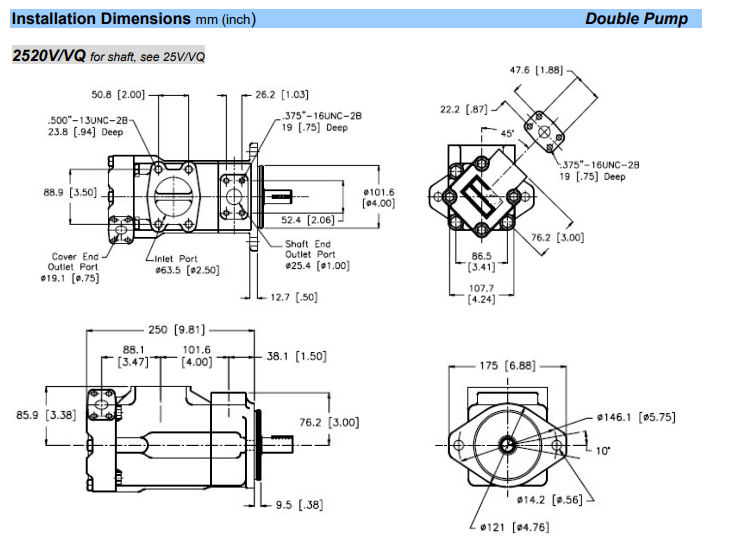
| 2520V / 2520VQ | Double Vane Pump | Two pumping cartridges with independent flow outputs | Industrial and mobile equipment |
| 3520V / 3520VQ | Double Vane Pump | Higher flow capacity in the main pumping section | Construction machinery |
| 3525V / 3525VQ | Double Vane Pump | High-flow dual-circuit configuration | Heavy-duty hydraulic equipment |
| 4525V / 4525VQ | Double Vane Pump | Large-displacement primary pumping section | Heavy machinery |
| 4535V / 4535VQ | Double Vane Pump | High-flow double vane pump design | Heavy-duty industrial and mobile hydraulic systems |
Variable Displacement Vane Pump
A variable displacement vane pump can adjust its displacement according to the pressure or flow requirements of the hydraulic system.
Unlike fixed displacement vane pumps, variable displacement vane pumps can reduce output flow under certain operating conditions, thereby reducing unnecessary hydraulic power consumption.
| Pump Type | Key Features | Typical Applications |
|---|---|---|
| Pressure-Compensated Variable Vane Pump | Automatically reduces displacement when the preset pressure is reached | Hydraulic power units |
| Adjustable Displacement Vane Pump | Allows displacement adjustment within its designed range | Industrial production equipment |
| Low-Noise Variable Vane Pump | Combines variable displacement control with low-noise operation | Machine tools and automation equipment |
Vickers Vane Pump Selection Guide
Selecting the right Vickers vane pump requires consideration of the hydraulic system type, operating pressure, flow requirements, pump displacement, rotation direction, and mounting configuration.
Proper selection affects not only the operating efficiency of the hydraulic system but also equipment stability and service life.
| Selection Step | Key Question | Selection Result |
|---|---|---|
| 1. Determine System Requirements | Does the system require one or two independent flow outputs? | Single or double vane pump |
| 2. Determine Operating Parameters | What are the operating pressure, flow rate, and speed? | Determine basic performance requirements |
| 3. Select Pump Displacement | What is the required displacement or displacement combination? | Determine displacement specifications |
| 4. Determine Displacement Control | Does the system require adjustable pump displacement? | Fixed or variable displacement vane pump |
| 5. Confirm Mounting Configuration | Do the flange, shaft type, rotation direction, and ports match? | Determine the complete ordering model |
Vickers Vane Pump Working Principle
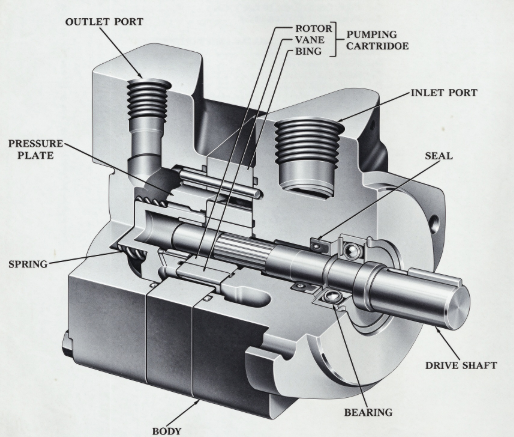
Vickers vane pumps operate by using changes in the enclosed volume formed between the vanes and cam ring as the rotor rotates, allowing hydraulic oil to be drawn in and discharged.
The main internal components include the rotor, vanes, cam ring, port plates, and drive shaft.
When the drive shaft rotates the rotor, the vanes remain in contact with the inner surface of the cam ring under centrifugal force and hydraulic pressure.
As the rotor rotates, the volume between adjacent vanes continuously changes:
Suction Process: When the enclosed volume increases, hydraulic oil enters the pumping chamber through the inlet port.
Discharge Process: When the enclosed volume decreases, the hydraulic oil is compressed and discharged through the outlet port.
Continuous Operation: The rotor continues rotating, producing a continuous flow of hydraulic oil.
Common Vickers balanced vane pumps typically feature symmetrically arranged suction and discharge zones, completing two sets of suction and discharge processes per revolution.
The main difference between single and double vane pumps is the number of pumping sections, rather than whether they complete only one or two suction and discharge cycles per revolution.
Vane pumps offer advantages such as compact construction, relatively small size, smooth operation, low flow pulsation, and reduced noise.
However, their internal components require high machining precision, and they have specific requirements for hydraulic oil cleanliness and suction conditions.
Providing Additional Hydraulic Oil in a Short Time
Some hydraulic systems equipped with Vickers vane pumps also include a hydraulic accumulator.
The accumulator can store pressurized hydraulic oil when the system’s oil supply exceeds demand and release the stored oil when additional flow is required for a short period.
This design helps meet temporary flow demands and, in properly designed systems, can reduce peak pump flow requirements and power consumption.
It is important to note that the accumulator is an auxiliary hydraulic system component and is not built into every Vickers vane pump.
Absorbing Pressure Pulsations and Hydraulic Shocks
Sudden changes in hydraulic oil flow velocity or direction may cause pressure fluctuations and hydraulic shocks.
A properly configured accumulator can absorb some of these pressure fluctuations, reducing the impact of hydraulic shocks on pumps, pipelines, and other hydraulic components.
In suitable system designs, an accumulator can also reduce pressure pulsations at the pump outlet, helping the hydraulic system operate more smoothly.
Maintaining Hydraulic System Pressure
When the hydraulic pump stops supplying oil or the system experiences a temporary flow shortage, the accumulator can release stored pressurized oil to provide temporary pressure support.
This function can compensate for system leakage for a limited period and provide emergency hydraulic power for certain equipment.
However, the actual pressure-holding duration depends on the accumulator capacity, precharge pressure, system leakage rate, and operating conditions. It cannot guarantee that the system will maintain pressure for an extended period.
Common Causes of Excessive Vickers Vane Pump Noise and Repair Methods
Vickers vane pumps typically operate with relatively low noise levels. However, excessive noise may develop during long-term operation due to insufficient oil supply, cavitation, internal wear, or installation problems.
Insufficient Oil Supply
When the suction strainer is clogged, the suction pipe diameter is too small, or the suction line is excessively long, the hydraulic pump may not receive enough hydraulic oil.
Repair Method: Check the hydraulic oil level, suction strainer, and suction piping. Remove any blockages and ensure that the suction line dimensions meet the manufacturer’s requirements.
Cavitation
Cavitation may occur when the pump inlet pressure is too low or when the oil temperature, viscosity, or suction conditions do not meet operating requirements.
Cavitation can cause abnormal noise and damage the vanes, cam ring, and other internal components.
Repair Method: Check the suction pressure, oil temperature, and suction piping. Eliminate blockages and air leaks, and ensure that the hydraulic pump operates within the specified conditions.
Internal Component Wear
When the vanes, rotor, cam ring, or port plates become worn, internal clearances may increase, resulting in higher noise levels, insufficient pressure, or reduced flow.
Repair Method: Inspect internal components for wear. For minor surface damage, determine whether repair is permitted according to the manufacturer’s maintenance standards.
If the cam ring, vanes, or port plates are severely worn, replace the affected components or the complete cartridge kit.
Improper Installation
Misalignment between the hydraulic pump and drive motor, loose couplings, or improperly secured mounting flanges may cause noticeable vibration and abnormal noise.
Repair Method: Check drive shaft alignment, coupling condition, and mounting bolts to ensure proper installation.
Hydraulic Oil Problems
Incorrect hydraulic oil viscosity, contamination, or air entrainment can cause abnormal pump operation.
Repair Method: Check the hydraulic oil viscosity, cleanliness, and condition. Filter or replace the hydraulic oil and eliminate air ingress when necessary.
How to Determine Whether Vane Pump Noise Is Normal
Normal noise levels vary among Vickers vane pump models depending on operating speed, pressure, displacement, installation method, and measurement distance.
If the operating noise becomes noticeably higher than normal or is accompanied by pressure loss, abnormal vibration, or increased temperature, the pump should be inspected and the problem resolved promptly.
How to Identify a Vickers Vane Pump Model
Vickers vane pump model numbers typically contain information about the product series, displacement codes, drive shaft configuration, rotation direction, port arrangement, and design version.
Correct model identification helps determine the hydraulic pump specifications and select suitable complete pumps, cartridge kits, and repair parts.
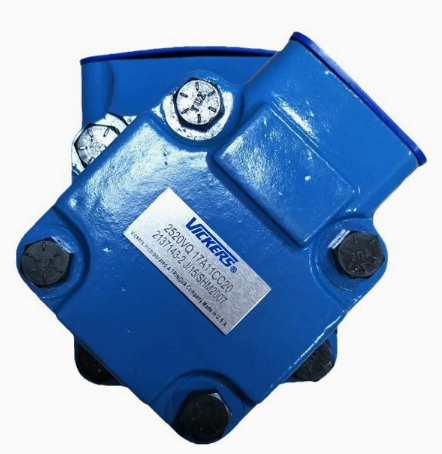
Vickers Vane Pump Model Number Example: 2520VQ17A11CC20
| Component | Code | Meaning | Description |
| Series | 2520VQ | Double vane pump series | 25 = SAE B flange; 20 = design series |
| First Pump Displacement | 17 | First pumping cartridge displacement | 14 cc/rev |
| Second Pump Displacement | A | Second pumping cartridge code | A = 11 cc, B = 12 cc, C = 14 cc |
| Shaft Configuration | 1 | Shaft type | 1 = keyed shaft, 2 = splined shaft |
Vickers Vane Pump Maintenance Tips
Regular maintenance is essential for ensuring stable Vickers vane pump operation, reducing mechanical wear, and extending service life.
Proper maintenance can help reduce hydraulic system failures, equipment downtime, and repair costs.
Vickers Vane Pump Maintenance Schedule
| Maintenance Item | Recommended Frequency | Maintenance Details |
|---|---|---|
| Hydraulic Oil Inspection | Monthly | Check oil level, color, viscosity, and contamination |
| Suction Strainer Inspection | Every 500 hours | Inspect for blockages; clean or replace if necessary |
| Return Oil Filter Inspection | Every 500 hours | Check filter contamination and replace according to the differential pressure indicator |
| Pump Cartridge Inspection | Assess every 2,000 hours | Inspect the vanes, rotor, cam ring, and port plates based on wear symptoms and equipment requirements |
| Noise Monitoring | Monthly | Compare operating noise with normal levels and check for abnormal vibration, cavitation, and suction problems |
| Coupling Inspection | Every 3 months | Check shaft alignment, connections, and flexible coupling wear |
| Hydraulic Oil Replacement | Assess every 2,000 hours or 1 year | Replace hydraulic oil according to oil analysis results and equipment requirements |
The maintenance intervals above are general recommendations and are not official service intervals applicable to all Vickers models. Actual maintenance schedules should be determined according to the manufacturer’s service manual, equipment operating conditions, oil analysis results, and filter condition.
Regularly Inspect Hydraulic Oil
Hydraulic oil not only transmits power but also provides lubrication, cooling, and protection against internal wear.
Regularly check the hydraulic oil level, color, viscosity, and the presence of moisture, metal particles, or other contaminants.
If the hydraulic oil shows significant contamination or performance deterioration, identify the cause and treat or replace the oil according to equipment requirements.
Keep the Filtration System Clean
Suction strainers and return oil filters help control contaminants in the hydraulic system.
Clogged filters may cause abnormal hydraulic system operation. Excessive suction-side resistance, in particular, can lead to cavitation and internal pump damage.
Inspect the Vane Pump Cartridge
Some Vickers vane pumps feature replaceable cartridge designs.
If the hydraulic pump experiences insufficient pressure, reduced flow, increased internal leakage, or abnormal noise, inspect the internal cartridge components for wear.
Focus on checking the vanes, rotor, cam ring, port plates, and related seals.
If the cartridge is severely worn, select a suitable cartridge kit for replacement based on the complete pump model and OEM part number.
Monitor Noise and Vibration
Operating noise and vibration are important indicators of hydraulic pump condition. Early detection of abnormalities can help prevent further damage.
If the pump produces unusual noise, increased vibration, or intermittent abnormal sounds, inspect the hydraulic oil, suction piping, coupling, and internal components.
Check the Coupling and Mounting Condition
The coupling transmits power from the drive equipment to the hydraulic pump.
During maintenance, inspect the coupling for wear, check for loose mounting bolts, and verify drive shaft alignment.
Improper installation may increase bearing loads and cause vibration, noise, and other mechanical failures.
Replace Hydraulic Oil Based on Its Condition
Hydraulic oil service life is affected by operating temperature, load, contamination levels, and equipment operating environment.
For continuously operating industrial hydraulic systems, determine the oil replacement interval according to the equipment maintenance manual and oil analysis results rather than relying entirely on fixed operating hours.
When replacing hydraulic oil, use oil that meets the equipment requirements and follow the specified bleeding and startup procedures.
Conclusion
Vickers vane pumps are widely used in industrial hydraulic systems and construction machinery due to their stable flow output, relatively low operating noise, and proven structural design.
Single vane pump series such as V10, V20, 25V, 35V, 45V, 25VQ, 35VQ, and 45VQ are suitable for hydraulic systems with different flow requirements, while double vane pump series such as 2520VQ, 3525VQ, and 4535VQ can meet the requirements of multiple hydraulic circuits.
When selecting or repairing a Vickers vane pump, it is important to consider the complete model number, displacement, operating pressure, rotation direction, and mounting configuration. Depending on the actual wear condition, users can choose to replace the complete pump or the cartridge kit.
Proper pump selection, correct installation, and regular maintenance can help reduce the risk of pump failures, extend equipment service life, and minimize hydraulic system downtime.


