
When replacing a fuel injector, one of the most important decisions is whether to choose an original fuel injector or a high-quality aftermarket fuel injectors.
Original fuel injectors are supplied as original equipment for a specific vehicle or engine application. Aftermarket fuel injectors are manufactured by third-party manufacturers and are designed as replacement parts for the same applications.
A properly manufactured aftermarket fuel injector can provide the same basic application compatibility as the original part, including the required fuel flow, electrical characteristics, connector type, and physical dimensions.
However, not all aftermarket fuel injectors are the same. Understanding the differences between original and aftermarket products can help you make a better purchasing decision.
Price
Price is one of the most noticeable differences between original and aftermarket fuel injectors.
Original fuel injectors are usually more expensive because they are supplied through the original equipment supply chain.
For older or less common vehicles, original injectors may also be difficult to find or may have been discontinued.
High-quality aftermarket fuel injectors can provide a more affordable replacement solution. Depending on the application and manufacturer, aftermarket products may cost significantly less than the original part.
For engines that require multiple injectors, such as V6 or V8 engines, the total cost difference can become substantial when replacing the complete set.
However, price should not be the only factor when choosing an aftermarket fuel injector. Quality, compatibility, testing, and warranty are equally important.
Consistency
Original fuel injectors are manufactured according to the specifications required for their intended engine application. This means that important characteristics such as fuel flow, electrical performance, dimensions, and connector configuration are designed to match the original system.
The quality of aftermarket fuel injectors can vary significantly between manufacturers.
A reliable aftermarket manufacturer should have strict quality-control procedures and test products before shipment. Flow testing is particularly important because differences in injector flow can affect engine performance.
When purchasing an aftermarket fuel injector, look for a supplier that can provide:
- Flow test data
- Product specifications
- Electrical test information
- Quality-control procedures
- Warranty coverage
- Accurate part-number cross-reference information
A good aftermarket fuel injector should be selected based on documented specifications and quality control not simply the lowest price.
Compatibility
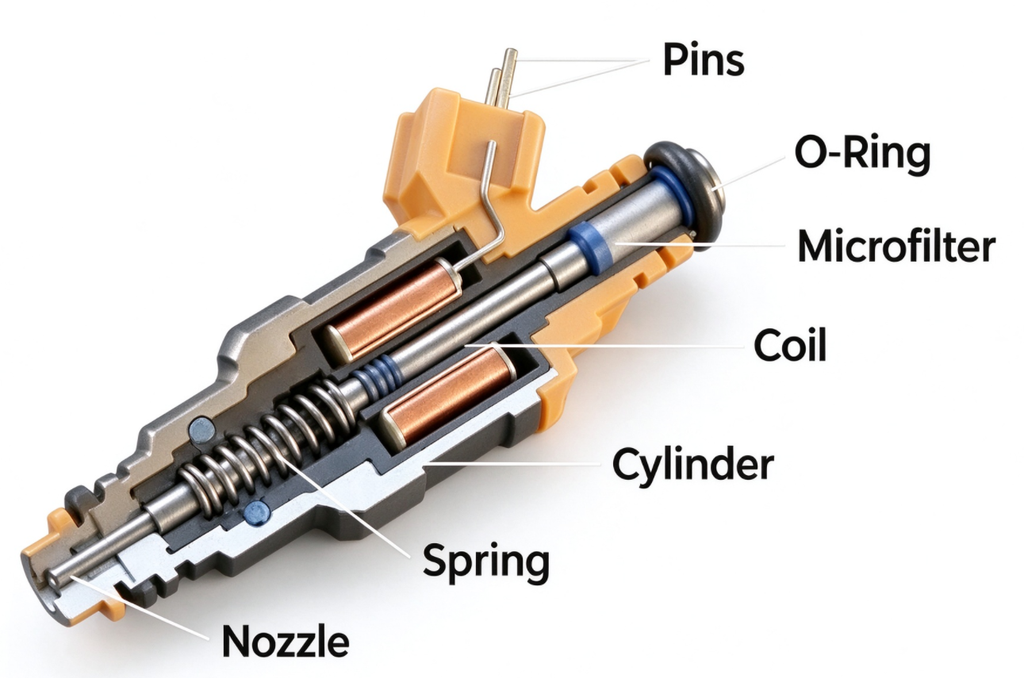
Compatibility is one of the most important factors when selecting a fuel injector.
A replacement injector must not only fit physically but also work correctly with the vehicle’s fuel system and ECU.
The part number is one of the most reliable ways to identify the correct fuel injector.
For example, an original injector may have a specific part number that is used across several vehicle or engine applications. When purchasing an aftermarket replacement, the manufacturer’s cross-reference should match the original part number and application.
Always confirm the part number and engine application before purchasing.
Original vs. Aftermarket Fuel Injectors
Both original and aftermarket fuel injectors have their own advantages.
| Feature | Original Fuel Injectors | Aftermarket Fuel Injectors |
| Price | Usually higher | Usually more affordable |
| Availability | May be limited for older vehicles | Often easier to source |
| Compatibility | Designed for the original application | Must be verified carefully |
| Specifications | Original specifications | Should match the original application |
| Testing | Controlled by the original supply chain | Depends on manufacturer |
| Warranty | Usually available | Depends on supplier |
| Custom Applications | Limited | More flexible |
- The important point is that aftermarket does not automatically mean low quality.
- A high-quality aftermarket fuel injector can be a reliable replacement when it is manufactured according to the correct application requirements and properly tested before shipment
When Should You Choose an Original Fuel Injector?
An original fuel injector may be the best choice when:
- The vehicle is still under warranty.
- The engine is completely original and unmodified.
- You want the lowest possible compatibility risk.
- The original part is readily available at a reasonable price.
- The vehicle is used in an application with strict emissions requirements.
- The manufacturer specifically recommends the original component.
For newer vehicles or applications where maintaining the original configuration is the highest priority, an original fuel injector can provide additional peace of mind.
When Is an Aftermarket Fuel Injector a Good Choice?
A high-quality aftermarket fuel injector can be a practical choice when:
- The original injector has been discontinued.
- The original part is difficult to source.
- The original injector is expensive.
- You need to replace a complete set of injectors.
- You are repairing an older vehicle.
- You need a cost-effective replacement.
- The aftermarket manufacturer provides detailed specifications.
- Flow testing and quality-control information are available.
- The supplier provides a clear warranty.
Aftermarket injectors can also be useful for modified or performance engines where different fuel-flow requirements may apply.
Example: Toyota 3VZ-E Fuel Injectors
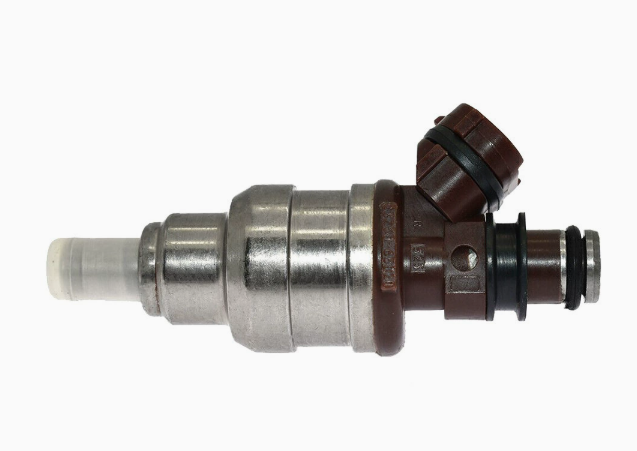
The Toyota 3VZ-E engine is a good example of where aftermarket fuel injectors can be particularly useful.
This engine was used in older Toyota applications, including certain 4Runner and T100 models. As these vehicles become older, original replacement injectors can become difficult to find or may no longer be available.
In this situation, a high-quality aftermarket injector that is correctly matched to the original application can provide a practical replacement solution.
The goal is not simply to find the cheapest injector, but to find a replacement that provides correct compatibility, stable performance, and reliable service life.
How to Choose the Right Fuel Injector
Choosing between an original and aftermarket fuel injector does not have to be complicated.
Start by confirming the original part number and engine model. Then compare the key specifications, including:
- Fuel flow rate
- Electrical resistance
- Connector type
- Injector dimensions
- Fuel compatibility
- Application compatibility
- Testing information
- Warranty
If an aftermarket injector meets the required specifications and comes from a reliable manufacturer or supplier, it can be a cost-effective alternative to an original injector.
Conclusion
Original fuel injectors offer the advantage of established application compatibility and original specifications. However, they can be expensive or difficult to source, especially for older vehicles.
High-quality aftermarket fuel injectors provide another option for customers looking for a more cost-effective replacement. The key is to choose a manufacturer that focuses on accurate specifications, consistent quality, proper testing, and reliable after-sales support.
The best fuel injector is not necessarily the most expensive one. It is the one that correctly matches the engine, fits the fuel system, provides stable performance, and meets the requirements of the application.
For any replacement fuel injector, always confirm the part number, engine model, specifications, and application compatibility before placing an order.
FAQ
Are aftermarket fuel injectors as good as original fuel injectors?
High-quality aftermarket fuel injectors can provide reliable performance when they are manufactured according to the required specifications and properly tested. Before purchasing, check the fuel flow rate, electrical resistance, connector type, dimensions, part number, and warranty.
How do I know if an aftermarket fuel injector is compatible with my vehicle?
The best way is to confirm the original part number, engine model, vehicle model, and year. You should also compare the injector’s flow rate, resistance, connector type, dimensions, and other specifications with the original injector.
Are aftermarket fuel injectors cheaper than original injectors?
In most cases, aftermarket fuel injectors are more affordable than original parts. The exact price difference depends on the vehicle, engine, injector type, manufacturer, and quantity required.


