
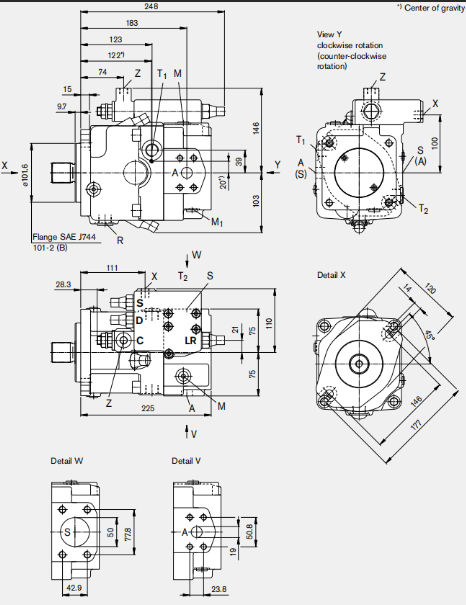
The Rexroth A11VO Piston Pump is widely used in excavators, mining machinery, and other heavy-duty hydraulic equipment.
The A11VO series features a variable displacement design that allows the output flow to be adjusted according to the actual requirements of the hydraulic system.
The A11VLO series is equipped with a built-in charging impeller, which helps improve inlet oil supply performance under specific operating conditions.
During long-term operation, Rexroth A11VO piston pumps may experience problems such as insufficient pressure, slow operation, engine stalling, abnormal noise, overheating, displacement control malfunctions, and oil leakage.
These problems are commonly associated with hydraulic oil contamination, internal component wear, poor suction conditions, control valve failures, or improper installation.
Rexroth A11VO Piston Pump Models and Specifications
| Product Series | Model | Maximum Theoretical Displacement (cm³/rev) | Design Features |
|---|---|---|---|
| A11VO | A11VO40 | 42 | Standard Variable Displacement Axial Piston Pump |
| A11VO | A11VO60 | 58.5 | Standard Variable Displacement Axial Piston Pump |
| A11VO | A11VO75 | 74 | Standard Variable Displacement Axial Piston Pump |
| A11VO | A11VO95 | 93.5 | Standard Variable Displacement Axial Piston Pump |
| A11VO | A11VO130 | 130 | Standard Variable Displacement Axial Piston Pump |
| A11VO | A11VO145 | 145 | Standard Variable Displacement Axial Piston Pump |
| A11VO | A11VO190 | 193 | Standard Variable Displacement Axial Piston Pump |
| A11VO | A11VO260 | 260 | Standard Variable Displacement Axial Piston Pump |
| A11VLO | A11VLO130 | 130 | Variable Displacement Axial Piston Pump with Built-in Charging Impeller |
| A11VLO | A11VLO145 | 145 | Variable Displacement Axial Piston Pump with Built-in Charging Impeller |
| A11VLO | A11VLO190 | 193 | Variable Displacement Axial Piston Pump with Built-in Charging Impeller |
| A11VLO | A11VLO260 | 260 | Variable Displacement Axial Piston Pump with Built-in Charging Impeller |
Insufficient System Pressure and Weak Machine Performance
When hydraulic system pressure is insufficient, an excavator may experience weak boom lifting, slow digging movements, and insufficient output under heavy-load conditions.
A Rexroth A11VO Piston Pump may deliver insufficient flow when the power control setting is too low.
DR Pressure Cut-Off Valve Failure
Troubleshooting:
Inspect the DR pressure cut-off valve and its control oil passages. Remove contaminants from the valve spool and damping orifices.
If the pressure cut-off setting needs adjustment, calibrate it according to the technical requirements of the specific pump model and equipment manufacturer. Tighten the adjustment locking mechanism after calibration.
Internal Piston Pump Wear
Possible Causes:
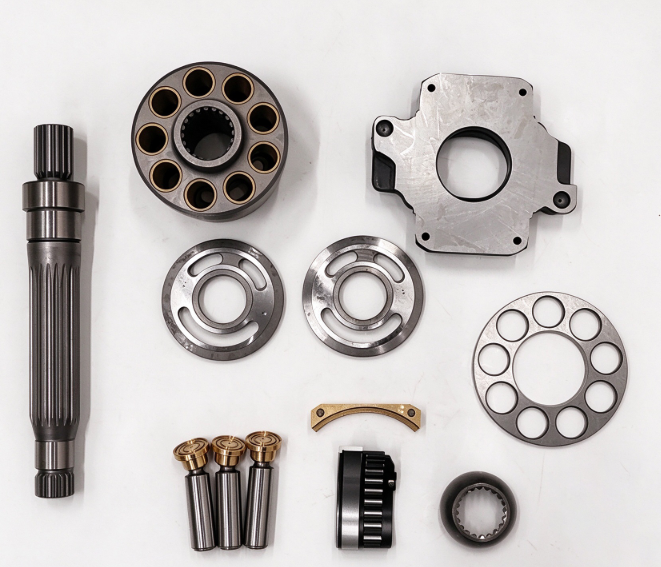
Long-term operation or hydraulic oil contamination may cause wear to internal components such as the valve plate, pistons, slippers, and cylinder block.
This increases internal leakage and results in insufficient hydraulic pressure.
Diagnosis:
Measure the pump case drain flow under the specified pressure, speed, and oil temperature conditions, and compare the results with the manufacturer’s allowable values.
If the case drain flow significantly exceeds the specified range, it may indicate severe internal pump wear.
Troubleshooting:
Disassemble and inspect the major friction components, including the pistons, slippers, cylinder block, and valve plate.Internal wear in a Rexroth A11VO Piston Pump can increase case drain flow and reduce hydraulic pressure.
Abnormal LS Load-Sensing Signal
Possible Causes:
- Blocked or leaking LS signal lines.
- Sticking LS control valve spool.
- Abnormal load-sensing differential pressure.
Troubleshooting:
Inspect the LS signal lines and related control valves. Remove any blockages and confirm that the signal pressure can be transmitted correctly.
If necessary, adjust the LS control differential pressure according to the manufacturer’s specified testing conditions.
Insufficient Oil Supply or Air Entering the System
Possible Causes:
- Low hydraulic oil level in the tank.
- Clogged suction strainer.
- Poor sealing at suction connections.
- Excessive suction line resistance.
- Worn or damaged built-in charging impeller in A11VLO pumps.
Troubleshooting:
Check the hydraulic oil level, suction strainer, suction piping, and connection seals to eliminate insufficient oil supply and air ingress.
For A11VLO models, inspect the operating condition of the built-in charging impeller according to the symptoms.
Diagnostic Tip:
If the machine operates normally when cold but becomes noticeably weak after warming up, pay particular attention to internal leakage in the hydraulic pump.
As oil temperature increases, hydraulic oil viscosity may decrease, making leakage caused by internal wear more noticeable.
However, leakage in control valves, actuators, and other hydraulic system components should also be investigated. Internal pump damage cannot be confirmed based solely on differences between cold and hot operation.
Insufficient Flow and Slow Operation Under Heavy Loads
If an excavator operates normally without a load but its actuators slow down significantly under load, the problem may be related to power control, maximum displacement limits, or drive speed
LR Power Control Setting Too Low
Possible Causes:
If the LR power control setting is too low, the hydraulic pump may reduce its displacement prematurely as the load increases, resulting in insufficient output flow.
Troubleshooting:
Check the power control setting and adjust it according to the engine output power and hydraulic system design requirements.
During adjustment, consider other engine loads and transmission losses to prevent the pump’s absorbed power from exceeding the available engine power.
Incorrect Maximum Displacement Limit Setting
Possible Causes:
The maximum displacement limit screw may have been incorrectly adjusted, preventing the swash plate from reaching its specified maximum angle.
Troubleshooting:
Inspect the maximum displacement limiting mechanism and restore the correct setting according to the manufacturer’s technical documentation.
Do not change the factory-set limit without authorization, as this may cause internal mechanical interference or hydraulic system overload.
Insufficient Input Speed
Possible Causes:
Insufficient engine speed.
Significant engine speed drop under load.
Worn coupling or abnormal power transmission.
Troubleshooting:
Check the actual engine output speed and load capacity, and confirm that the drive coupling can transmit power correctly.
Sticking Control Valve Spool
Possible Causes:
A sticking spool inside the LRDS control valve assembly may prevent the displacement control mechanism from adjusting the swash plate angle correctly.
Troubleshooting:
Check the cleanliness of the control oil circuit, clean the control valve assembly according to maintenance requirements, and confirm that the displacement control mechanism operates normally.
Engine Overloading, Speed Drop, or Stalling
Engine overloading is a relatively common problem in excavator hydraulic systems.
When the power absorbed by the hydraulic pump exceeds the power available from the engine, engine speed may drop significantly, and severe cases may result in stalling.
LR Power Control Setting Too High
Possible Causes:
An excessively high hydraulic pump power control setting may cause the pump to absorb more power than the engine can provide under heavy loads.
Troubleshooting:
Check the actual engine power and the hydraulic pump power control setting.
Readjust the settings according to the power-matching requirements specified by the equipment manufacturer to prevent hydraulic system overload.
Abnormal LS Control Differential Pressure
Possible Causes:
An abnormal LS control valve or a blocked damping orifice may prevent the displacement control mechanism from adjusting pump displacement according to load requirements.
Troubleshooting:
Inspect the LS valve spool, control oil passages, and damping orifices. Measure the relevant pressures and adjust the control parameters according to the manufacturer’s specifications.
Sticking Swash Plate Displacement Control Mechanism
Possible Causes:
Wear, scoring, or sticking of the control piston or swash plate control mechanism may prevent the hydraulic pump from reducing displacement promptly.
Troubleshooting:
Inspect the control piston and related mechanisms, remove contaminants, and repair or replace severely worn or damaged components.
Abnormal Piston Pump Noise and Vibration
The Rexroth A11VO piston pump should maintain relatively stable operation under normal working conditions.
If noticeable whining, metallic knocking, or abnormal vibration occurs, identify the possible causes based on the sound characteristics and operating parameters.
Common Abnormal Noises and Possible Causes:
| Abnormal Symptom | Possible Causes | Inspection Direction |
|---|---|---|
| Sharp whining or hissing | Insufficient oil supply, cavitation, or air entering the hydraulic system | Check oil level, suction lines, and inlet conditions |
| Metallic knocking | Damaged pistons, slippers, bearings, or other internal components | Stop the machine and inspect internal pump components |
| Significant low-frequency vibration | Coupling misalignment or insufficient mounting base rigidity | Check drive shaft alignment and mounting conditions |
| Intermittent abnormal noise | Unstable control system, pressure fluctuations, or suction problems | Check control pressure and hydraulic system conditions |
Abnormal Rexroth A11VO Piston Pump noise may indicate cavitation, internal damage, or installation problems.
Air Ingress or Cavitation
Possible Causes:
Low hydraulic oil level, a clogged suction strainer, suction line leaks, undersized suction pipes, or excessive pipe bends may affect the pump’s inlet oil supply.
For Rexroth A11VLO piston pumps, abnormal operation of the built-in charging impeller may also affect inlet oil supply conditions.
Troubleshooting:
Add hydraulic oil that meets the specified requirements, inspect the suction piping and sealing connections, and clean blocked filtration components.
If necessary, inspect the built-in charging impeller of the Rexroth A11VLO pump for wear.
Internal Mechanical Component Damage
Possible Causes:
Hydraulic oil contamination or prolonged abnormal operation may cause slipper wear, piston damage, valve plate scoring, and bearing failures.
Troubleshooting:
If significant metallic knocking occurs, stop the machine immediately and inspect it after safely releasing hydraulic system pressure.
Continued operation may cause further internal component damage and increase repair costs.
Installation or Coupling Problems
Possible Causes:
Drive shaft misalignment, coupling wear, or loose mounting foundations may cause abnormal vibration.
Troubleshooting:
Check the alignment between the pump and drive equipment, and make adjustments according to the tolerances specified by the coupling and equipment manufacturers.
Excessive Pump Housing or Hydraulic Oil Temperature
When the temperature of Rexroth A11VO piston pump rises abnormally, it may indicate internal leakage, restricted case drainage, insufficient cooling capacity, or continuous energy losses within the hydraulic system.
The actual allowable temperature should be determined according to the pump model, hydraulic oil viscosity, and operating conditions specified by the manufacturer.
Heat Generation Caused by Internal Wear
Possible Causes:
When internal friction components wear, high-pressure oil may leak through excessive clearances, converting part of the hydraulic energy into heat.
Troubleshooting:
Measure the case drain flow and evaluate internal wear based on operating pressure and oil temperature.
If severe wear is confirmed, arrange pump repair or replace the affected components.
Abnormal Case Drain Line
Possible Causes:
- Blocked case drain line.
- Insufficient pipe diameter.
- Excessive return line resistance.
- Case pressure exceeding the allowable range.
Troubleshooting:
Inspect the installation and flow capacity of the case drain line to ensure that it meets the manufacturer’s requirements for case drainage and pressure.
Avoid improper piping arrangements that restrict oil drainage, and confirm the correct positions of the case filling and drain ports according to the specifications.
Insufficient Hydraulic Oil Cooling Capacity
Possible Causes:
A clogged hydraulic oil cooler, cooling fan failure, or reduced cooling system efficiency may cause continuous oil temperature increases.
Troubleshooting:
Inspect and clean the cooler, and confirm that the cooling fan and related cooling components operate normally.
Hydraulic Oil Deterioration or Continuous System Relief
Possible Causes:
Incorrect hydraulic oil viscosity, oil deterioration, or continuous discharge of high-pressure oil through the relief valve may generate excessive heat.
Troubleshooting:
Select hydraulic oil with the appropriate viscosity grade according to the equipment manufacturer’s requirements, and check whether the relief valve is sticking or continuously relieving pressure.
Abnormal Displacement Control and Continued Hydraulic Flow in Neutral
When the control lever returns to neutral but the actuator continues moving slowly, the problem may be related to the displacement control system, internal leakage in the main control valve, or failure of the valve spool to return to neutral.
Common Causes
- Sticking displacement control piston.
- Sticking LRDS control valve spool.
- Blocked control valve damping orifices.
- Worn swash plate control mechanism.
- Abnormal main control valve neutral position or internal leakage.
Troubleshooting
First, check the operating control signal and the neutral position of the main control valve to determine whether the problem originates from the hydraulic pump.
Then inspect the displacement control pressure and operating condition of the LRDS valve assembly. Clean the control valve and damping orifices according to the specified procedures.
If the displacement control mechanism shows severe scoring or sticking, disassemble and inspect it after safely releasing system pressure.
It is important to note that, with certain control configurations, the A11VO piston pump may not automatically return to zero displacement when the directional control valve is in neutral.
Therefore, continued pump output in neutral does not necessarily indicate a displacement control failure.
Rexroth A11VO Piston Pump Oil Leakage Problems
Oil leakage in Rexroth A11VO piston pumps commonly occurs at the drive shaft seal, pump housing mating surfaces, or hydraulic pipe connections.
Drive Shaft Oil Seal Leakage
Possible Causes:
- Excessive case pressure.
- Abnormal radial loads on the coupling.
- Aged or worn shaft seal.
- Incompatibility between the seal material and hydraulic oil.
Troubleshooting:
Check the case drain line and case pressure, and verify the installation condition of the drive shaft and coupling.
If the shaft seal is worn or damaged, select an original or compatible replacement seal with the correct material and dimensions according to the complete pump model.
Pump Housing Mating Surface Leakage
Possible Causes:
- Loose mounting bolts.
- Aged or damaged seals.
- Damaged housing mating surfaces.
Troubleshooting:
Inspect the mating surfaces and mounting bolts, and follow the manufacturer’s specified tightening sequence and torque requirements.
Replace the corresponding sealing components if they are damaged.
Rexroth A11VO Piston Pump Quick Troubleshooting Procedure
When insufficient pressure, slow operation, or abnormal noise occurs, troubleshooting should proceed from simple external checks to more complex internal inspections.
| Troubleshooting Step | Inspection Item | Main Purpose |
|---|---|---|
| Step 1 | Check hydraulic oil level, oil condition, and filters | Eliminate insufficient oil supply and contamination |
| Step 2 | Check suction lines and connections | Eliminate suction restrictions and air ingress |
| Step 3 | Measure case drain flow | Evaluate internal leakage and wear |
| Step 4 | Measure LS, DR, and LR control parameters | Determine whether the control system is functioning correctly |
| Step 5 | Inspect abnormal noise and vibration | Distinguish cavitation, installation problems, and mechanical wear |
| Step 6 | Inspect control valves and damping orifices | Eliminate sticking or blocked control components |
| Step 7 | Disassemble the hydraulic pump if necessary | Inspect major friction components and the displacement control mechanism |
Before testing, confirm the appropriate pressure measurement ports, test conditions, and allowable pressure limits.
Never disconnect hydraulic lines or control valves while the system is pressurized.
Important Rexroth A11VO Piston Pump Maintenance and Safety Precautions
Fill the Pump with Oil Before Startup
Before the first startup or restarting Rexroth A11VO piston pump after maintenance, fill the pump housing with hydraulic oil according to the manufacturer’s requirements and ensure that the specified lubrication and bleeding conditions are met.
Starting the pump without sufficient oil may rapidly damage the slippers, cylinder block, valve plate, and other internal components.
Strictly Control Operating Pressure
Different Rexroth A11VO piston pump sizes may have different continuous operating pressure and peak pressure ratings.
Pressure specifications for one model should not be applied directly to the entire series. Permitted short-term peak pressure must not be treated as continuous operating pressure.
Maintain Hydraulic Oil Cleanliness
Hard particles in hydraulic oil may cause wear to pistons, slippers, and valve plates, and may also cause control valves to stick.
Maintain hydraulic oil cleanliness according to the technical requirements of the specific pump model, and regularly inspect the filtration system and oil contamination levels.
Adjust the LRDS Control System Correctly
When adjusting pressure cut-off, power control, and load-sensing control parameters, use suitable pressure testing equipment and follow the manufacturer’s specified adjustment sequence and testing conditions.
Do not change factory settings without proper verification.
Inspect the Built-In Charging Impeller of A11VLO Pumps
For A11VLO models, if insufficient oil supply, cavitation, or abnormal inlet conditions occur, inspect the built-in charging impeller and related inlet oil supply conditions.
Avoid Continued Operation with Existing Faults
If significant metallic knocking, severe cavitation, rapid temperature increases, or abnormal pressure occurs, stop the machine promptly for inspection to reduce the risk of further internal component damage.
Conclusion
Rexroth A11VO piston pumps are widely used in heavy-duty hydraulic equipment. Their common problems include insufficient system pressure, reduced flow, engine overloading, abnormal noise, overheating, displacement control malfunctions, and external oil leakage.
During repair, priority should be given to inspecting hydraulic oil condition, suction conditions, and external piping before gradually checking the LRDS control system and internal pump wear.
For critical components such as valve plates, pistons, slippers, cylinder blocks, and bearings, severely worn or damaged parts should be replaced with suitable repair components selected according to the complete pump model and maintenance specifications.
Proper fault diagnosis, standardized repair procedures, and regular maintenance can effectively reduce hydraulic pump failure risks, extend the service life of A11VO piston pumps, and minimize construction machinery downtime.


