
Choosing the right durable excavator parts is essential for keeping equipment operating reliably, reducing failures, and controlling downtime costs.
Excavators often work under high loads and in environments involving dust, mud, water, impact, and large temperature changes. Even the same excavator model may require different levels of component performance depending on whether it is used in mining, quarrying, earthmoving, or general construction.
Therefore, when choosing excavator parts, you should not consider only the machine model and purchase price. You should also consider:
- Actual working conditions
- Component structure
- Material performance
- Service life
- Maintenance frequency
- Downtime risk
- Supply stability
- Shipping and delivery time
For critical components such as hydraulic pumps, travel motors, swing motors, seal kits, undercarriage parts, and engine parts, correct selection is often more important than simply choosing the lowest price.
Farinparts provides replacement parts for excavators and heavy equipment and can help confirm compatibility based on the machine model, serial number, part number, or photos of the original part.
What Is the Difference Between Mining and Earthmoving Conditions?
From an engineering perspective, mining and general earthmoving are not simply a matter of “heavy-duty” versus “light-duty” operation.
There are significant differences in working materials, impact intensity, continuous operating time, and wear patterns.
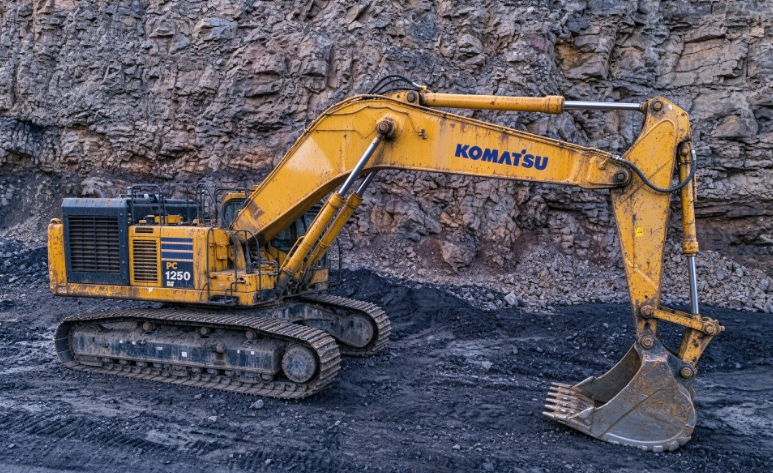
Mining Conditions
Excavators working in mines or quarries typically face:
- High-hardness materials such as granite, basalt, iron ore, and blasted rock;
- Sharp-edged materials that continuously impact buckets, bucket teeth, and undercarriage components;
- Long periods of high-load or near-full-load operation;
- Dust, vibration, and high-temperature environments;
- Less natural cooling and less downtime.
Therefore, mining equipment parts place greater emphasis on:Impact resistance, wear resistance, high strength, and reliability.
Earthmoving Conditions
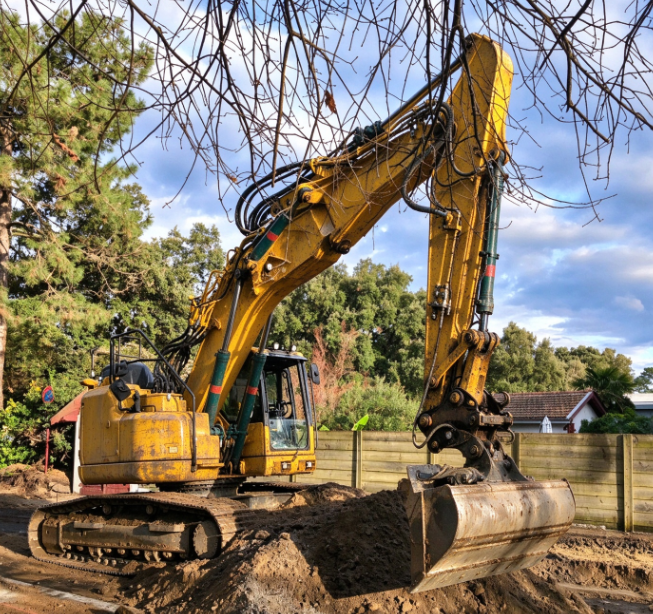
General earthmoving applications more commonly involve:
- Clay
- Sand
- Backfill
- Loose soil
- Medium- to low-hardness mixed materials
Compared with mining, digging resistance and impact loads are generally more stable.
Equipment is also more likely to operate in medium- or low-load ranges, so component wear tends to be more gradual.
These working conditions place greater emphasis on:
Stable service life, dimensional accuracy, ease of maintenance, and cost control.
Differences in Parts Selection for Mining and Earthmoving
| Comparison | Mining / Quarry Conditions | General Earthmoving Conditions |
|---|---|---|
| Working Material | Rock, ore, blasted stone | Soil, sand, clay, backfill |
| Impact Load | High | Medium to low |
| Continuous Operating Time | Long periods under high load | Intermittent or medium load |
| Main Wear Type | Impact, cutting, abrasive wear | Fatigue and general wear |
| Parts Requirements | High strength, toughness, and impact resistance | Stability, durability, and dimensional consistency |
| Selection Priority | Prevent sudden failure and unplanned downtime | Extend service intervals and control maintenance costs |
| Cost Priority | Downtime risk first | Lifecycle cost and replacement frequency |
Mining applications focus more on preventing sudden failure, while earthmoving applications focus more on stable, durable, and predictable service life.
A component that performs well in normal earthmoving work may not necessarily be suitable for long-term mining operations.
How to Choose the Right Excavator Parts
Choosing durable excavator parts requires more than matching a machine model or part number. The actual operating environment should also be considered.
Consider Working Conditions, Not Just the Machine Model
The same excavator model may require completely different component grades depending on the operating environment.
For example, the same 20-ton excavator may work:6–8 hours per day in general earthmoving;
or more than 12 hours continuously in mining while operating under much higher impact loads.
Before selecting parts, consider:
- Excavated material
- Daily operating hours
- Impact frequency
- Ambient temperature
- Dust conditions
- Hydraulic system pressure
- Whether the machine operates continuously under high load
Then select the appropriate product specification.
Do Not Focus Only on High Hardness
This is a common mistake when selecting mining parts.
Many users assume:Higher hardness = better durability.
This is not always true.
For parts exposed to high impact, very high hardness combined with insufficient toughness may result in:
- Localized breakage
- Chipping
- Microcracks
- Brittle fracture
For example, bucket teeth, bushings, pins, and some undercarriage components require not only wear resistance but also sufficient impact resistance.
A properly selected material should therefore balance: Hardness + Strength + Toughness + Wear Resistance
Include Downtime Costs in the Calculation
When purchasing parts, do not compare only the unit price.
The actual operating cost also includes:
- Installation labor
- Repair time
- Shipping costs
- Repeat purchasing costs
- Equipment downtime losses
- Damage to related components
For example, if a component costs 20% less but lasts only half as long as another option, its actual operating cost may be higher.
For mining, ports, infrastructure, and large construction projects, downtime costs can sometimes be much higher than the cost of the part itself.
A more reasonable approach is to evaluate:Total Cost of Ownership.
Although durable excavator parts may have a higher initial cost, longer service life and fewer replacements can reduce total operating costs.
Prioritize Mature and Stable Specifications
For frequently replaced parts and repair components, supply stability is also important.
Examples include:
- Seal Kit
- Hydraulic Pump Parts
- Travel Motor Parts
- Swing Motor Parts
- Carrier
- Bearings
- Bushings
- Undercarriage Parts
Common Excavator Parts Selection Mistakes
Mistake 1: Focusing Only on High Hardness in Mining Applications
In high-impact rock environments, materials with high hardness but insufficient toughness may fail suddenly.
This type of failure is often not gradual wear, but: Crack → Crack Propagation → Sudden Failure
This can seriously affect continuous equipment operation.
Mistake 2: Ignoring Fatigue Wear in Earthmoving Applications
Although the load from each individual earthmoving cycle may be relatively low, repeated operation creates long-term cyclic stress.
Over time, this can lead to:
- Increased pin clearance
- Bushing wear
- Increased bearing clearance
- Reduced hydraulic sealing performance
- Reduced precision in swing or working equipment
These failures may not stop the machine immediately, but they can gradually reduce operating efficiency.
Mistake 3: Comparing Only Unit Prices
Low-cost parts that require frequent replacement increase:
Labor + Downtime + Logistics + Repeat Repair Costs
For critical components, reliability and stable service life are usually more important than the lowest purchase price.
Original Parts or Aftermarket Parts?
Original Parts
Their main advantages generally include:
- Clearly defined original specifications
- Higher certainty of compatibility
- Standardized manufacturing requirements
- Suitable for machines under warranty or critical repairs
However, original parts are usually more expensive, and some models may have longer delivery times.
Aftermarket Parts
Aftermarket parts are replacement parts produced by third-party manufacturers.
High-quality aftermarket parts generally offer:
- More competitive pricing
- A wider range of supply options
- Shorter delivery times
- Coverage for some discontinued or older equipment models
However, aftermarket product quality can vary significantly.
When purchasing, pay particular attention to:
- Manufacturer
- Material
- Part Number
- Dimensions
- Compatibility
- Warranty
- Supplier Experience
Do not make a decision based only on the lowest price.Both original and high-quality aftermarket products can provide durable excavator parts, provided that material quality, specifications, and compatibility are properly verified.
Consider the Actual Operating Environment
The working environment directly affects component service life.
Heavy-Duty Environments
Examples include:
- Mining
- Quarry
- Demolition
- Heavy Excavation
Greater attention should be given to:Impact resistance, fatigue resistance, and wear resistance.
High-Temperature Environments
Pay particular attention to whether the following components are suitable for long-term high-temperature operation:
- Hydraulic seals
- O-rings
- Hoses
- Bearings
- Lubricants
Muddy and Wet Environments
Focus on:
- Corrosion resistance
- Dust protection
- Seal performance
- Bearing protection
If mud, sand, or water enters the hydraulic motor, final drive, or bearing area, internal wear can accelerate.
Focus on Routine Inspection and Maintenance
Even durable components require proper maintenance.
Regular inspections can identify problems before they develop into major failures.
Pay particular attention to:
- Hydraulic oil leaks
- Engine oil leaks
- Abnormal noise
- Excessive vibration
- Hydraulic oil temperature
- Track tension
- Bearing play
- Cylinder leakage
- Pump or motor case drain
In particular:Even durable components require proper maintenance.
Regular inspection and maintenance are also essential for maximizing the service life of durable excavator parts.
Pay particular attention to:
- Hydraulic oil leaks
- Engine oil leaks
- Abnormal noise
- Excessive vibration
- Hydraulic oil temperature
- Track tension
- Bearing play
- Cylinder leakage
- Pump or motor case drain
In particular:Hydraulic pumps, travel motors, swing motors, hydraulic cylinders, and engines
should be inspected regularly because they operate under high loads.
Identifying problems early is usually much less expensive than repairing major failures later.
How to Confirm the Correct Excavator Parts
When purchasing machinery parts, it is better not to provide only the machine name.
To improve parts identification accuracy, provide the following information:
- Machine Model
- Engine Model
- Part Number
- Hydraulic Pump Number
- Travel Motor Number
- Swing Motor Number
- Clear Photos of the Old Part
If you are looking for:Carrier, Main Pump, Travel Motor, Swing Motor, Hydraulic Repair Kits, Seal Kits, Engine Parts,etc.
You can send this information to Farinparts.If no part number is available, clear product photos, nameplate photos, and dimensional information can also help identify the correct part.
Consider Shipping Costs and Delivery Time
Do Not Compare Product Prices Alone.
When purchasing excavator parts internationally, also calculate:Product Cost + Freight + Customs + Local Delivery
For larger or heavier parts such as:
- Engine Parts
- Final Drive
- Hydraulic Pump
- Swing Motor
- Carrier Assembly
- Cylinder
shipping costs may represent a significant portion of the total purchase cost.
Before confirming an order, it is therefore advisable to compare:Product Price + Package Dimensions + Weight + Shipping Method + Delivery Time
Conclusion
There is no single solution for choosing durable excavator parts that applies to every machine and every working condition.
Mining, quarrying, and heavy-duty construction place greater emphasis on:
Impact resistance, high reliability, and reducing unexpected failures.
General earthmoving applications focus more on:
Stable service life, maintenance intervals, and long-term operating costs.
Proper parts selection requires considering:
Machine Model + Working Conditions + Material + Structural Design + Parts Quality + Replacement Frequency + Downtime Risk + Supply Capability + Delivery Time
Do not make purchasing decisions based only on part price.
For critical machinery components, a stable-quality, accurately matched, and reliably supplied product can reduce repeated repairs and equipment downtime, helping lower overall operating costs throughout the machine’s lifecycle.


