

After replacing a common rail fuel injector, the job is not always finished once the new injector is installed. On some engines, the technician must also enter the injector’s individual correction or calibration code into the ECU and assign it to the correct cylinder.
This process is commonly known as fuel injector coding.
Fuel injector coding is mainly used in certain electronically controlled common rail fuel systems. Even when several injectors have exactly the same part number, their actual fuel delivery characteristics can vary slightly. In systems that use individual injector calibration, correct coding allows the ECU to account for the measured characteristics of each injector and maintain more precise and consistent fuel delivery.
However, not every injector requires coding. Whether coding is necessary—and whether the system uses IMA, IQA, C2I, C3I, or another type of correction code—depends on the fuel injection system, injector type, ECU strategy, and the engine manufacturer’s service procedures.
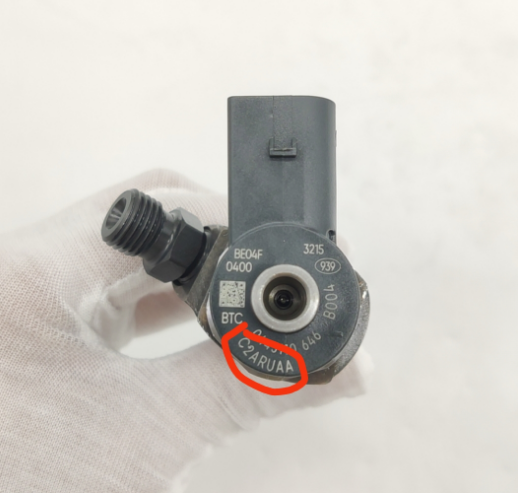
What Is Fuel Injector Coding?
Fuel injector coding is the process of entering the correction or calibration information for an individual injector into the engine ECU and assigning that information to the correct cylinder.
For example, suppose the injector in Cylinder 3 of a six-cylinder engine is replaced. If that system requires injector coding, the technician must do more than physically install the new injector. A compatible diagnostic tool must also be used to tell the ECU:
Cylinder 3 is now fitted with this injector, and this injector’s specific correction data should be used for that cylinder.
This is why the following information found on or associated with an injector should not be confused:
- Bosch, Delphi, or Denso part number
- OE part number
- Serial number
- Injector correction/calibration code
Most importantly, an injector OE number or Bosch part number should not be entered into the ECU as an injector correction code.
Why Is Fuel Injector Coding Important?
Even when two injectors are manufactured to the same design specifications, their actual fuel delivery characteristics may not be absolutely identical.
Manufacturing tolerances, nozzle flow characteristics, control valve behavior, and calibration after injector repair can all contribute to small individual differences.
On systems designed to use injector-specific calibration data, the ECU can use this information to make appropriate adjustments to the fuel injection control for each cylinder.
The purpose is not to change the injector itself. Instead, it allows the ECU to recognize the individual characteristics of each injector.
Correct fuel injector coding can therefore help the ECU:
- Control fuel injection for each cylinder more accurately.
- Compensate for permitted individual differences between injectors.
- Maintain more consistent fuel delivery between cylinders.
- Operate according to the engine manufacturer’s intended control strategy.
If an engine requires injector-specific calibration data but the correct code is not entered after injector replacement, the ECU may continue using the previous injector’s data or may be unable to apply the intended individual correction.
When Is Fuel Injector Coding Required?
Not all diesel fuel injectors need to be coded after replacement.
Fuel injector coding is mainly found on certain electronically controlled common rail systems.
Some ECUs can manage injector operation without manually entering an individual correction code. Other systems require coding when:
- A new injector is installed.
- A repaired or recalibrated injector is installed.
- An existing injector is moved from one cylinder to another.
Therefore, whether an injector physically fits an engine does not determine whether coding is required.
Even when the part number is correct, the system may require a specific:
- Code format
- Character length
- Cylinder assignment
- ECU programming function
- Initialization or adaptation procedure after installation
The most reliable approach is always to follow the service procedure for the specific engine and ECU.
What Are IMA and IQA Codes?
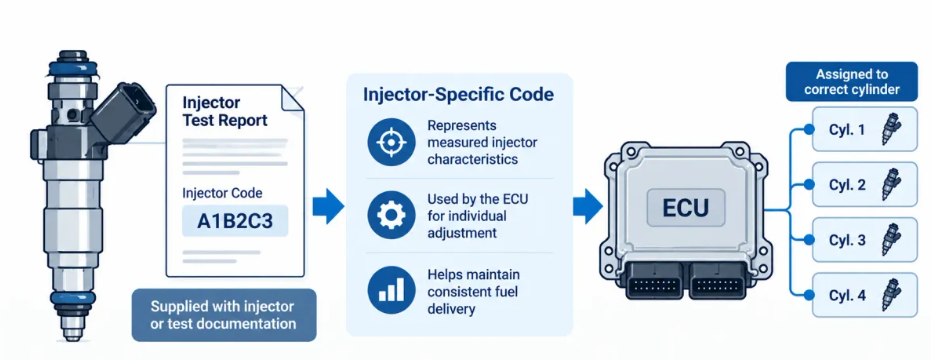
In Bosch common rail systems, you may frequently encounter the terms IMA and IQA.
IMA
IMA is commonly associated with Bosch’s system for matching or correcting individual injector fuel delivery characteristics. The term originates from the German Injektor-Mengen-Abgleich.
In simple terms, an injector is tested to determine its individual characteristics, and corresponding correction information is used to represent those characteristics.
IQA
IQA stands for Injector Quantity Adjustment and is also associated with the correction of individual injector fuel delivery characteristics.
In diagnostic equipment and service information, you may see the term:
IMA/IQA Coding
The basic purpose is to allow the ECU to recognize differences between individual injectors and apply the appropriate fuel quantity corrections according to the system’s control strategy.
Other fuel injection systems may use different coding formats, including:
C2I, C3I, C4I, Trim Code, and Compensation Code.
You should therefore never assume that every injector brand or ECU uses the same coding method.
What Is a Bosch DCI Code?
This is an area where confusion is common.
DCI itself is not an injector correction code equivalent to IMA or IQA.
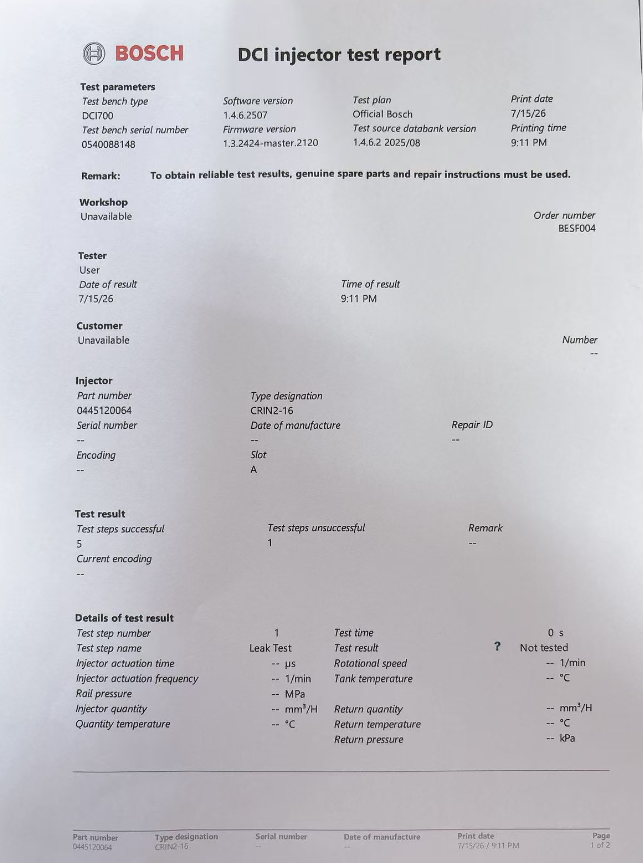
Bosch DCI refers to Bosch professional test systems used for testing and calibrating common rail injectors, such as the Bosch DCI 200 and DCI 700.
In the repair industry, you may sometimes hear:“This injector has a DCI code.”
A more accurate interpretation is that:the injector has been tested and calibrated on a Bosch DCI test bench, and applicable correction data or an IMA/IQA code has been generated for that injector.
A more technically accurate description would therefore be:the injector correction code was generated after testing and calibration on a Bosch DCI test bench.
DCI should not simply be treated as a separate injector coding standard.
What Diagnostic Tool Is Needed for Fuel Injector Coding?
A basic OBD fault code reader is usually not sufficient.
The diagnostic tool must support the Injector Coding, Injector Calibration, Injector Compensation, or equivalent ECU function for the specific vehicle or engine.
Depending on the application, you may also need:
- Manufacturer-specific diagnostic software
- Security access or security login
- ECU programming authorization
- Guided diagnostic functions
Before starting the coding procedure, confirm the following information:
Vehicle/engine model → ECU type → injector part number → individual injector correction code → cylinder position
The vehicle battery should also be adequately charged and stable. Do not disconnect the diagnostic equipment or interrupt vehicle power while data is being written to the ECU.
Fuel Injector Coding: Step-by-Step Process
The exact procedure varies between engines, but the general process is as follows.
Record Each Injector Code Before Installation
Do not wait until all the injectors have been installed before trying to find their codes.
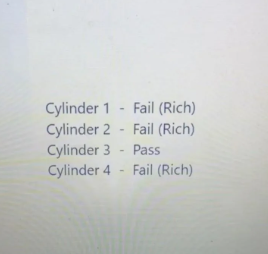
- Record the code and its intended cylinder position beforehand. For example:
- Cylinder 1 → Code XXXXX
- Cylinder 2 → Code XXXXX
- Cylinder 3 → Code XXXXX
Taking clear photos of each injector label is also a useful way to keep a record.
Confirm the Injector Matches the Engine
Verify the OE number, Bosch/Delphi/Denso part number, engine model, and ECU application.
At the same time, inspect the high-pressure fuel lines, return lines, electrical connectors, and related seals.
Connect a Compatible Diagnostic Tool
Select the correct vehicle, engine, and ECU.
Open the Injector Coding Function
Depending on the diagnostic equipment, the function may be called:
- Injector Coding
- Injector Calibration
- Injector Compensation
- Injector Correction
Select the Correct Cylinder
This step is critical.
The code for Cylinder 1 must be written to the Cylinder 1 position in the ECU.
Enter the Injector Correction Code
Enter the code exactly as supplied with the injector,pay attention to:
- Number of characters
- Letters
- Numbers
- Uppercase/lowercase requirements
Do not add spaces unless specifically required by the manufacturer’s procedure.
Save and Write the Code to the ECU
Follow the diagnostic tool’s instructions and maintain stable power and communication throughout the process.
Perform Any Required Initialization or Adaptation
Some engines require an additional learning, initialization, or adaptation procedure after the injector codes have been written.
Start the Engine and Verify Operation
After coding, check:
- Idle quality
- Diagnostic trouble codes
- Cylinder balance
- Injector correction values
- Other relevant live diagnostic data
Why Does Fuel Injector Coding Fail or Get Rejected by the ECU?
This is a common problem after replacing a fuel injector.
If the injector has been calibrated using professional test equipment and a correction code has been supplied, but the diagnostic tool still displays messages such as:
- Invalid Code
- Coding Failed
- Incorrect Injector Code
Do not immediately assume that the injector itself is defective.
Check the following areas first.
Check Uppercase Letters, Spaces, and Characters
Enter the injector code exactly as provided.
Pay particular attention to whether letters must be entered in uppercase and whether spaces have accidentally been added.
Also check commonly confused characters, such as:0 / O, 1 / I, 5 / S, 8 / B
Check the Vehicle and Engine Selected in the Diagnostic Software
This is easy to overlook.The same engine family may have different:
- Model years
- Emissions standards
- ECU versions
- Fuel system configurations
If a different engine variant from the same family is selected, the diagnostic software may open the wrong injector coding function.
In that situation, the ECU may reject the code even when the injector correction code itself is valid.
Check Whether the Diagnostic Tool Has Write Permission
Some generic diagnostic tools can:
- Communicate with the ECU
- Read and clear fault codes
- Display live data
but still cannot modify the Injector Correction Data stored in the ECU.
Certain systems require:Security Access, Security Login, or Manufacturer Authorization
before injector coding can be performed.
If the code cannot be saved, confirm that the diagnostic tool actually supports writing injector calibration data to that ECU, rather than simply reading diagnostic information.
Check the Diagnostic Software Version
Older diagnostic software may not support the injector coding.
Even when the diagnostic hardware supports injector coding, programming may fail because of:
- Outdated software
- An incomplete ECU database
- Incomplete support for that particular vehicle or engine
Make sure the diagnostic software and vehicle database are updated to a version that supports the ECU being serviced.
Check the Cylinder Assignment
Make sure the physical injector position matches the cylinder number selected in the diagnostic software.
This is especially important on V-type engines or engines that use a manufacturer-specific cylinder numbering sequence.
Do not assume the position of Cylinder 1, Cylinder 2, and so on. Verify the numbering using the engine manufacturer’s service information.
What If Fuel Injector Coding Is Successful but the Engine Still Runs Poorly?
If the ECU successfully accepts the injector code but the engine still experiences symptoms such as:
rough running, misfires, unstable idle, abnormal cylinder contribution, or related fault codes,
the diagnosis should no longer focus only on injector coding.
First check the basic condition of the fuel system before and after injector replacement.
This includes:
- Cleaning the fuel system where required.
- Using clean fuel free of contamination and water.
- Inspecting or replacing the fuel filter.
- Confirming proper low-pressure and high-pressure fuel supply.
These are fundamental checks whenever diagnosing diesel fuel injection problems.
Try an Injector Cylinder-Swap Test
If a specific cylinder consistently exhibits abnormal operating conditions, performing a fuel injector swap test can help diagnose the cause—for example, by checking for issues with the wiring connection.
For example, suppose the original problem is on Cylinder 3.
Move the suspected injector to another known-good cylinder and move the other injector to Cylinder 3. If the engine requires injector coding, update the ECU with the correct injector codes for their new cylinder positions.
Then observe what happens.
- If the fault follows the injector to the new cylinder, the injector itself deserves further testing.
- If the fault remains on the original cylinder, continue checking that cylinder’s wiring, ECU driver circuit, compression, fuel system, or other mechanical conditions.
Tips: if the engine requires injector coding, the injector codes must also be reassigned in the ECU after swapping injectors. Otherwise, incorrect calibration data may affect the test results.
Conclusion
Successful fuel injector coding may look like nothing more than entering a string of characters, but it depends on several things working together.
Correct injector + correct correction code + correct cylinder + correct ECU + correct diagnostic software + correct programming procedure
If an injector code cannot be written to the ECU, do not immediately assume that either the injector or the correction code is defective. Check the code format, character case and spacing, cylinder assignment, injector application, vehicle/engine selection, ECU compatibility, diagnostic tool write permissions, and software version.
If the code is accepted but the engine still does not operate correctly, expand the diagnosis beyond injector coding. Check fuel cleanliness, fuel filters, fuel pressure, electrical circuits, cylinder condition, and—where appropriate—perform an injector cylinder-swap test.
Correct fuel injector coding is one part of a successful injector replacement. Accurate diagnosis still requires confirming that the injector, fuel system, ECU, and engine are all operating together as intended.
FAQ
What does fuel injector coding mean?
Fuel injector coding is the process of entering an individual injector’s correction or calibration information into the ECU and assigning it to the correct cylinder when required by the engine management system.
This allows the ECU to account for the injector’s individual calibrated characteristics and apply the appropriate control corrections.
Do all common rail injectors need coding?
No.Whether coding is required depends on the specific injector, fuel system, ECU strategy, and engine manufacturer’s service requirements.
When should I code an injector after replacement?
Why is the ECU rejecting my injector code?
Check the following in order:
Correct code → uppercase/lowercase and spaces → cylinder position → injector application → vehicle/engine selection → ECU type → diagnostic tool write permissions → diagnostic software version
Do not repeatedly enter the same rejected code without first identifying the reason for the rejection.
Why can a code generated on a Bosch DCI test bench still be rejected?
Even if an injector has been tested and calibrated using a Bosch DCI test bench, the correction code is only one part of the complete coding process.
Whether the ECU accepts the code also depends on:
- Whether the injector is correct for the engine
- Whether the code format matches the ECU
- Correct cylinder assignment
- Correct vehicle/engine selection in the diagnostic software
- Diagnostic tool permissions
- Diagnostic software compatibility and version
Therefore, an ECU rejecting a code does not by itself prove that the calibration data generated after DCI testing is incorrect.
Can I drive after replacing an injector without coding it?
There is no universal answer.
Some systems do not require manual injector coding, while others use individual injector calibration values as part of the ECU’s control strategy.


