
The Vickers PVH series is a high-performance variable-displacement axial piston pump primarily used in machine tools, metallurgy, forging and pressing, mining, lifting equipment, and various types of industrial hydraulic equipment. The Vickers PVH series features an open-loop design and can be configured with either pressure-compensated control or pressure- and flow-compensated control, making it suitable for hydraulic systems operating at high pressures, with high power requirements, and subject to significant load variations.
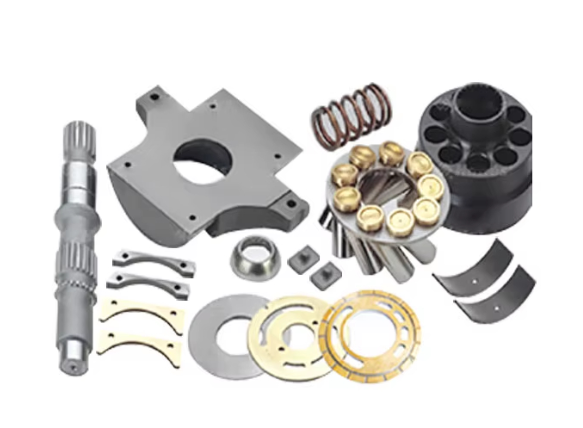
The internal components of the Vickers PVH piston pump primarily consist of the drive shaft, bearings, cylinder block, plungers, sliding shoes, swash plate, distribution plate, and variable displacement control mechanism. Under conditions of prolonged high-pressure operation, hydraulic fluid contamination, insufficient oil supply, or improper maintenance, internal components are prone to wear, leading to malfunctions such as noise, insufficient pressure, reduced flow, and excessive oil temperature.
The following section describes several common failure symptoms of Vickers PVH piston pumps, their possible causes, and corresponding troubleshooting methods.
The Vickers PVH piston pump is a variable-displacement piston pump designed for open-circuit hydraulic systems and is available in eight displacement sizes.
| Series Model | Nominal Displacement | Actual Displacement |
|---|---|---|
| PVH57 / PVH057 | 57 cc | 57.4 cm³/rev |
| PVH63 / PVH063 | 63 cc | 63.1 cm³/rev |
| PVH74 / PVH074 | 74 cc | 73.7 cm³/rev |
| PVH81 / PVH081 | 81 cc | 81.0 cm³/rev |
| PVH98 / PVH098 | 98 cc | 98.3 cm³/rev |
| PVH106 | 106 cc | 106.5 cm³/rev |
| PVH131 | 131 cc | 131.1 cm³/rev |
| PVH141 | 141 cc | 141.0 cm³/rev |
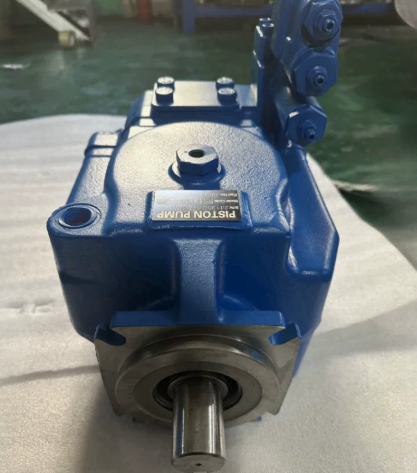
Abnormal Noise or Vibration in the Vickers PVH Piston Pump
Fault Symptoms
During operation, the Vickers PVH piston pump emits a distinct, high-pitched noise, continuous knocking sounds, or abnormal vibration, sometimes accompanied by fluctuations in outlet pressure.
Common Causes
- The hydraulic oil tank level is too low, resulting in insufficient oil intake by the pump;
- The suction line is blocked or the suction filter element is severely contaminated;
- Air leaks at suction line connections, allowing air to enter the hydraulic system;
- Hydraulic fluid viscosity is too high, which can cause suction difficulties, especially during cold starts;
- Excessive resistance at the pump inlet, causing cavitation;
- Abnormal wear on the pistons, sliding shoes, cylinder block, or distribution plate;
- Wear or damage to the spindle bearings;
- The pump and motor are not aligned, causing mechanical vibration.
Solution
- First, check the reservoir fluid level and the condition of the hydraulic fluid, and inspect the suction line, filter, and fittings for blockages or air leaks.
- If the equipment is operating in a low-temperature environment, verify that the hydraulic fluid viscosity meets the equipment’s requirements. When the hydraulic fluid viscosity is too high, do not immediately subject the pump to high-load operation.
- If the external oil supply system is functioning normally but the pump continues to produce noticeable abnormal noises, further inspection of internal rotating components—such as bearings, pistons, slide shoes, the cylinder block, and the distribution plate—is required.
Insufficient Pressure or Inability to Build Pressure in Vickers PVH Piston Pumps
Fault Symptoms
After starting the equipment, the system pressure fails to reach the set value; or the pressure drops significantly as the load increases.
Common Causes
- The pressure compensator is set incorrectly;
- The pressure compensator spool is contaminated or stuck;
- The system relief valve is set too low or is malfunctioning;
- Excessive internal leakage in the pump;
- Wear on the mating surfaces between the plunger and the cylinder block;
- Wear on the sealing surfaces between the cylinder block and the distribution plate;
- Insufficient oil supply at the pump inlet;
- Excessive air ingress into the pump;
- Damage to the drive shaft or internal transmission components;
- The pump’s rotation direction does not match the specified direction.
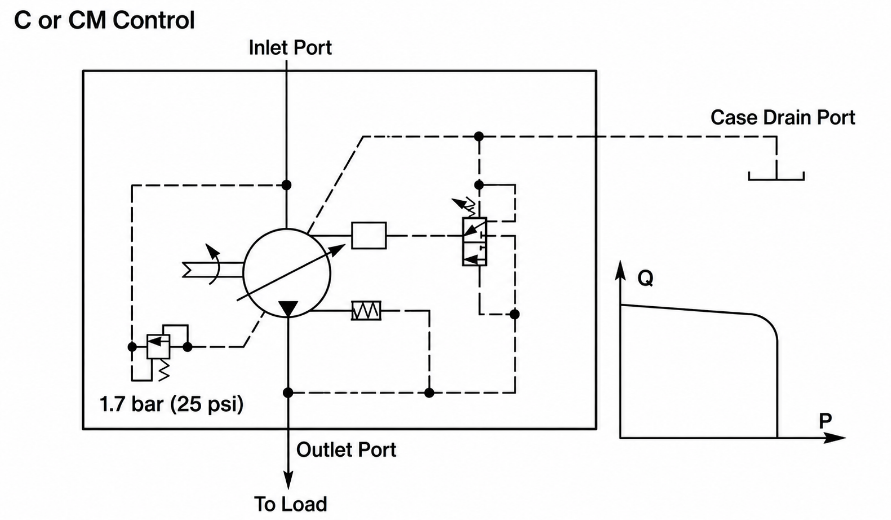
The PVH can utilize pressure-compensated control as well as pressure- and flow-compensated control; therefore, contamination or improper adjustment of the control mechanism may also directly affect the pump’s discharge pressure and displacement.
Solution
- First, inspect the entire hydraulic system rather than immediately disassembling the hydraulic pump.
It is recommended to check the following in sequence:
Hydraulic fluid level → Suction line → Filter → System relief valve → PVH pressure compensator → Pump outlet pressure.
- If both the external system and control pressure are normal but the pump still cannot establish the rated pressure, further inspection should be conducted to check for internal leakage in the pump and return flow through the housing.
- When casing leakage is significantly higher than normal, it is usually necessary to focus on inspecting the wear of the plunger pairs, cylinder block, distribution plate, and slide shoe assembly.
Insufficient Flow from the Vickers PVH Piston Pump
Fault Symptoms
The equipment’s operating speed has noticeably slowed, the actuator responds sluggishly, or the hydraulic pump’s actual output flow rate is lower than normal.
Common Causes
- Insufficient oil supply at the pump inlet;
- Clogged suction filter element;
- Air ingress in the suction line;
- Inappropriate hydraulic oil viscosity;
- Pump speed is below design specifications;
- Abnormal operation of the variable mechanism;
- Failure of the pressure and flow compensation controller;
- Wear on internal components such as pistons, cylinder blocks, and distribution plates;
- Severe internal leakage in the system.
Solution
- First, measure the pump’s actual speed, discharge pressure, and flow rate, and check the suction conditions.
If the pump’s speed is normal but the flow rate has dropped significantly, check whether the suction filter element and suction lines are clogged, and simultaneously rule out air ingress on the suction side.
- If the oil supply system shows no abnormalities, check whether the variable control mechanism can properly adjust the swashplate angle.
For PVH pumps that have been in service for a long time, the housing leakage rate should also be tested. If the return flow through the housing increases significantly, it often indicates that internal components such as the plunger pairs and distribution pairs have suffered significant wear.
Unstable Outlet Pressure or Fluctuating Pressure Gauge Needle
Fault Symptoms
The pressure gauge needle fluctuates continuously, causing system pressure to fluctuate between high and low levels, which may be accompanied by unstable equipment operation.
Common Causes
- Air has entered the hydraulic system;
- Poor sealing in the suction line;
- Insufficient fluid level in the reservoir;
- Clogged suction filter;
- Unstable operation of the pressure compensator spool;
- Contamination of the orifice in the control oil line;
- Hydraulic fluid contamination causing the control spool to stick;
- Abnormal wear on internal rotating components.
Solution
- First, inspect the suction system and bleed the air.
After starting the equipment, operate the hydraulic system at low pressure and low speed to allow air to be gradually purged.
If the pressure continues to fluctuate periodically after bleeding, focus on inspecting the pressure compensator and its control oil circuit for contamination or sticking.
- When disassembling the control components, pay special attention to cleanliness, as even very fine contaminants can affect the normal operation of the variable control spool and throttle orifices.
Excessive Oil Temperature in the PVH Piston Pump
Fault Symptoms
After the equipment has been running for some time, the hydraulic oil temperature continues to rise, the PVH pump housing temperature becomes noticeably abnormal, and in severe cases, system performance may even deteriorate.
Common Causes
- Excessive internal leakage in the pump;
- Wear between the plungers and the cylinder block;
- Wear on the mating surfaces between the distribution plate and the cylinder block;
- Wear on the sliding shoes or swash plate;
- Excessive resistance in the housing return line;
- Excessive pressure in the housing;
- Incorrect hydraulic fluid viscosity;
- Decreased cooling system efficiency;
- The system has been operating under high pressure for an extended period;
- Significant throttling losses in the hydraulic system.
Solutions
- First, check the hydraulic fluid level, viscosity, and the operating condition of the cooler.
- Next, measure the return pressure at the pump housing and the housing leakage rate.
If casing leakage has increased significantly, accompanied by rising oil temperature, dropping pressure, or reduced efficiency, focus the inspection on the internal rotating components.
It is important to note that PVH pumps are equipped with a separate casing drain channel; therefore, the casing return line must remain unobstructed. The official product documentation also explicitly lists the configuration of a separate drain port.
Excessive Case Drain Leakage in the Vickers PVH Piston Pump
Fault Symptoms
Casing leakage is one of the key indicators for assessing the degree of internal wear in axial piston pumps.
Possible Causes
If the return oil volume through the Vickers PVH pump housing is significantly higher than normal, the following should be inspected with particular attention:
- the piston and the piston bore in the cylinder block;
- the cylinder block and the distribution plate;
- the slide shoe and swash plate;
- Internal bearings;
- the rotating assembly.
As wear on these precision-matched surfaces increases, high-pressure oil leaks into the pump housing through internal clearances, resulting in:
a drop in flow rate → a drop in pressure → reduced volumetric efficiency → increased oil temperature.
Therefore, when diagnosing faults in PVH pumps that have been in service for a long time, measuring the casing leakage rate is generally more informative than simply observing the outlet pressure.
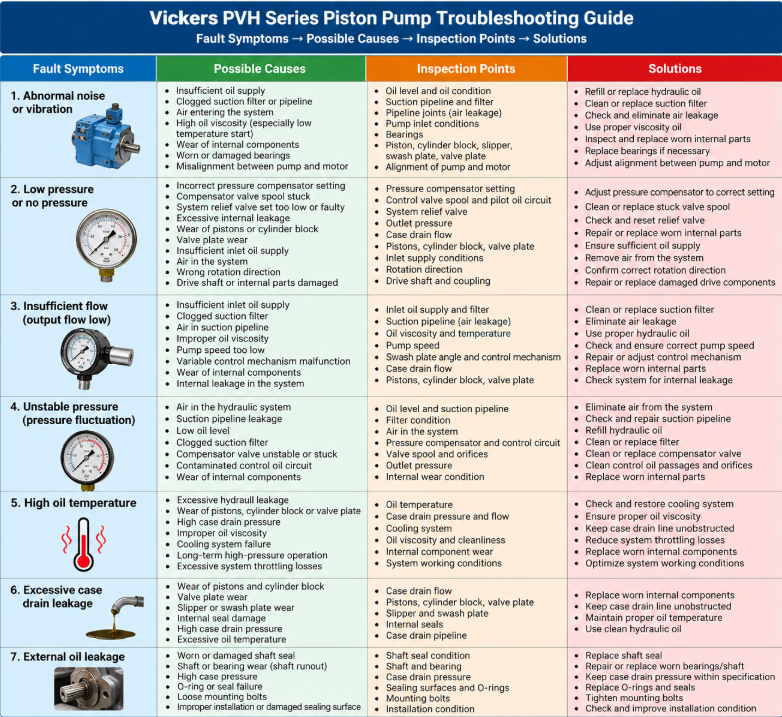
External Oil Leakage from the Vickers PVH Piston Pump
Common Leak Locations
External oil leaks in Vickers PVH pumps typically occur at:
- Main shaft oil seal;
- The pump housing mating surfaces;
- Control valve connection points;
- SAE flange connections;
- Casing drain ports;
- Various O-rings.
Main Causes
- Aged or damaged shaft seals;
- Shaft runout caused by wear on the main shaft or bearings;
- Excessive pressure in the housing;
- Aged O-rings;
- Poor sealing at the mounting surface;
- Loose bolts;
- Incorrect seal model or material.
If oil leakage recurs shortly after replacing the shaft seal, do not simply replace the seal again; instead, focus on inspecting the housing pressure, the return oil line, and the condition of the main shaft bearings.
Which Parts Should Be Inspected During Vickers PVH Piston Pump Repair?
When a PVH pump experiences insufficient pressure, reduced flow, excessive noise, or overheating, the following components should be carefully inspected during disassembly:
1.Pistons
Check the piston surfaces for:
- Scoring;
- Scratches;
- Wear;
- Burning or heat damage;
- Discoloration.
2.Cylinder Block
Inspect the piston bores for wear, and check the contact surface between the cylinder block and the valve plate for scoring, wear, or heat damage.
3.Valve Plate
Inspect the high-pressure and low-pressure port areas for:
- Wear;
- Scoring;
- Cavitation damage;
- Burning or heat damage.
Damage to the sealing surface of the valve plate can directly increase internal leakage and reduce pump efficiency.
4.Slipper Shoes
Check the slipper surfaces for wear or deformation, and inspect the connection between the pistons and slipper shoes for abnormal looseness, wear, or damage.
5.Swash Plate
Inspect the slipper running surface on the swash plate for visible scratches, pitting, scoring, or abnormal wear.
6.Bearings
Check the bearings for:
- Abnormal noise;
- Excessive clearance;
- Pitting;
- Raceway damage.
7.Pressure Compensator
Inspect the spool, spring, and control oil passages. Make sure the spool moves freely and check whether the control orifices are blocked by contamination or debris.
How to Reduce Vickers PVH Piston Pump Failures?
Like most high-pressure axial piston pumps, the PVH is sensitive to hydraulic fluid cleanliness, inlet supply conditions, and the quality of system maintenance.
The following points should be emphasized in daily maintenance:
- Keep the hydraulic fluid clean
Contaminants can accelerate wear on the pistons, cylinder block, distribution plate, and variable control valves.
PVH maintenance documentation specifically emphasizes the importance of internal cleanliness; during disassembly and reassembly, care must be taken to prevent dust, metal particles, and other contaminants from entering the internal rotating mechanisms.
- Regularly inspect filter elements
Clogged suction or return filters can cause insufficient oil intake, cavitation, and elevated oil temperature.
- Avoid Running Low on Oil
Operating a hydraulic pump at high speeds with insufficient oil can damage the slide shoes, distribution plate, and piston assembly in a very short time.
- Use Hydraulic Oil with the Correct Viscosity
Excessively high viscosity may cause suction difficulties, while excessively low viscosity may increase internal leakage and wear.
- Regularly Check Casing Drainage
A sudden increase in oil leakage from the housing is usually a significant sign of internal wear.
- Perform proper bleeding and startup after maintenance
After maintenance, changing the hydraulic oil, or replacing the hydraulic pump, ensure there is sufficient hydraulic oil inside the pump housing and complete the initial startup and bleeding under low-load conditions to prevent rotating components from operating without proper lubrication.
Conclusion
Common Vickers PVH piston pump failures include:
Abnormal noise, insufficient pressure, reduced flow, pressure fluctuations, excessive oil temperature, increased case drain leakage, and external oil leakage.
During troubleshooting, it is not recommended to determine that a specific component has failed based on a single symptom alone. A more reliable approach is to evaluate the pump inlet condition, outlet pressure, actual flow rate, hydraulic oil temperature, and case drain flow together before deciding whether the pump needs to be disassembled for inspection.
If disassembly is necessary, key components such as the pistons, cylinder block, valve plate, slipper shoes, swash plate, and control assembly should be carefully inspected.
This systematic diagnostic approach can improve troubleshooting accuracy and help prevent unnecessary pump disassembly when the actual problem originates elsewhere in the hydraulic system.


