


CAT 320D excavator slow travel and weak power problems such as slow travel, weak travel power, poor climbing ability, difficult turning, or slow and weak hydraulic operation after long-term use.
These symptoms do not always mean that the main hydraulic pump has failed. Problems with the pilot hydraulic system, main relief valve, center swivel joint, travel motor, main control valve, hydraulic hoses, or even a restricted oil passage can produce similar symptoms.
Before replacing expensive components, it is important to determine whether:
- All hydraulic functions are slow and weak
- Only the travel system is affected
These two conditions require different troubleshooting approache
1.All Hydraulic Functions Are Slow and Weak
If the boom, arm, bucket, swing, and travel functions are all slow or weak, the problem is likely related to a component shared by the entire hydraulic system.
Check Engine Speed and Load Response
Operate one of the hydraulic control levers and observe whether the engine responds normally to hydraulic load.
If the engine does not respond properly when a hydraulic function is operated, inspect:
- Pressure switch or pressure sensor signals
- Engine speed
- Engine control system
- Hydraulic control input signals
The machine service mode can also be used to check whether the hydraulic load signal is being detected correctly.
If engine speed is below specification, the engine problem should be corrected before continuing hydraulic troubleshooting.

2.Check for Air in the Hydraulic System
Air entering the hydraulic system can cause:
- Slow hydraulic movement
- Pump noise
- Foaming hydraulic oil
- Jerky operation
- Unstable hydraulic pressure
Inspect:
- Hydraulic oil level
- Pump suction hose
- Suction line connections
- Seals
- Hydraulic pump inlet
If air is found in the system, bleed the hydraulic circuit according to the service manual and repair the source of air entry.
3.Inspect the Suction Filter or Strainer
A restricted suction filter can prevent the hydraulic pump from receiving enough oil.
Typical symptoms include:
- Multiple hydraulic functions becoming slow
- Abnormal hydraulic pump noise
- Weak performance under load
- More noticeable symptoms at high engine speed
If the suction filter is clogged, replace or clean it as required.
Also inspect the hydraulic oil for:
- Rubber fragments
- Broken seal material
- Metal particles
- Other contaminants
If debris is present, do not simply replace the filter. The source of the contamination should also be identified.
4.Check the Main Pump Outlet Lines
Inspect the main hydraulic pump outlet hoses and pipes for:
- Restrictions
- Crushed or bent hoses
- Internal hose liner damage
- Incorrect hose diameter
- Restricted fittings
A hydraulic hose can look normal externally while having a reduced internal flow area.
This can significantly affect hydraulic performance under high-flow conditions.
5.Check Pilot Pressure
Low pilot pressure is one possible cause of CAT 320D excavator slow travel and weak power, because the travel control spool may not open completely.
This can make several hydraulic functions slow and weak.
Install an appropriate pressure gauge at the pilot pressure test port.
The original reference information gives approximately:34.5 Bar
If pilot pressure is low, inspect:
- Pilot pressure control valve
- Valve spool wear
- Valve spool sticking
- Regulating spring fatigue or breakage
- Pilot gear pump wear
If the pilot pressure cannot be adjusted to specification, the pilot pump may require repair or replacement.
Pressure specifications may vary between CAT 320D serial number ranges and configurations. Always confirm values in the correct Caterpillar service manual.
6.Check Main Hydraulic Relief Pressure
If the main system pressure is too low, all hydraulic actuators may feel weak.
Install high-pressure gauges at the main pump test ports and test the system under the correct service procedure.
The original reference value is approximately:343 Bar
If the pressure is too low and cannot be adjusted properly, inspect the main relief valve.
Common problems include:
6.1 Relief Valve Stuck Open
Contamination may hold the valve spool partially open, allowing high-pressure oil to return prematurely.
6.2 Weak or Broken Spring
A fatigued regulating spring can reduce relief pressure.
6.3 Damaged Sealing Surface
A worn valve seat or cone may prevent the valve from sealing properly.
6.4 Blocked Orifice
Contamination in the damping orifice can interfere with proper valve operation.
7.Check Pump Control Pressure
The CAT 320D uses variable-displacement hydraulic pumps.
If the pump control pressure is abnormal, the pump may remain at a low displacement and fail to provide enough hydraulic flow.
Possible symptoms include:
- Slow hydraulic movement
- Insufficient flow
- Multiple functions becoming weak
Inspect:
- Proportional control valve
- Pump regulator
- Electrical control signal
- Pump control pressure
If contamination is suspected, the proportional valve should be inspected and cleaned.
If the hydraulic components are operating normally but control pressure is still incorrect, the electrical control system should be checked.
8.Inspect the Negative Flow Control Circuit
The main hydraulic pumps on Caterpillar excavators use a control system that adjusts pump displacement according to hydraulic demand.
If the control oil passage is blocked or a control piston becomes stuck, the pump may not increase displacement correctly.
Inspect:
- Control hoses
- Small orifices
- Pump regulator passages
- Hydraulic control pistons
- Control valve movement
Remove contamination and repair any sticking components before adjusting the pump.
9.Check Main Hydraulic Pump Flow
If system pressure is normal but hydraulic functions remain slow, pump flow should be tested.
The original reference information provides the following example test condition:
- Engine speed: 1,800 rpm
- Output pressure: 9,800 kPa
- Pump flow: approximately 180 L/min
- Reference service limit: approximately 170 L/min
These values should only be treated as reference data and should not be applied to every CAT 320D without checking the correct service information.
If pump flow is too low, possible causes include:
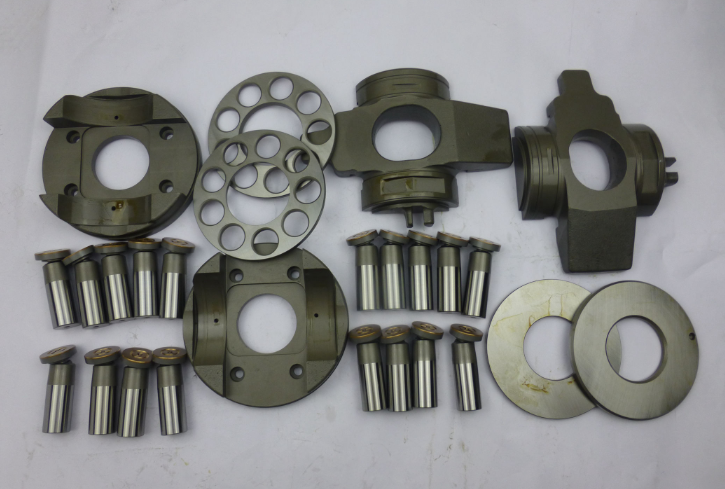
- Worn valve plate
- Worn cylinder block surface
- Excessive piston-to-bore clearance
- Weak or damaged compression spring
- Servo piston stuck in the low-displacement position
- Sticking servo valve
- Damaged servo valve spring
Severe internal pump wear may require pump rebuilding or replacement.
10.What If Only the Travel System Is Slow and Weak?
If the boom, arm, bucket, and swing functions operate normally but travel is slow or weak, the main hydraulic pump should not automatically be blamed.
The diagnosis should focus on the travel circuit.
11.Check Engine Response During Travel
Operate the travel controls and listen for normal engine load response.
If there is little or no change in engine load, inspect:
- Travel pressure switch
- Hydraulic control signal
- Engine speed control
- Travel pilot circuit
A faulty pressure switch may prevent the control system from recognizing travel demand correctly.
Low travel pilot pressure may prevent the travel spool from fully opening.
12. Check Travel Pilot Pressure
The original reference values are approximately:
Full travel lever operation: above 30 Bar
Partial operation: approximately 18 Bar
If pressure is low, inspect the travel pilot valve for:
- Insufficient spool travel
- Weak regulating spring
- Sticking valve stem
- Worn valve components
- Blocked pilot passages
13.Check Travel Cross-Port Relief Pressure
The travel circuit requires sufficient pressure under high load.
The original reference information gives a travel relief pressure of approximately:368 Bar
If travel pressure is low, inspect the cross-port relief valve.
Possible problems include:
- Weak regulating spring
- Damaged sealing surface
- Valve stuck by contamination
- Internal leakage
If the relief valve is working correctly but pressure still cannot reach specification, continue with the remaining travel system checks.
14.Inspect the Center Swivel Joint
The center swivel joint, also called the center joint, is an important component, when diagnosing CAT 320D excavator slow travel and weak power, always check the center swivel joint for internal leakage.
The upper structure of the excavator rotates independently from the undercarriage, while the travel motors are mounted in the lower frame.
Hydraulic oil must therefore pass through the center swivel joint.
When its internal seals are worn or damaged, high-pressure oil may leak internally between circuits.
Common symptoms include:
- Weak travel
- Unequal left and right travel speed
- Machine pulling to one side
- Poor travel performance under heavy load
If internal leakage is excessive, the center joint may need to be resealed or rebuilt.
15.Check Travel Motor Case Drain Leakage
A worn travel motor can lose hydraulic power through.Excessive travel motor case drain can lead to CAT 320D excavator slow travel and weak power, especially under heavy load.
A case drain test is one of the most useful ways to evaluate travel motor condition.
The original reference information suggests:
At approximately 200 bar, motor leakage should not exceed about 15 L/min.
However, the actual allowable case drain specification should always be confirmed using the correct CAT 320D service manual.
If one travel motor has significantly higher case drain flow than the other, it may have excessive internal wear.
Possible worn components include:
- Piston shoe
- Cylinder block
- Valve plate
- Bearing
- Internal sealing components
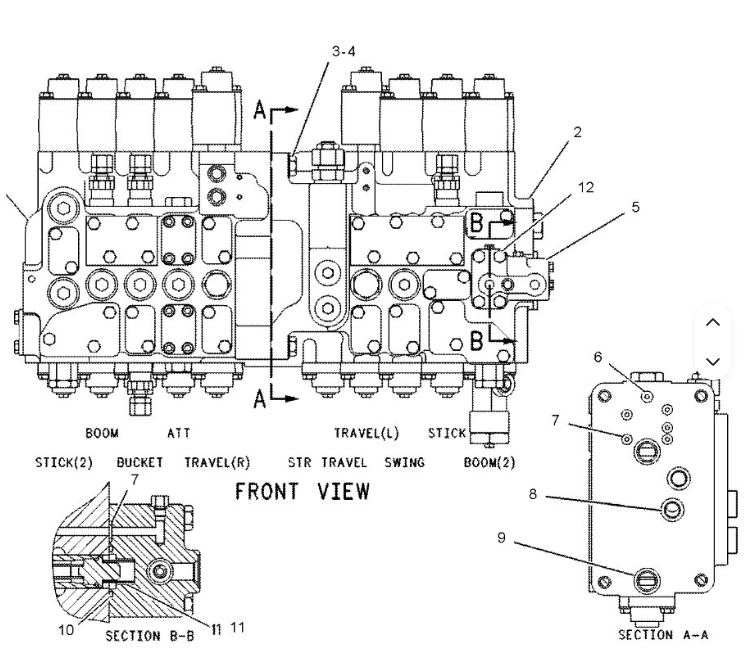
16.Inspect the Main Control Valve
A travel spool that does not fully open can restrict hydraulic flow to the travel motor.
Possible causes include:
16.1 Sticking Valve Spool
Contamination can prevent the spool from moving freely.
16.2 Excessive Valve Clearance
Wear between the spool and valve body can cause internal leakage.
16.3 Restricted Internal Passage
Blocked passages or orifices may limit hydraulic flow.
If the spool or valve body is severely worn, the valve may require repair or replacement.
17.Check Whether the Travel Brake Fully Releases
Excavator travel motors usually use spring-applied, hydraulically released brakes.
If the travel brake does not fully release, the motor may still rotate but will experience excessive resistance.
Common causes include:
- Sticking brake pilot valve
- Leaking brake piston seals
- Blocked brake release passage
- Balance valve problems
If the hydraulic brake system is working normally, inspect the mechanical components as well, including:
- Travel motor bearings
- Final drive
- Planetary gears
- Reduction gears
Mechanical binding can also cause weak travel.
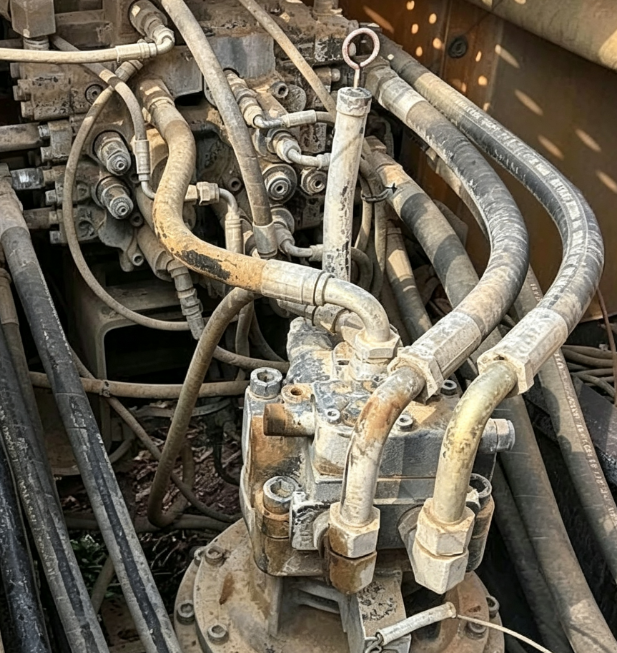
18. Do Not Overlook Incorrect Hydraulic Hose Size
Restricted hydraulic hoses are an often-overlooked cause of CAT 320D excavator slow travel under heavy load.
In one real repair case, a CAT 320 excavator had a damaged high-pressure hose.
Because the correct replacement hose was not immediately available, another hose with a similar appearance was installed.
After the replacement:
- Normal travel on flat ground was acceptable
- Normal turning was acceptable
- Other hydraulic functions appeared normal
However, when the excavator became stuck in mud and needed to turn under heavy resistance, the machine could not turn properly.
System pressure appeared normal.
The actual problem was that the replacement hose had a smaller internal flow area.
Under light load, the restriction was not noticeable. Under high-flow, high-load travel conditions, pressure loss through the hose became significant and reduced the hydraulic flow reaching the motor.
After installing the correct hose, the excavator returned to normal operation.
This case demonstrates an important hydraulic principle:Normal pressure does not always mean normal flow.
Hose inside diameter, fitting size, and flow restriction can be just as important as system pressure.
19.Failed Center Joint Seals
CAT 320D excavator slow travel can be caused by low pilot pressure, restricted hydraulic flow, travel motor leakage, or center swivel joint problems.
Repair Case:
- Weak travel
- A tendency for the engine to bog down
- Abnormal hydraulic performance
Inspection revealed:
- A failed pressure switch
- Severely damaged center swivel joint seals
- Seal fragments circulating in the hydraulic oil
- A suction filter clogged with broken seal material
The repair included:
- Replacing the center joint seals
- Cleaning the hydraulic system
- Removing contamination
- Replacing filters
- Inspecting the hydraulic oil
After repair, the machine returned to normal operation.
This case shows that a failed seal can do more than cause local leakage.
Broken sealing material can contaminate the entire hydraulic system and restrict pump oil supply.
20. CAT 320D Excavator Slow Travel Troubleshooting Steps
For CAT 320D excavator slow travel troubleshooting, start with simple checks before removing the hydraulic pump or travel motor.
Engine speed
↓
Hydraulic oil level and condition
↓
Suction filter
↓
Pilot pressure
↓
Main system pressure
↓
Pump control pressure
↓
Main pump flow
↓
Travel pilot pressure
↓
Travel relief valve
↓
Center swivel joint
↓
Travel motor case drain
↓
Main control valve
↓
Travel brake and final drive
Following this sequence can help avoid unnecessary replacement of the main hydraulic pump or travel motor.
21.Conclusion
When troubleshooting CAT 320D excavator slow travel, first determine whether only the travel system is affected or whether all hydraulic functions are slow.
If all hydraulic functions are slow and weak, focus on:
Engine → Pilot System → Main Relief Pressure → Pump Control → Main Hydraulic Pump
If only the travel system is affected, focus on:
Travel Pilot System → Travel Relief Valve → Center Swivel Joint → Travel Motor → Main Control Valve → Travel Brake
Hydraulic diagnosis should not rely on pressure testing alone.
A proper diagnosis may require:
Pressure Testing + Flow Testing + Case Drain Testing + Hydraulic Oil Inspection + Temperature Comparison
Combining these tests makes it easier to identify the actual fault and avoid unnecessary component replacement.
Safety Note: CAT 320D hydraulic systems operate at extremely high pressure. Pressure testing, blocking hydraulic lines, disconnecting high-pressure hoses, and travel motor testing should only be performed by qualified technicians using the service manual for the correct machine serial number. The reference pressure and flow values in this article should not be used as universal adjustment specifications.
FAQ
Why is my CAT 320D excavator slow travel?
Common causes include low pilot pressure, restricted hydraulic flow, incorrect pump control pressure, center swivel joint leakage, travel motor wear, or problems with the main control valve. If all hydraulic functions are also slow, the main pump or system pressure should be checked as well.
Why is my CAT 320D weak only when traveling?
If the boom, arm, bucket, and swing work normally but travel is weak, the fault is more likely in the travel circuit. Check the travel pilot pressure, cross-port relief valve, center swivel joint, travel motor, travel brake, and related control valve.
Can a bad center swivel joint cause slow or weak travel?
Yes. Worn or damaged seals inside the center swivel joint can cause internal hydraulic leakage. This may lead to weak travel, unequal left and right track speed, poor turning performance, or the machine pulling to one side.
How do I know if the CAT 320D travel motor is leaking internally?
A travel motor case drain test is one of the best diagnostic methods. If one motor has significantly higher case drain flow than the other under similar conditions, it may indicate internal wear in the pistons, cylinder block, valve plate, or other motor components.
Does normal hydraulic pressure mean the travel system is working correctly?
Not always. A CAT 320D can have normal pressure but still suffer from low hydraulic flow. Restricted hoses, incorrect hose size, internal leakage, pump flow problems, or valve restrictions can reduce travel performance even when pressure readings appear normal.


