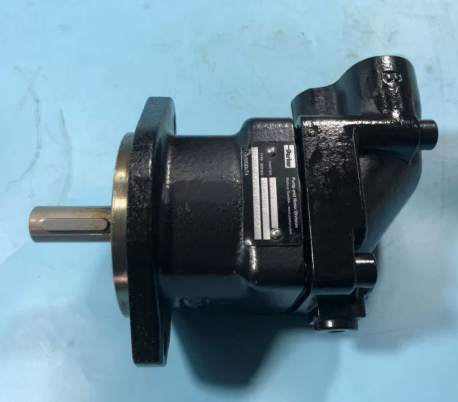


The Parker F12 hydraulic motor is a high-performance fixed-displacement axial piston motor based on a bent-axis design. Known for its compact construction, high efficiency, strong starting torque, and reliable performance under demanding operating conditions, the F12 series is widely used in mobile machinery, construction equipment, forestry machines, marine systems, mining equipment, and industrial hydraulic drives.
Proper installation and commissioning are just as important as selecting the correct motor. Incorrect shaft alignment, contaminated hydraulic oil, restricted case drain lines, or poor piping practices can significantly shorten motor service life.
This guide explains the main features, common applications, installation requirements, and startup procedures for Parker F12 hydraulic motors.
What Is a Parker F12 Hydraulic Motor?
The Parker F12 is a fixed-displacement bent-axis piston motor designed for applications requiring high power density and reliable hydraulic performance.
Unlike a variable-displacement motor, the displacement of an F12 motor remains fixed. Motor speed therefore depends mainly on hydraulic flow, while output torque is primarily determined by pressure differential and motor displacement.
Its bent-axis construction provides a compact rotating group and allows the motor to operate efficiently in demanding hydraulic drive systems.
Depending on the specific F12 version, the motor may be used in either open-circuit or closed-circuit hydraulic systems
F12 Hydraulic Motor Series
The Parker F12 Hydraulic Motor series is available in multiple displacement sizes to meet different speed, torque, and hydraulic system requirements.
| Model | Nominal Displacement |
|---|---|
| F12-030 | 30 cc/rev |
| F12-040 | 40 cc/rev |
| F12-060 | Approx. 60 cc/rev |
| F12-080 | Approx. 80 cc/rev |
| F12-090 | Approx. 90 cc/rev |
| F12-110 | Approx. 110 cc/rev |
| F12-125 | 125 cc/rev |
| F12-152 | Approx. 152 cc/rev |
| F12-162 | Approx. 162 cc/rev |
| F12-182 | Approx. 182 cc/rev |
| F12-250 | Approx. 250 cc/rev |
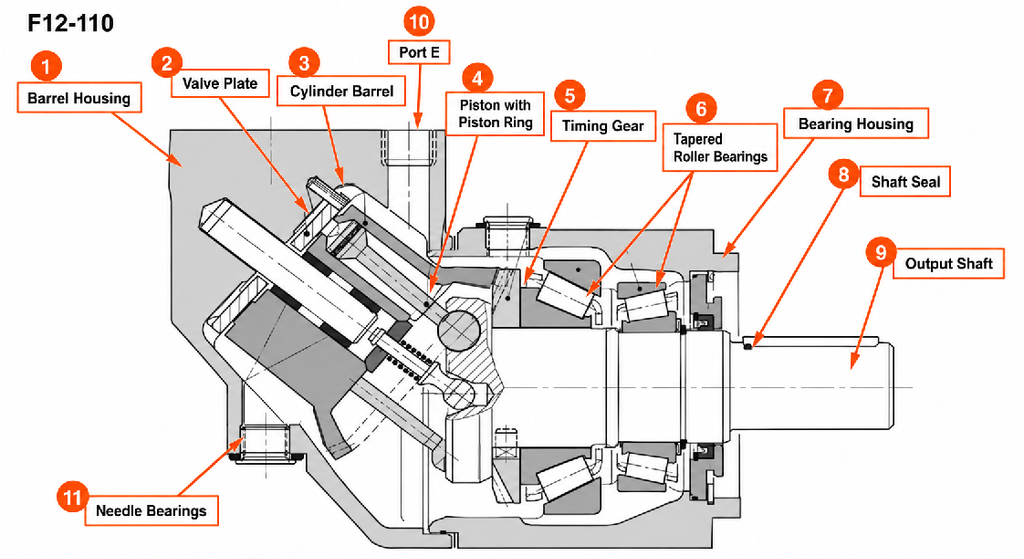
Main Features of Parker F12 Hydraulic Motor
High Performance
One of the main advantages of the Parker F12 series is its ability to provide stable hydraulic performance under demanding operating conditions.
- High mechanical efficiency
- High volumetric efficiency
- Strong starting torque
- Smooth operation
- Reliable high-speed performance
- Good power-to-weight ratio
These characteristics make the F12 suitable for hydraulic drives that require frequent starts, high load, or continuous operation.
Compact and Lightweight Design
The F12 combines a relatively compact housing with high power capability.This is especially useful in mobile machinery where installation space is limited.
A compact hydraulic motor can make it easier to integrate the drive unit into:
- Gearboxes
- Winch systems
- Fan drives
- Conveyor systems
- Vehicle transmissions
- Machine attachments
High Power Density
Power density is one of the reasons the F12 is widely used in heavy-duty applications.
A relatively small motor can transmit substantial hydraulic power, which allows equipment designers to reduce installation size without sacrificing drive capability.
This is particularly valuable for construction, forestry, marine, and mining machinery where space and weight are important considerations.
Good Adaptability
Parker F12 motors are available in different displacement sizes and mounting configurations.
Common Applications of Parker F12 Hydraulic Motors
Because of their compact size and strong performance, F12 motors are used across many industries.
Construction Equipme
- Excavators
- Cranes
- Skid steers
- Off-highway machines
- Hydraulic attachments
- Fan drive systems
- Forestry Machinery
F12 motors can be found in:Harvesters、Forwarders、Feller bunchers、Saw drives、Feeding systems
Forestry equipment often requires high starting torque and reliable performance under changing loads, making bent-axis motors well suited to these applications.
Mining Equipment
- Drilling equipment
- Underground machinery
- Conveyors
- Auxiliary drives
- Heavy-duty mobile equipment
- Marine Equipment
F12 hydraulic motor may also be used in:Winches、Deck cranes、Hatch systems、Auxiliary hydraulic drives、Industrial Applications
They can also be used in:Conveyors、Mixers、Recycling equipment、Hydraulic power transmission systems、Test equipment
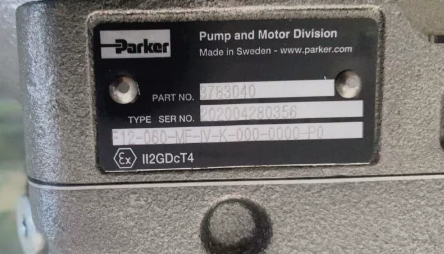
Parker F12 Hydraulic Motor Installation Guide
Correct installation has a major influence on motor performance and service life.Before installation, the motor, hydraulic system, and mechanical drive should all be carefully inspected.
Step 1: Inspect the Hydraulic Motor
- Housing
- Drive shaft
- Mounting flange
- Hydraulic ports
- Threads
- Seals
- Protective plugs
Do not install a motor with obvious impact damage, corrosion, damaged threads, or a bent shaft.
Protective port plugs should remain installed until the hydraulic lines are ready to be connected.This helps prevent dirt from entering the motor.
Step 2: Keep the Installation Area Clean
Hydraulic motors contain precision internal components, so cleanliness is extremely important.
- Clean the mounting surface.
- Clean hydraulic hose ends.
- Flush contaminated lines if necessary.
- Keep fittings protected until installation.
- Prevent dust, metal particles, fibers, or water from entering the system.
Contaminated oil can damage pistons, bearings, cylinder blocks, valve surfaces, and other precision components.A new motor installed into a dirty hydraulic system can fail very quickly.
Step 3: Check the Mounting Structure
The mounting bracket or gearbox housing should have sufficient strength and rigidity to support the motor.An unstable mounting structure may cause:
- Excessive vibration
- Shaft misalignment
- Bearing load
- Coupling damage
- Premature seal failure
Step 4: Check Shaft Alignment
Correct shaft alignment is critical.The motor shaft and driven component should connect without excessive radial or axial loading.
Poor alignment can lead to:
- Shaft bearing damage
- Vibration
- Coupling wear
- Shaft seal leakage
- Premature motor failure
Never force the motor into position by tightening the mounting bolts.If the shaft and coupling do not align naturally, identify the cause before installation.
Step 5: Check the Coupling
- Correct spline or key dimensions
- Proper engagement
- Adequate lubrication where required
- Wear or damage
- Correct axial position
Step 6: Connect the Hydraulic Lines Correctly
Before connecting the hydraulic hoses, confirm the port identification for the exact F12 model.
- Pressure and return connections are correct.
- Case drain connections are properly installed.
- Hose dimensions are adequate.
- Hoses are not twisted or sharply bent.
- Fittings are correctly tightened.
- No contamination enters during installation.
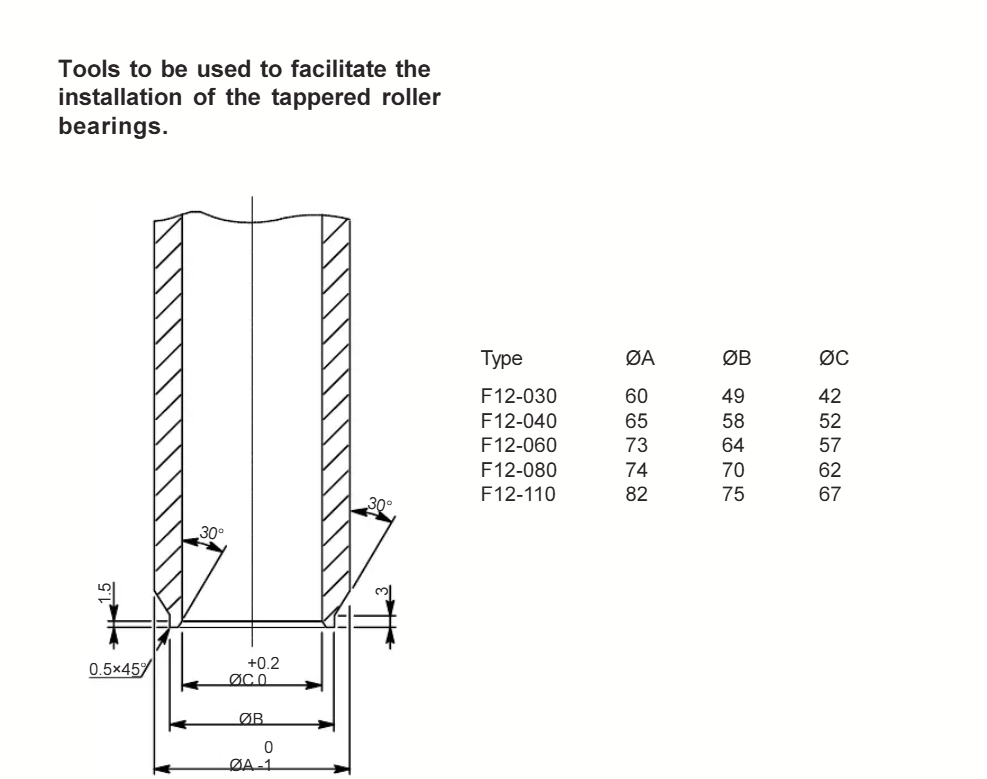
Step 7: Check the Hydraulic Oil
Before startup, verify the oil level and condition.
- Meet the viscosity requirements of the system
- Be clean
- Be free from water contamination
- Be compatible with motor seals
- Be suitable for the operating temperature
Using the wrong viscosity can reduce lubrication quality and increase internal wear.Contamination control is especially important for axial piston motors.
Step 8: Fill the Motor Housing Before Startup
This helps ensure that internal bearings and rotating components receive lubrication immediately.Dry running can damage internal components very quickly.
Step 9: Check the System Before Starting
- Oil level
- Hose connections
- Case drain line
- Motor mounting bolts
- Shaft coupling
- Hydraulic filters
- Valve position
- System pressure settings
How to Start a Parker F12 Hydraulic Motor After Installation
A newly installed or rebuilt motor should not immediately be operated at maximum load.A gradual startup procedure is safer.
- Start at Low Pressure
Initially operate the hydraulic system at low pressure and low load.
This allows oil to circulate through the motor and helps remove trapped air
- Run at Low Speed
Operate the motor slowly at first.
Monitor:
- Rotation direction
- Noise
- Vibration
- Oil leakage
- Case drain
- Oil temperature
If the rotation direction is incorrect, stop the system and correct the hydraulic connections according to the circuit design.
- Gradually Increase Speed and Load
Once the motor is operating smoothly, gradually increase speed and load.
What Should You Monitor During Operation?
After commissioning, several operating conditions should be checked regularly.
| Inspection Item | Normal Condition | Possible Problem |
|---|---|---|
| Noise | Smooth and consistent | Cavitation, air, bearing or rotating-group damage |
| Vibration | Low and stable | Misalignment, coupling or bearing problem |
| Oil Temperature | Within system specification | Internal leakage, cooling or viscosity problem |
| External Leakage | No abnormal leakage | Seal or case-pressure problem |
| Motor Speed | Stable | Flow or mechanical-load problem |
| Case Drain | Within model specification | Excessive internal wear if unusually high |
Parker F12 Motor Maintenance Tips
Regular preventive maintenance can help extend motor service life.
Recommended checks include:
- Monitor hydraulic oil cleanliness.
- Replace hydraulic filters at the required intervals.
- Check hoses and fittings for leakage.
- Inspect the case drain line.
- Monitor unusual noise or vibration.
- Check operating temperature.
- Inspect the drive coupling.
- Monitor case drain flow when motor wear is suspected.
If motor performance gradually decreases, the problem may also come from the:
- Hydraulic pump
- Control valve
- Relief valve
- Oil cooler
- Hydraulic filter
- Mechanical load
A proper hydraulic diagnosis should be performed first.
Conclusion
The Parker F12 hydraulic motor combines high performance, compact construction, high power density, and broad application flexibility, making it a popular choice for demanding mobile and industrial hydraulic systems.
However, reliable performance depends heavily on correct installation.
Keeping the hydraulic system clean, aligning the drive shaft correctly, connecting the case drain properly, using the correct hydraulic oil, and gradually commissioning the motor can help prevent premature failure.