

The Hyundai R260LC Series Maintenance,including models such as the R260LC-9, R260LC-9A, and R260LC-9S, is widely used in earthmoving, road construction, demolition, quarrying, and general heavy-duty excavation work.
Because these excavators often operate under high loads, dusty conditions, mud, vibration, and long working hours, regular inspection and preventive maintenance are essential.
Proper maintenance can help reduce unexpected downtime, improve operating efficiency, and extend the service life of major components such as the engine, hydraulic pump, main control valve, hydraulic cylinders, travel reduction units, and undercarriage.
1.Daily Inspection Before Starting
Before starting a Hyundai R260LC Series excavator, perform a basic walk-around inspection and check the major fluid levels and operating systems.
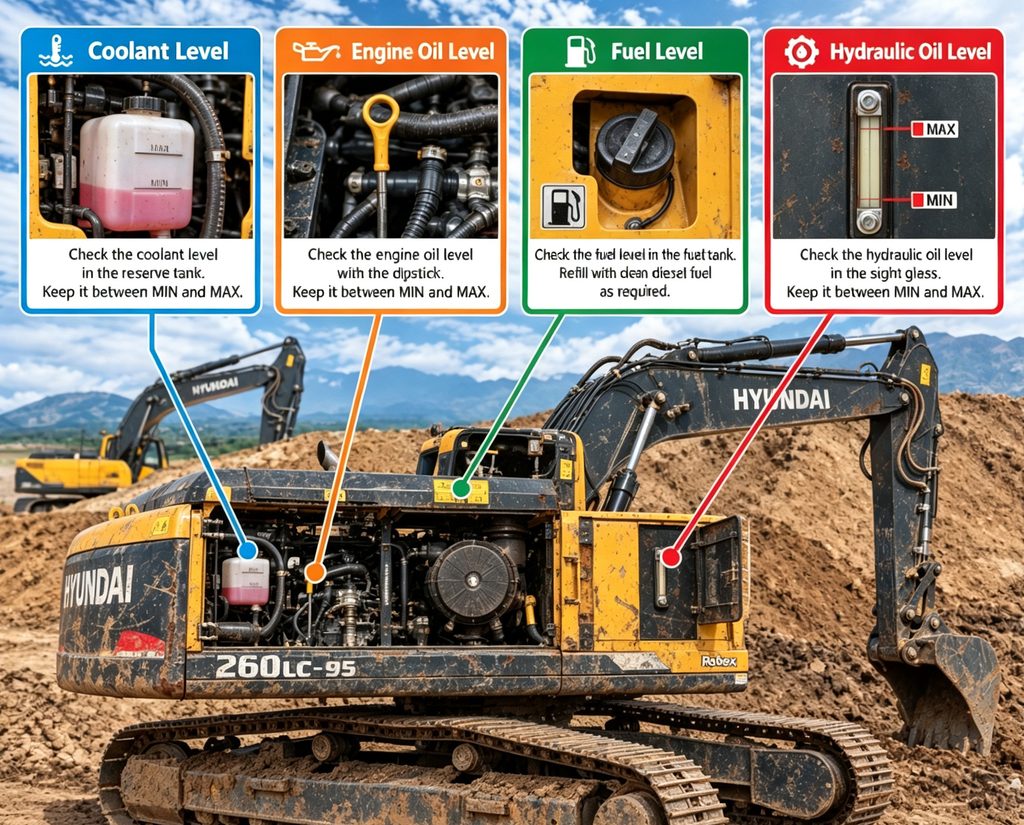
1.1 Check the Coolant Level
Inspect the coolant level in the reserve tank and cooling system.
If the coolant level is low, check for possible leaks around:
- Radiator
- Coolant hoses
- Hose clamps
- Water pump
- Radiator cap
Insufficient coolant may cause the engine to overheat.
1.2 Check the Engine Oil Level
Park the excavator on level ground and check the engine oil according to the recommended procedure.
Low engine oil can cause insufficient lubrication of critical engine components, including:
- Crankshaft
- Connecting rods
- Pistons
- Camshaft
- Turbocharger
If the oil level drops repeatedly, do not simply keep adding oil. Inspect the engine for leakage or abnormal oil consumption.
1.3 Check the Fuel Level
Make sure there is enough fuel for the planned working period.
Also inspect the fuel system for:
- Diesel leaks
- Damaged fuel hoses
- Loose fittings
- Water in the fuel-water separator
Clean fuel is especially important for protecting the injection pump and fuel injectors.
1.4 Check the Hydraulic Oil Level
The hydraulic system is one of the most important systems on a Hyundai R260LC Series excavator.
Check the hydraulic oil level daily and make sure it remains within the recommended range.
Also inspect the oil for:
- Dark discoloration
- Milky appearance
- Foaming
- Burnt odor
- Visible contamination
- Metal particles
If the hydraulic oil level keeps dropping, inspect the hydraulic pump, hoses, fittings, control valve, hydraulic cylinders, and motors for leakage.
1.5 Check the Air Cleaner
Inspect the air filter restriction indicator and the condition of the air cleaner element.
In dusty environments, the air cleaner should be checked more frequently.
A clogged air filter can cause:
- Reduced engine power
- Increased fuel consumption
- Black exhaust smoke
- Poor engine performance
When servicing the air cleaner, prevent dust from entering the intake system.
1.6 Inspect Electrical Wiring
Check the condition of:
- Battery cables
- Wiring harnesses
- Electrical connectors
- Relays
- Fuses
- Ground cables
Look for damaged insulation, loose connectors, corrosion, overheating, or short-circuit risks.
Pay special attention to wiring near the engine and hydraulic pump, where heat and vibration can accelerate wear.
1.7 Check Safety Equipment
Before operation, confirm that the following are working properly:
- Horn
- Work lights
- Warning lights
- Travel alarm
- Monitor display
- Warning indicators
If a fault code appears on the monitor, identify the cause before continuing normal operation.
2.Inspect the Machine for Leaks
Before starting work, walk around the excavator and inspect the ground underneath the machine.
Look for signs of:
- Engine oil leakage
- Diesel fuel leakage
- Coolant leakage
- Hydraulic oil leakage
- Gear oil leakage
Pay particular attention to:
- Hydraulic hose connections
- Main hydraulic pump
- Main control valve
- Swing motor
- Travel motors
- Hydraulic cylinders
- Final drives
- Oil seals
A small leak may eventually become a serious failure if it is ignored.
3.Keep the Excavator Clean
Cleaning is an important part of preventive maintenance.
A clean machine is easier to inspect, and leaks, loose parts, damaged hoses, and abnormal wear can be detected much earlier.
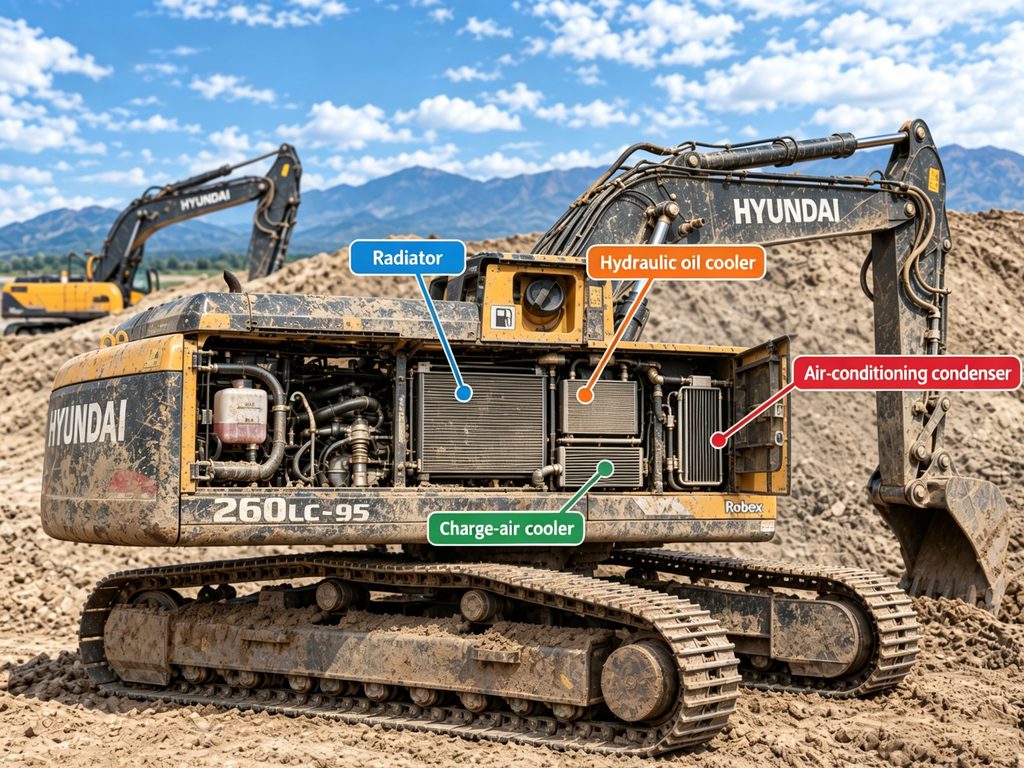
3.1 Cooling System Cleaning
Regularly clean:
- Radiator
- Hydraulic oil cooler
- Charge-air cooler
- Air-conditioning condenser
Remove dust, mud, leaves, and other debris that could restrict airflow.
A blocked cooling package may cause both engine coolant temperature and hydraulic oil temperature to rise.
In quarrying, demolition, mining, or extremely dusty applications, cleaning intervals should be shortened.
3.2 Engine Compartment Cleaning
Remove accumulated:
- Dust
- Oil residue
- Leaves
- Mud
- Flammable debris
Do not allow debris to build up around hot engine components.
3.3 Undercarriage Cleaning
After working in mud, clay, or wet ground conditions, remove accumulated material from the tracks and undercarriage.
Hardened mud and stones can increase wear and affect proper track movement.
4.Lubricate the Working Equipment
The boom, arm, bucket, and linkage of a Hyundai R260LC Series excavator operate under heavy loads and repeated shock.
Regular greasing helps reduce pin and bushing wear.
Important lubrication points include:
- Boom foot pins
- Boom cylinder pins
- Arm pins
- Arm cylinder pins
- Bucket cylinder pins
- Bucket pins
- Bucket linkage
- H-link
- Connecting linkage
In severe working conditions such as mud, water, heavy impact, or continuous digging, lubrication intervals may need to be shortened.
Swing Bearing Lubrication
The swing bearing supports the upper structure of the excavator and carries significant rotational loads.
Regular maintenance should include:
- Greasing the swing bearing
- Inspecting the swing gear
- Checking bearing play
- Inspecting mounting bolts
A service interval of around 250 operating hours may be used as a general reference for some machines, but the correct interval should always follow the maintenance manual for the specific R260LC Series model and serial number.
5.Engine Oil and Oil Filter Maintenance
Engine oil provides lubrication, cooling, cleaning, corrosion protection, and wear reduction.
Regular engine maintenance should include:
- Changing engine oil
- Replacing the engine oil filter
- Checking oil condition
- Inspecting for metal contamination
- Checking for oil leakage
A 500-hour service interval is common for certain maintenance items on many excavators, but the actual interval depends on:
- Engine model
- Oil specification
- Operating temperature
- Fuel quality
- Workload
- Site conditions
Always follow the maintenance schedule specified for the actual machine.
6.Hyundai R260LC Series Hydraulic System Maintenance
The hydraulic system directly affects:
- Digging force
- Working speed
- Swing performance
- Travel performance
- Multi-function operation
- Machine responsiveness
For this reason, hydraulic system maintenance is one of the most important parts of R260LC Series service.
6.1 Daily Hydraulic Checks
Inspect:
- Hydraulic oil level
- Hydraulic oil condition
- Hydraulic oil temperature
- Hydraulic pump noise
- System pressure
- Hydraulic hoses
- Hose fittings
- Main control valve
- Hydraulic cylinders
Further diagnosis may be required if the excavator shows symptoms such as:
- Slow hydraulic movement
- Weak digging performance
- Poor combined-operation performance
- Hydraulic vibration
- Abnormal pump noise
- High hydraulic oil temperature
- Unusual engine loading
- Excessive aeration or foaming
6.2 Hydraulic Oil Contamination Control
Hydraulic pumps, motors, and control valves contain precision-machined internal components.
Contaminated hydraulic oil can cause premature wear and failure.
When repairing or replacing hydraulic components, avoid:
- Allowing dust into open hoses
- Using dirty tools
- Leaving ports uncovered
- Reusing heavily contaminated hydraulic oil
- Installing dirty replacement parts
After a serious hydraulic failure, it may also be necessary to:
- Clean the hydraulic tank
- Flush hydraulic lines
- Replace hydraulic oil
- Replace hydraulic filters
Failure to remove contamination can quickly damage newly installed components.
7. Maintenance When Using a Hydraulic Breaker
If a Hyundai R260LC Series excavator is frequently equipped with a hydraulic breaker, the hydraulic system requires additional attention.
Breaker operation generates repetitive shock loads and may increase hydraulic oil contamination.
It is therefore often necessary to shorten the inspection or replacement intervals for:
- Hydraulic oil
- Hydraulic return filter
- Hydraulic system inspections
Also inspect:
- Breaker return line
- High-pressure hoses
- Quick couplers
- Hydraulic oil temperature
- Return filter
If hydraulic oil temperature remains abnormally high, identify the cause instead of simply continuing operation.
8.Travel Reduction Gear and Final Drive Maintenance
Each side of the Hyundai R260LC Series undercarriage uses a travel reduction assembly.
Internal gears and bearings depend on gear oil for lubrication.
Regularly inspect:
- Gear oil level
- Gear oil condition
- Oil discoloration
- Water contamination
- Metal particles
- Final drive housing
- Floating seals
A 500-hour interval may be used as a general maintenance reference for certain machines, but the correct schedule should always follow the specific service manual.
Metal Particles in Gear Oil
If a significant amount of metal contamination is found, inspect the travel reduction unit for possible wear or damage to:
- Planet gears
- Sun gear
- Bearings
- Ring gear
- Input components
Continuing to operate the machine may lead to more serious final drive damage.
9. Cooling System and Coolant Maintenance
The cooling system keeps the engine within its normal operating temperature range.
Regularly inspect:
- Coolant level
- Reserve tank
- Radiator
- Cooling hoses
- Hose clamps
- Water pump
- Coolant condition
If the coolant becomes rusty, oily, heavily contaminated, or repeatedly drops in level, investigate the cause.
Proper coolant also provides protection against:
- Freezing
- Corrosion
- Scale formation
- High-temperature boiling
Ordinary tap water should not be used as a long-term substitute for the recommended coolant.
10.Replace Filters at the Correct Intervals
A Hyundai R260LC Series excavator uses several different filters, including:
- Engine oil filter
- Fuel filter
- Fuel-water separator
- Air cleaner element
- Hydraulic return filter
- Pilot hydraulic filter
Filters should be inspected and replaced according to the recommended maintenance schedule.
Do not select replacement filters based only on external size.
Also confirm:
- Filtration rating
- Flow capacity
- Working pressure
- Bypass valve specification
- Installation dimensions
- Seal design
An incorrect filter can reduce system protection and increase the risk of engine or hydraulic damage.
11.Electrical System Inspection and Maintenance
Modern excavators depend heavily on electrical control systems for engine operation, hydraulic control, monitoring, and safety functions.
Regularly inspect:
- Battery
- Alternator
- Starter motor
- Ground cables
- Main power cables
- Fuses
- Relays
- Sensors
- Electrical connectors
11.1 Battery Inspection
Check:
- Battery terminal tightness
- Corrosion
- Battery voltage
- Battery mounting condition
Do not place wrenches, bolts, or other metal objects on top of the battery.
They may cause an electrical short circuit.
11.2 Wiring Harness Inspection
Pay particular attention to wiring located around:
- Engine
- Hydraulic pump
- Main control valve
- Cab floor
- Swing center area
Long-term vibration may damage insulation or loosen connectors, leading to intermittent electrical faults.
12.Fuel System Maintenance
Modern diesel fuel systems use precision components that require clean fuel.
Poor-quality or contaminated diesel can damage the injection pump and injectors.
Choose Fuel for the Operating Temperature
In cold climates, use diesel fuel suitable for the local temperature range.
Otherwise, fuel waxing may cause:
- Fuel filter blockage
- Hard starting
- Fuel starvation
- Reduced engine power
- Keep Water and Dirt Out of the Fuel System
Avoid contamination from:
- Water
- Dust
- Rust
- Dirt
- Metal particles
Contaminated fuel can lead to:
- Fuel pump wear
- Injector failure
- Hard starting
- Reduced engine power
Always use clean refueling equipment.
Drain the Fuel-Water Separator
Inspect the fuel-water separator regularly and drain accumulated water as required.
If an unusual amount of water is found repeatedly, check the fuel source and fuel tank for contamination.
Reduce Condensation in the Fuel Tank
Depending on operating conditions and manufacturer recommendations, keeping sufficient fuel in the tank after operation may help reduce internal air space and limit moisture condensation.
13.Undercarriage Inspection
The undercarriage of the Hyundai R260LC Series operates under constant load and is one of the most wear-intensive areas of the machine.
Important components include:
- Drive sprockets
- Front idlers
- Bottom rollers
- Carrier rollers
- Track chains
- Track shoes
Track Tension
Track tension should not be excessively tight or loose.Tracks that are too tight can increase:
- Chain wear
- Roller load
- Idler load
- Travel resistance
Track tension should not be excessively tight or loose.
Tracks that are too tight can increase:
- Chain wear
- Roller load
- Idler load
- Travel resistance
Tracks that are too loose may increase the risk of derailment.
Track Chain Inspection
Inspect:
- Track links
- Pins
- Bushings
- Track pitch
- Shoes
- Track bolts
for wear or damage.
Rollers and Idlers
Check for:
- Oil leakage
- Excessive play
- Uneven wear
- Abnormal rotation
Drive Sprockets
Inspect the sprocket teeth for:
- Sharp edges
- Hook wear
- Uneven wear
- Excessive material loss
Heavy sprocket wear often indicates that the entire undercarriage should be evaluated.
14.Hydraulic Hose and Cylinder Inspection
14.1 Hydraulic Hoses
Inspect hydraulic hoses daily for:
- Cracks
- Bulges
- Abrasion
- Exposed reinforcement wire
- Leaking fittings
- Deformation
Never use your hand to search for a high-pressure hydraulic leak.
High-pressure oil can penetrate the skin and cause serious injury.
14.2 Hydraulic Cylinders
Inspect:
- Piston rods
- Cylinder heads
- Wiper seals
- Rod seals
- Hydraulic fittings
for leakage and damage.
If the piston rod has:
- Scratches
- Pitting
- Rust
- Chrome peeling
new seals may fail again quickly unless the rod is repaired or replaced.
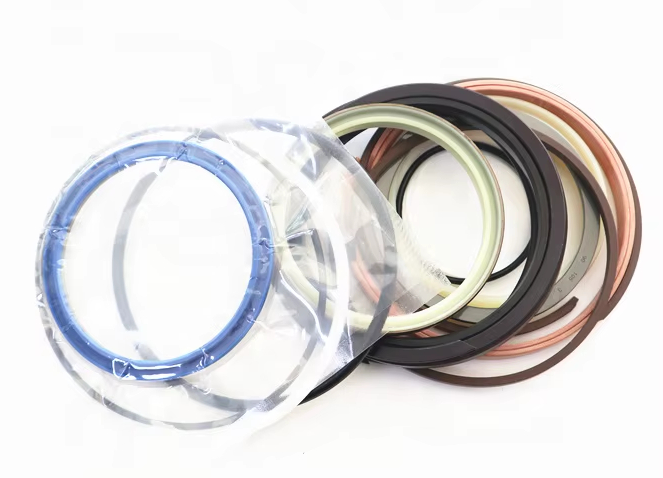
14.3 Common Hydraulic Cylinder Seals
A hydraulic cylinder seal kit for the Hyundai R260LC Series may include:
- Rod Seal
- Wiper Seal
- Buffer Seal
- Piston Seal
- Wear Ring / Guide Ring
- O-Ring
- Backup Ring
Before ordering a replacement hydraulic cylinder seal kit, confirm:
Excavator model
Exact R260LC Series version
Cylinder position
Cylinder part number
Rod diameter
Cylinder bore
Seal groove dimensions
The machine model alone is not always enough to identify the correct cylinder seal kit.
15.Stop and Inspect the Machine When Abnormal Symptoms Appear
Do not continue heavy-duty operation if the Hyundai R260LC Series excavator shows symptoms such as:
- Engine overheating
- Low engine oil pressure warning
- Excessive hydraulic oil temperature
- Abnormal engine smoke
- Slow hydraulic movement
- Weak digging performance
- Hydraulic vibration
- Abnormal hydraulic pump noise
- Swing noise
- Travel noise
- Excessive final drive temperature
- Severe hydraulic cylinder leakage
- Fault codes on the monitor
Many major failures begin with minor symptoms such as unusual noise, heat, slower operation, or small leaks.
Early inspection can prevent a minor problem from developing into a costly failure of the hydraulic pump, engine, main control valve, travel motor, or final drive.
16.Hyundai R260LC Series Maintenance Summary
Routine maintenance of the Hyundai R260LC Series can be summarized in a few key principles:
Inspect regularly, keep the machine clean, lubricate moving parts, control contamination, replace fluids and filters on schedule, and investigate abnormal symptoms early.
Daily attention should focus on:
- Engine oil
- Coolant
- Fuel
- Hydraulic oil
- Air cleaner
- Hydraulic leaks
- Working equipment lubrication
- Undercarriage condition
Regular maintenance should include:
- Engine service
- Hydraulic system maintenance
- Hydraulic filter replacement
- Travel reduction gear service
- Cooling system maintenance
- Fuel system maintenance
- Electrical system inspection
- Hydraulic cylinder inspection
- Undercarriage inspection
Machines used in quarrying, demolition, breaker applications, or extremely dusty environments may require shorter maintenance intervals.
It is also important to note that the Hyundai R260LC Series includes different generations and regional versions, such as the R260LC-9, R260LC-9A, and R260LC-9S. Engine specifications, hydraulic components, filters, and service intervals may vary between versions.
The 250-hour and 500-hour intervals mentioned in this guide are general reference points only. Always follow the operation and maintenance manual for the exact machine model and serial number.
FAQ
1.How often should I service a Hyundai R260LC Series excavator?
Service intervals depend on the exact model, engine, operating conditions, and machine serial number. Daily inspections should be performed before operation, while many routine maintenance items are commonly checked or replaced at intervals such as 250 or 500 operating hours. Always follow the maintenance manual for your specific machine.
2.How often should the hydraulic oil be changed?
Hydraulic oil replacement intervals vary depending on the R260LC Series model and working conditions. Machines used with hydraulic breakers, in dusty environments, or under heavy loads may require shorter inspection and replacement intervals. Oil condition should also be monitored for contamination, discoloration, foaming, or overheating.
3.What are the signs of hydraulic system problems on an R260LC Series excavator?
Common symptoms include slow hydraulic movement, weak digging force, jerky operation, abnormal hydraulic pump noise, high hydraulic oil temperature, poor multi-function performance, and excessive oil leakage. These symptoms should be inspected before continued heavy operation.
4.Can I continue operating the excavator if a warning light appears?
A warning light should not be ignored. Stop or reduce operation as appropriate and identify the cause, especially for engine oil pressure, coolant temperature, hydraulic oil temperature, or other critical system warnings.
5.What are the most common Hyundai R260LC Series maintenance parts?
Common maintenance parts for the Hyundai R260LC Series include engine, fuel, air, and hydraulic filters, as well as hydraulic hoses, O-rings, seals, and hydraulic cylinder seal kits. For machines with higher operating hours, hydraulic pump parts, main control valve seals, final drive seals, and other hydraulic repair components may also need replacement.


