

Rexroth A4VSO vs A4VG Hydraulic Pumps: Features, Differences & Applications
Bosch Rexroth A4VSO and A4VG are both high-performance variable displacement axial piston pumps based on the swashplate design. Although they share a similar basic pumping principle, they are designed for very different hydraulic architectures.
The most important distinction is simple:
A4VSO is primarily designed for open-circuit hydraulic systems, while A4VG is designed for closed-circuit hydrostatic drives.
What Is a Rexroth A4VSO Hydraulic Pump?
The Rexroth A4VSO is a variable displacement axial piston pump designed primarily for open-circuit hydraulic systems.
In an open circuit, the pump draws oil from the hydraulic reservoir, sends pressurized oil to the actuator or control valve, and the return oil then flows back to the tank.
The A4VSO series is widely used where efficient, adjustable hydraulic flow is required in industrial and heavy-duty hydraulic systems.
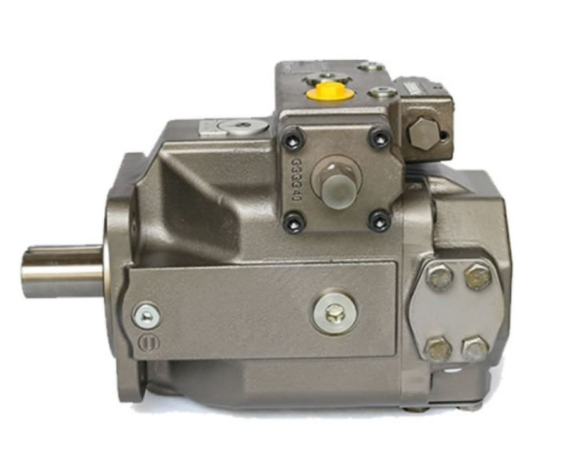
Main Features of the A4VSO Series
The A4VSO uses a swashplate-type axial piston design. Pump displacement can be changed continuously by adjusting the swashplate angle, allowing the output flow to be matched to actual system demand.
Its main advantages include:
- Variable displacement for precise flow control
- Good suction characteristics
- Relatively low operating noise
- Fast control response
- Long service life under proper operating conditions
- Multiple control and regulator options
- Through-drive options for tandem pump configurations
- Flexible installation for industrial hydraulic systems
Because output flow is related to pump displacement and drive speed, the A4VSO can regulate hydraulic output without relying entirely on throttling valves. This can improve system efficiency and reduce unnecessary heat generation.
Typical A4VSO Applications
A4VSO pumps are commonly found in stationary and heavy-duty hydraulic systems such as metal-forming machines, hydraulic presses, steel mill equipment, industrial power units, paper machinery, marine hydraulic systems, test equipment, and other applications requiring controllable high-pressure hydraulic flow.
They may also be used in certain heavy-equipment hydraulic systems where an open-circuit variable pump is required.
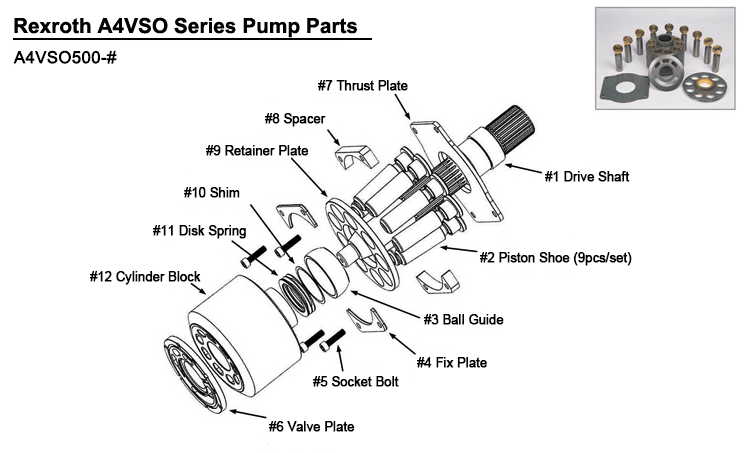
What Is a Rexroth A4VG Hydraulic Pump?
The Rexroth A4VG is also a swashplate-type variable axial piston pump, but it is designed primarily for closed-circuit hydrostatic transmission systems.
Instead of continuously returning most of the working oil to the hydraulic tank, a closed circuit sends oil directly between the pump and hydraulic motor.
This makes the A4VG particularly suitable for machine propulsion and other hydrostatic drive systems.
Main Features of the A4VG Series
One of the most important characteristics of the A4VG is its ability to vary displacement across the neutral position.
When the swashplate passes through neutral, the direction of hydraulic flow can be reversed. This allows a hydrostatic motor to change direction smoothly without requiring a conventional directional valve to reverse the main flow.
The A4VG series is also typically equipped with components required for closed-loop operation, including a charge pump and high-pressure protection functions.
Features may include:
- Variable displacement in both flow directions
- Smooth hydrostatic forward and reverse control
- Integrated charge pump
- High-pressure relief and charge functions
- Pressure cut-off control
- Multiple hydraulic, mechanical, and electronic control options
- High power density
- Compact design for mobile machinery
These features make the A4VG particularly suitable for high-load mobile applications where compact size and accurate drive control are important.
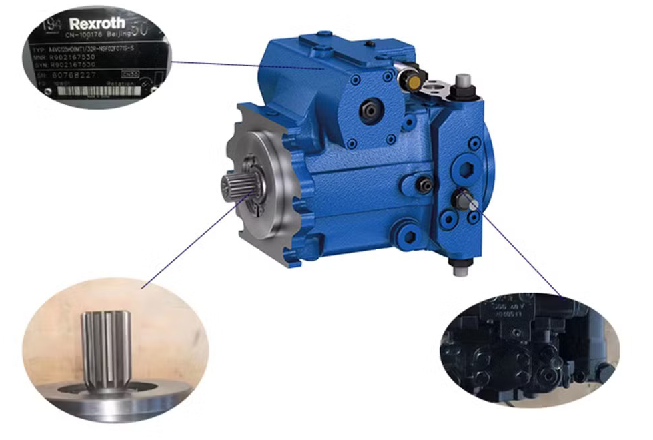
Rexroth A4VSO vs A4VG hydraulic pumps:key differences
| Feature | Rexroth A4VSO | Rexroth A4VG |
|---|---|---|
| Basic Design | Swashplate axial piston variable pump | Swashplate axial piston variable pump |
| Hydraulic Circuit | Open circuit | Closed circuit |
| Main Function | Supplies variable hydraulic flow to an open hydraulic system | Hydrostatic transmission and closed-loop drive |
| Flow Direction | Normally designed for open-circuit delivery | Flow direction can change as the swashplate moves through neutral |
| Charge Pump | Not normally part of the basic open-circuit operating principle | Integrated charge pump is a key feature |
| Typical Use | Industrial hydraulic systems and power units | Mobile hydrostatic drives |
| Control Purpose | Flow, pressure and power regulation | Vehicle speed, direction, torque and drive control |
| Typical Equipment | Hydraulic presses, steel mills, industrial machinery, marine systems | Rollers, agricultural machines, pavers, mobile equipment and hydrostatic drives |
Why Is the A4VSO hydraulic pump better suited to open circuits?
In an open hydraulic circuit, oil must be drawn from the reservoir and delivered efficiently to the system whenever hydraulic power is required.
The A4VSO is designed specifically around this operating principle.
Its variable displacement system allows the pump to adjust hydraulic output based on system pressure and flow demand. Depending on the selected controller, the pump may support pressure control, flow control, power control or combinations of these functions.
This makes the A4VSO especially useful in hydraulic power units where different operating stages require different flow rates.
For example, a hydraulic press may require high flow during rapid approach but lower flow at much higher pressure during the pressing stage.
A variable displacement pump can adapt to these changing requirements more efficiently than a fixed-displacement pump combined with excessive throttling.
Why Is the A4VG hydraulic pump better suited to closed circuits?
A closed-loop hydrostatic transmission has different requirements.
The main hydraulic flow circulates directly between the pump and hydraulic motor. Only leakage and cooling oil must be replaced by the charge circuit.
The A4VG’s integrated charge system helps maintain adequate pressure on the low-pressure side of the loop while also supplying control oil and replacing internal leakage.
By changing swashplate angle, the pump can increase or decrease motor speed. Passing through neutral reverses the main flow direction, which allows the driven machine to move forward and backward smoothly.
This operating principle is especially useful for machines that require frequent speed and direction changes.
Rexroth A4VSO vs A4VG hydraulic pumps:common applications
A4VSO pumps are particularly common in industrial hydraulic installations.
- Typical applications include hydraulic presses, metal-forming machinery, steel and metallurgical equipment, industrial hydraulic power units, marine equipment, paper machinery, large production equipment and specialized testing systems.
- Their combination of high pressure capability, controllability and modular configuration makes them suitable for hydraulic systems where precise pressure and flow management are required.
A4VG pumps are strongly associated with mobile hydrostatic transmissions.
- Typical applications include road rollers, compactors, paving machines, agricultural machinery, harvesting equipment, material-handling machines, mining equipment and other mobile machines using closed-loop hydrostatic propulsion.
- They can also be found in certain concrete equipment and other machines where hydrostatic drive or closed-loop hydraulic transmission is required.
A4VSO or A4VG hydraulic pumps: which one do you need?
The answer depends primarily on the hydraulic circuit.
If your equipment uses an open hydraulic circuit, the A4VSO family is generally the relevant type.
If the machine uses a closed-loop hydrostatic transmission, the A4VG family is normally the appropriate design.
The choice should then be narrowed down according to displacement, pressure requirements, control type, mounting dimensions and machine application.
Therefore, the decision is not simply about which pump is more powerful. The two series are designed to perform different jobs.
Conclusion
Rexroth A4VSO and A4VG hydraulic pumps are both variable displacement axial piston pumps, but they serve fundamentally different hydraulic systems.
The A4VSO series is designed primarily for open-circuit hydraulic systems, making it particularly suitable for industrial hydraulic power units, presses, metallurgical equipment and other systems requiring efficient variable flow.
The A4VG series is designed for closed-circuit hydrostatic transmissions, making it especially suitable for mobile equipment that requires precise speed control, reversing capability and compact high-power hydraulic drive.
For replacement applications, checking the original pump nameplate, machine model and operating requirements is the safest way to ensure correct compatibility.
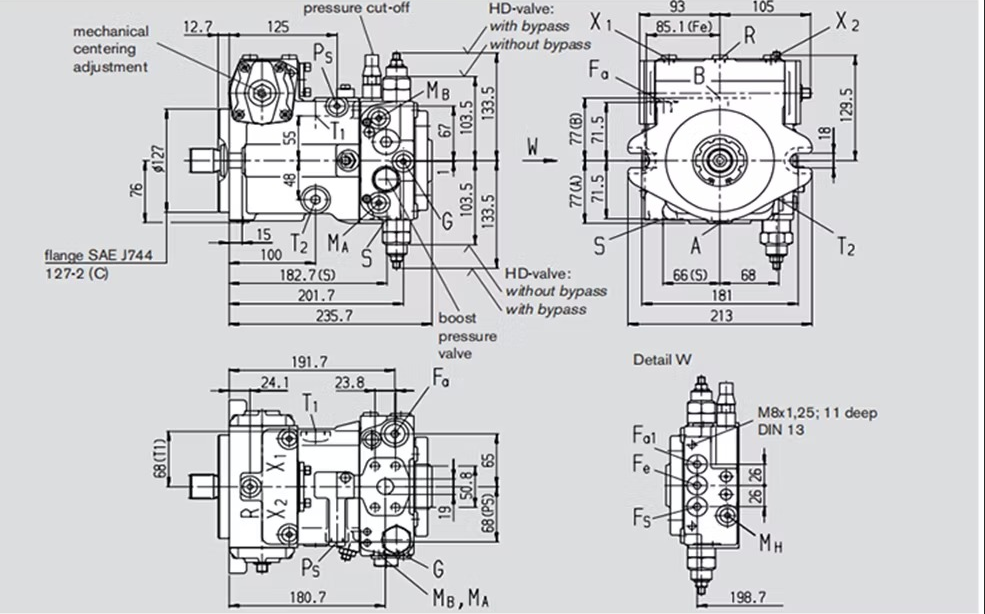
FAQ
What is the difference between Rexroth A4VSO and A4VG hydraulic pumps?
The A4VSO is mainly designed for open-circuit hydraulic systems, while the A4VG is used in closed-circuit hydrostatic transmissions. Their control systems, internal structure, and typical applications are different.
Can A4VSO and A4VG pumps be interchanged?
Usually not. Even if the displacement is similar, the two pump series are designed for different hydraulic circuits. Always verify the full model code, control type, shaft, flange, ports, and machine application before replacement.
Where are Rexroth A4VSO pumps commonly used?
A4VSO pumps are commonly used in hydraulic presses, industrial power units, metal-forming machinery, steel mills, marine systems, paper machinery, and other open-circuit hydraulic applications.
Where are Rexroth A4VG pumps commonly used?
A4VG pumps are widely used in closed-loop hydrostatic drive systems such as road rollers, pavers, agricultural machinery, compactors, mining equipment, and other mobile machines.
How do I choose the correct A4VSO or A4VG replacement pump?
Check the complete pump nameplate, including series, displacement, design version, rotation, shaft, mounting flange, control code, and port configuration. Providing the machine model and original pump number also helps confirm compatibility.


